
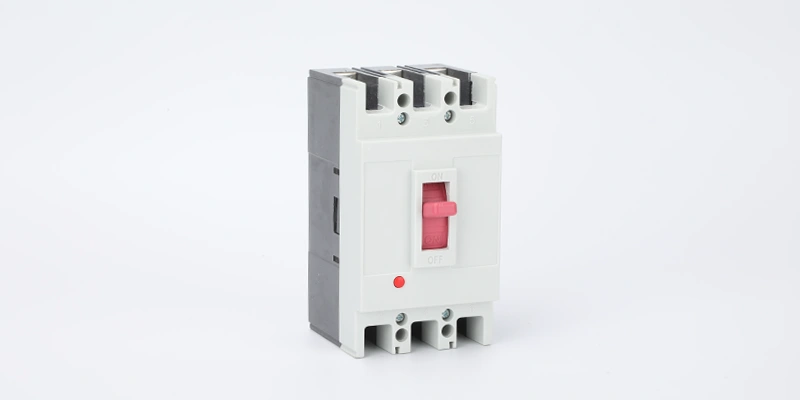



Molded Case Circuit Breakers(MCCB) Manufacturer in China

Are you looking for top-quality Molded Case Circuit Breakers from China?

At Sincede, we provide reliable and robust MCCBs designed to protect your electrical systems and ensure smooth operations. Whether you need standard models or custom solutions, we have the right option for you.

Don’t compromise on safety and performance—contact us today for a quote and see how our products can strengthen your operations!

  • IEC 60947-2
  • CE
  • CB
  • UDEM
  • ISO
  • RoHS
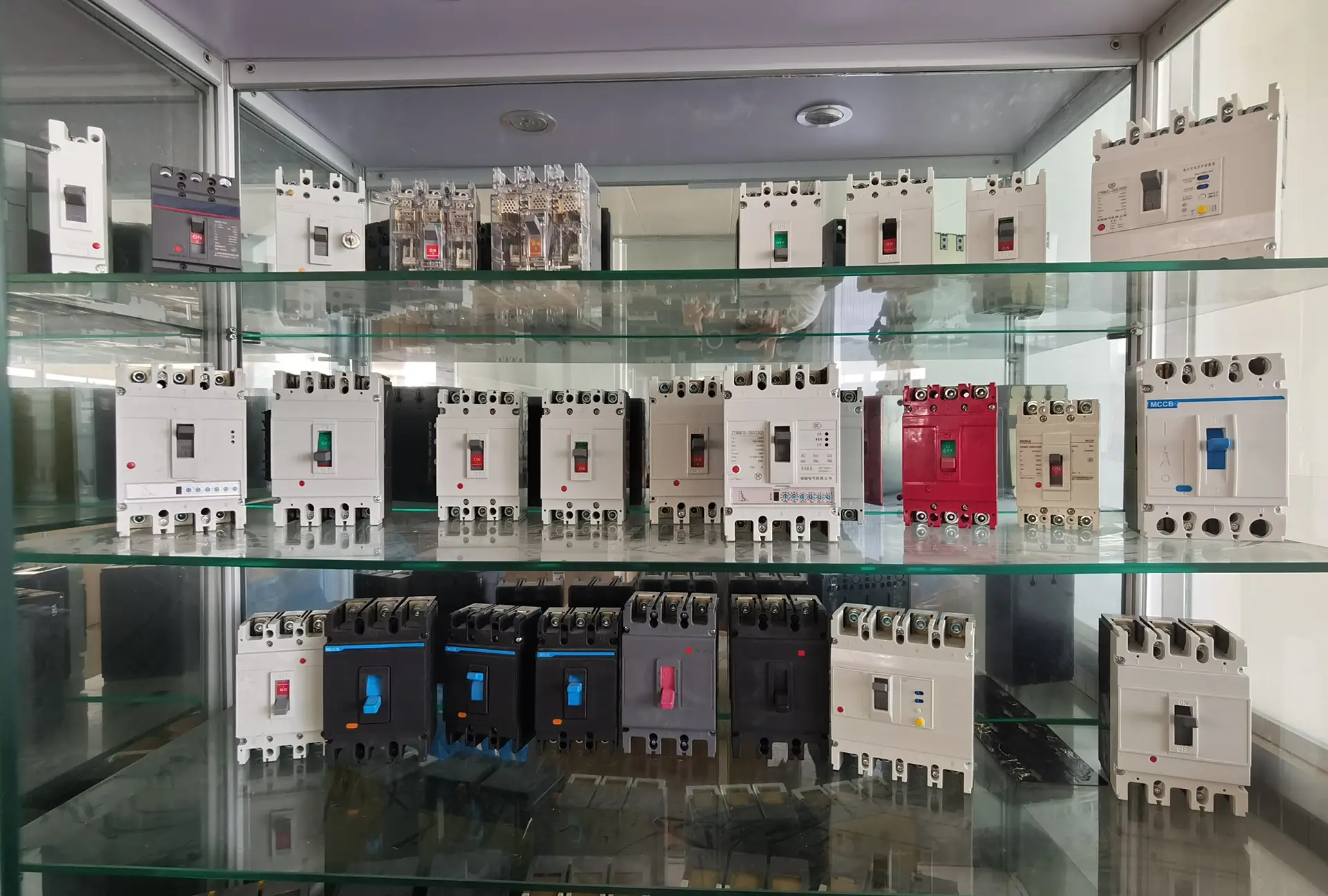
A glass cupboard showcasing a variety of Molded Case Circuit Breakers (MCCBs) arranged on multiple shelves. The breakers, in white, black, and red casings with colorful switches (green, red, blue, and pink), are neatly organized, reflecting a range of models and sizes. The background features a clean indoor setting with soft lighting, highlighting the electrical components.

Molded Case Circuit Breaker for Sale

Precision engineered for safety and reliability. Find the perfect breaker for your distribution system.

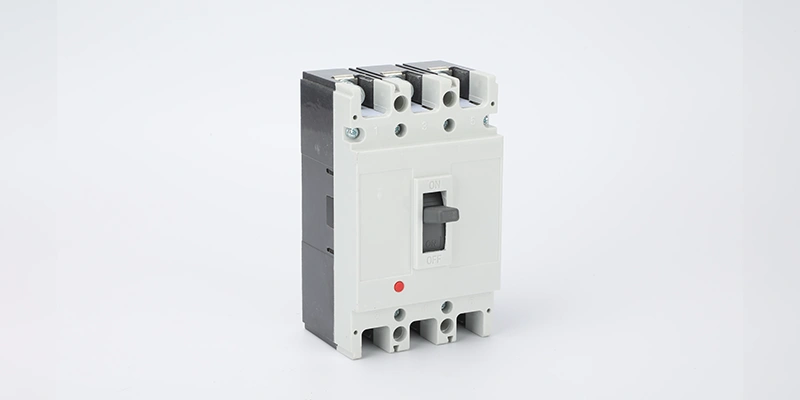
  • Thermal-Magnetic MCCB

    Protects against overloads in low-voltage systems. Ideal for residential and commercial power distribution.

    • Frame: 63A - 1600A
    • Current: 6A - 1600A
    • Poles: 1P / 2P / 3P /4P
    • Voltage: 400V / 690V
    • Ics: 25kA - 100kA
    • Icu: 18kA - 50kA
    White Cover Standard MCCB 125A 3P
    BestSeller
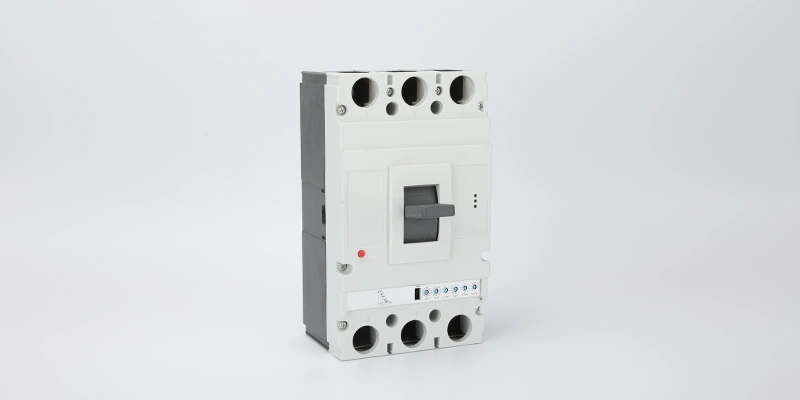
  • Electronic MCCB

    Precise electronic trip control with adjustable settings for industrial applications needing accuracy.

    • Frame: 125A - 800A
    • Current: 16A - 800A
    • Poles: 3P / 4P
    • Voltage: AC 400V
    • Ics: 25kA - 50kA
    • Icu: 35kA - 70kA
    Precise
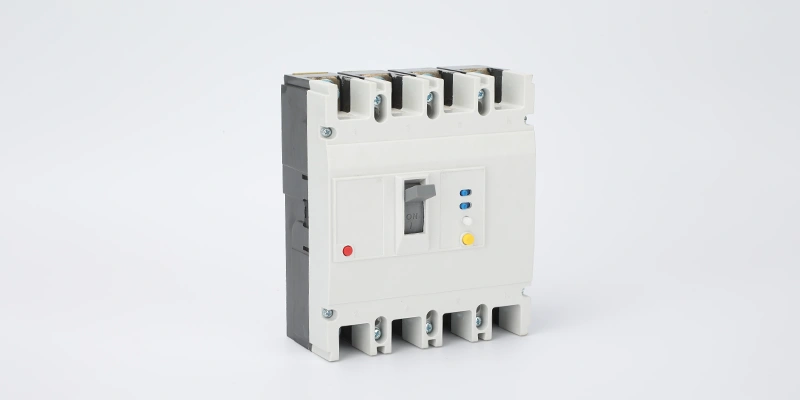
  • RCCB / ELCB

    Detects leakage currents to prevent electric shocks. Essential for safety compliance environments.

    • Frame: 125A - 800A
    • Current: 10A - 800A
    • Poles: 3P / 4P
    • Voltage: AC 400V
    • Ics: 25kA - 65kA
    • Icu: 35kA - 100kA
    White Cover Earth Leakage MCCB 125A 4P
    Safety
  • DC MCCB

    Robust protection for DC circuits. Perfect for Solar PV, telecom, and stable DC power management.

    • Frame: 125A - 1250A
    • Current: 20A - 1250A
    • Poles: 1P / 2P / 3P / 4P
    • Voltage: DC 1000V
    • Ics: 15kA - 37.5kA
    • Icu: 20kA - 50kA
    White Cover PV DC MCCB 63A 3P
    Solar / PV

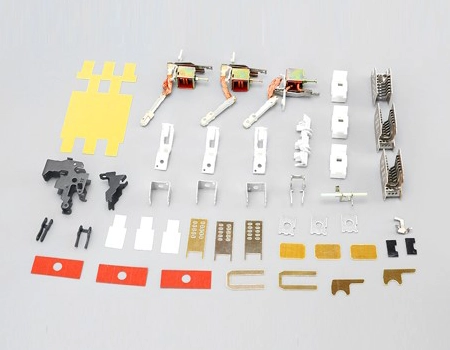
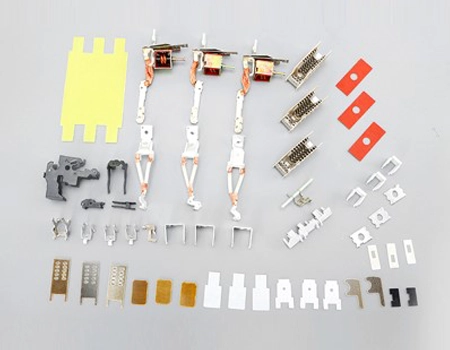
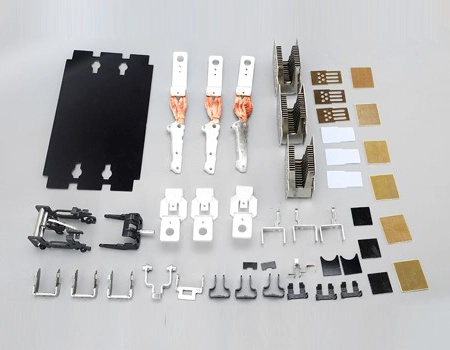
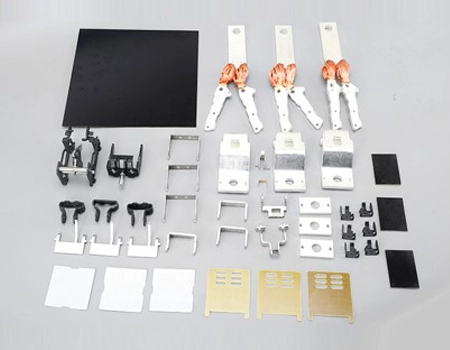
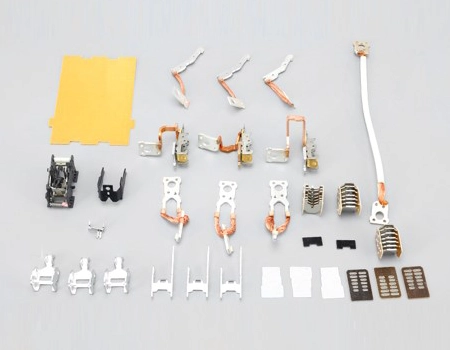
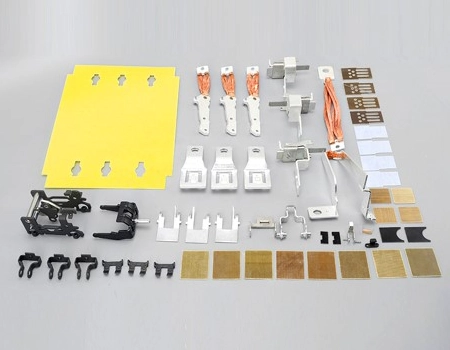
MCCB SKD Support

Scale your business with our flexible, semi-knocked down solutions. We provide the expertise and foundation you need to manufacture locally.

  • MCCB SKD Assembly Kit for 40–63A, 25kA
    MCCB SKD Kit 40–63A, 25kA
  • MCCB SKD Assembly Kit for 40–63A, 50kA
    MCCB SKD Kit 40–63A, 50kA
  • MCCB SKD Assembly Kit for 200–400A, 35–70kA
    MCCB SKD Kit 200–400A, 35–70kA
  • MCCB SKD Assembly Kit for 630–800A, 35–70kA
    MCCB SKD Kit 630–800A, 35–70kA
  • MCCB SKD Assembly Kit for 10A–100A, 35kA with Earth Leakage Protection
    Earth Leakage SKD 10–100A 35kA
  • MCCB SKD Assembly Kit for 225–400A, 70kA with Leakage Protection
    Earth Leakage SKD 225–400A 70kA

The Challenge

  1. High Operational Costs: Expensive shipping fees and high import duties eat into margins.
  2. Inflexible Inventory: Long lead times and fixed configurations make it hard to adapt to changes.
  3. Stock Risks: Prone to overstocking slow-moving items or running out of best-sellers.
  4. Weak Competitiveness: Slow response times allow competitors to take market share.

Our Solution

  1. Maximize Savings: Save on tariffs and freight by importing semi-finished modules.
  2. Full Flexibility: Assemble exactly what you need, when you need it, locally.
  3. Speed to Market: Drastically shorten lead times and respond instantly to customer orders.
  4. Reliable Quality: Built on 30 years of manufacturing expertise, ensuring consistent performance.

SKD’s Key Advantages for Your Business

  • Reduce Your Costs

    Save significantly on shipping freight, import duties, and operational overhead by assembling locally.

  • Adapt Quickly

    Customize MCCB specifications instantly to meet shifting market requirements without waiting for imports.

  • Ensure Reliability

    Provide products with consistent industrial quality to build long-term trust with your local customers.

  • Speed Up Time-to-Market

    Shorten lead times drastically and deliver products to your customers faster than your competitors.

  • Leverage Experience

    Benefit immediately from our 30 years of electrical industry expertise and manufacturing know-how.

  • Full Control & Flexibility

    Every component is made in-house, giving you a tailor-made solution that perfectly fits your assembly line.

Simplified Assembly Support

Assembly shouldn’t be a barrier. We understand the process can feel tricky, so we offer support to make it effortless.

We can pre-assemble your MCCBs up to the final step. You simply attach the cover and run basic testing. This saves time and ensures consistent quality without requiring specialized skills.

Need testing equipment? We can help you source the best equipments relying on our years’ local network.

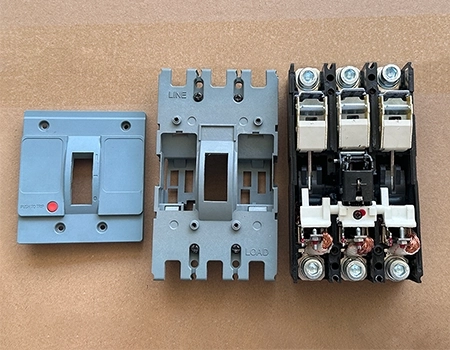
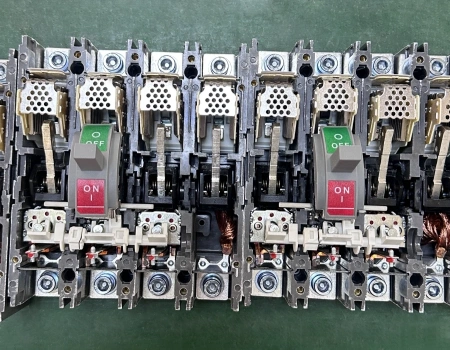
  • Three MCCB parts laid out on a wooden surface: left - gray front cover with handle and red indicator; middle - bottom half of the cover marked LINE and LOAD (combines with left piece to form the complete cover); right - fully assembled internal mechanism with contacts, arc chutes, and terminals, typical SKD setup ready for final customer assembly.
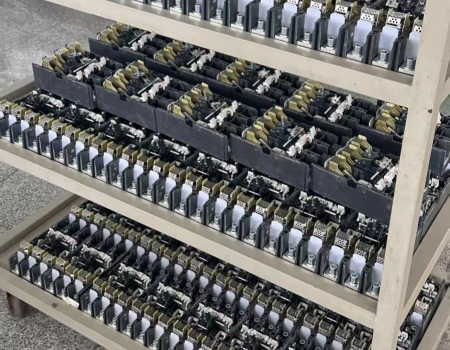
  • A rolling metal rack with multiple shelves holding trays of nearly finished MCCB SKD (semi-knocked down) units. Each unit is fully assembled with internal mechanisms, contacts, trip units, and terminals exposed, ready for customers to attach the front covers and complete the breakers.
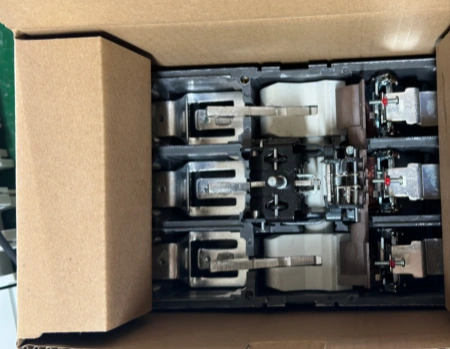
  • MCCBs in SKD (semi-knocked down) form without front covers, securely packed in a cardboard box with foam inserts. The internal mechanisms, silver operating handles, arc chutes, and red trip indicators are fully assembled and visible, ready for customers to attach the covers.

Scenes Behind Products

We believe that transparency builds trust. That’s why we not only share our facilities here online, but also warmly welcome you to visit our factory in person. Seeing our operations firsthand will give you even greater confidence in the quality and reliability behind every product.

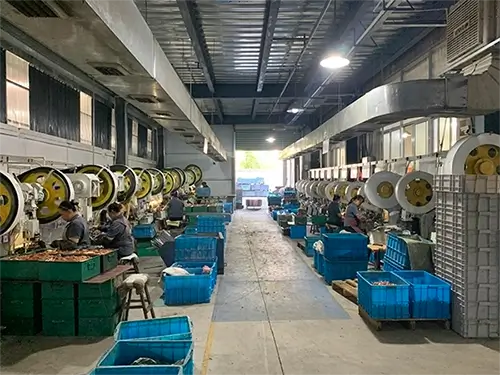
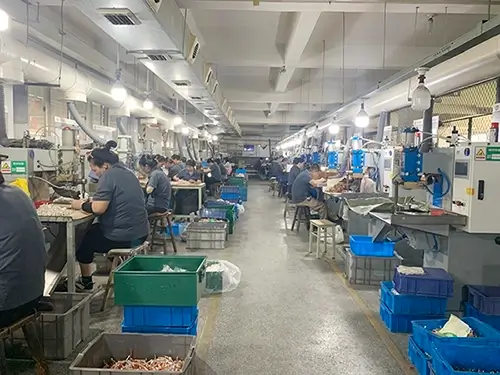
  • A spacious industrial workshop with multiple workers operating stamping machines along both sides. The machines have large circular components, and blue plastic crates filled with materials are placed throughout the floor. The ceiling has exposed pipes and lighting, with a clean, organized workspace and a visible exit in the background.
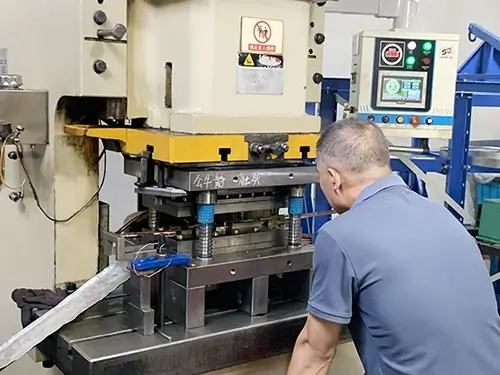
  • A worker in a blue shirt operates a punch press machine in an industrial setting. The machine, featuring a yellow and white frame with a control panel and a warning sign, is stamping a metal piece. A digital control box is visible on the right, and various industrial equipment can be seen in the background.
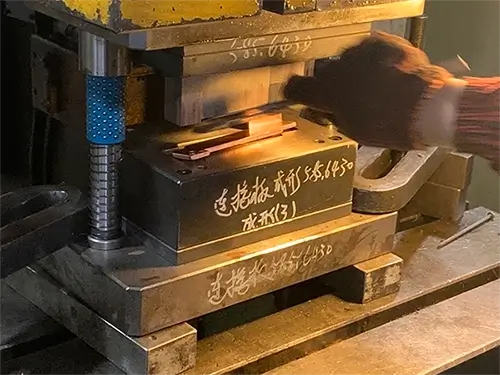
  • A close-up view of a worker's gloved hand operating a metal press machine, pressing a metal piece. The machine features a blue component and Chinese text, set on a workbench in an industrial environment, with an overall yellowish tint caused by the ambient lighting.
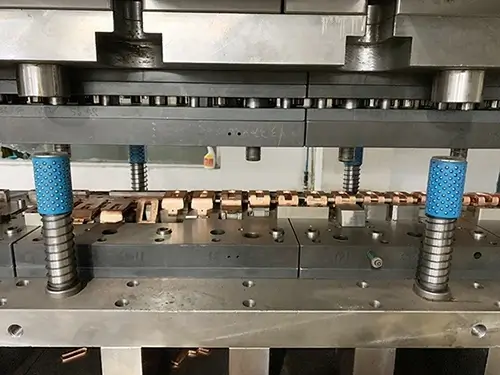
  • A close-up view of a large punch press machine stamping metal components. The machine has a metallic frame with precise alignment and pressure points, operating in an industrial environment.
  • A spacious spot welding workshop with multiple workers at workstations, operating spot welding equipment and handling metal components. The room is well-lit with overhead lights, featuring blue and green storage bins, worktables, and various equipment along the sides.
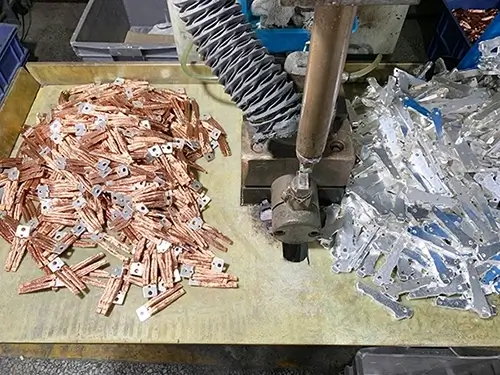
  • A close-up of a spot welding workbench featuring a spring-loaded arm, surrounded by piles of copper and silver metal components on a tray. The workbench is set in a factory environment, with storage bins visible in the background.
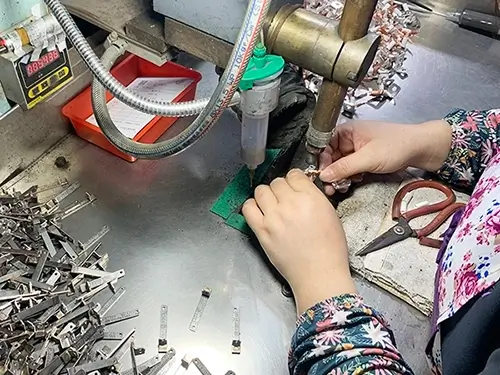
  • A worker's hands performing spot welding on small metal components placed on a green mat, using a precision tool connected to a hose. The workstation includes a metal table with scattered metal parts, a red container, and a pair of scissors, set in an industrial environment.
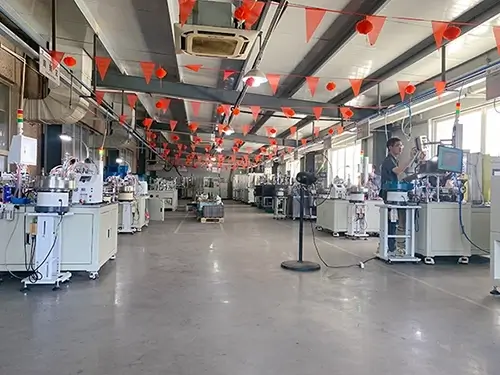
  • A spacious automatic workshop decorated with red triangular flags hanging from the ceiling, featuring multiple automated workstations with machinery and a worker operating equipment. The room is well-lit with overhead lights and air conditioning units, and includes various industrial tools and devices.
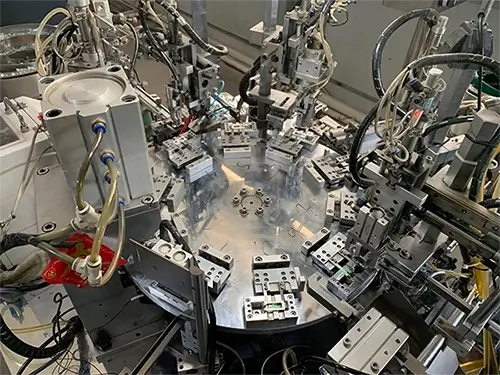
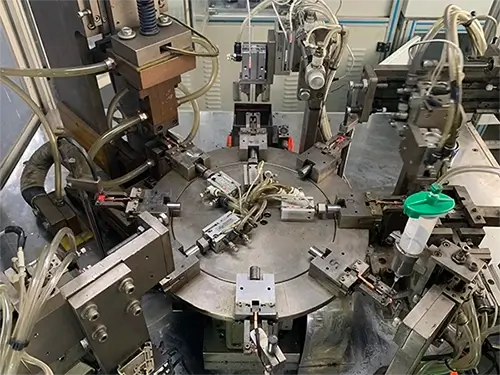
  • A close-up view of an automated riveting machine with a central rotating platform, surrounded by multiple robotic arms, sensors, and metallic components. The machine features various wires and hoses, operating in a clean industrial environment.
  • A detailed view of an automatic spot welding machine with a central rotating platform, surrounded by mechanical devices, tubes, and metallic components. The machine features green and metallic parts, with wires and hoses connected, operating in a controlled industrial environment.
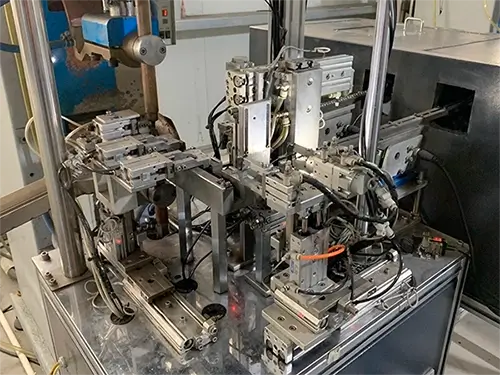
  • A detailed view of an automatic welding machine with multiple metallic components, wires, and robotic arms, set on a workbench in an industrial environment. The machine includes various sensors and tools.
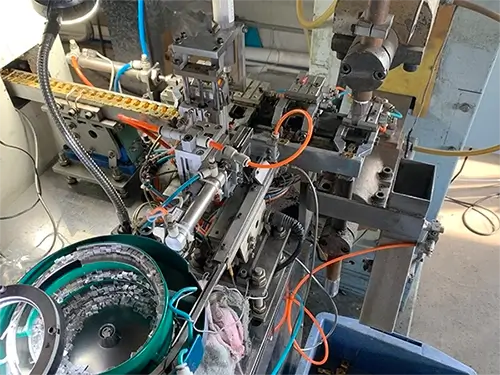
  • A close-up view of an automated spot welding machine with a conveyor belt, robotic arms, and a bowl of metal parts. The setup includes various wires, tubes, and components, operating in an industrial environment with a green container and scattered components nearby.
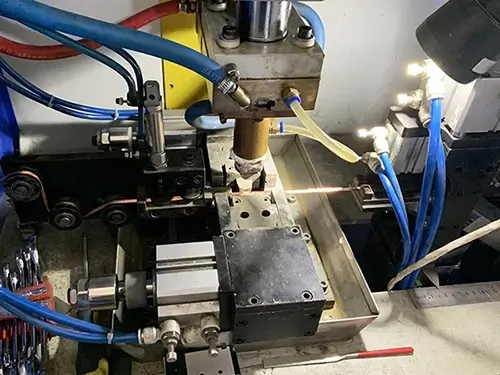
  • A close-up view of a wire cutting machine actively processing wires, featuring a central cutting tip, blue and red hoses, and robotic arms. The setup includes a metallic workbench with wires and tools, illuminated by overhead lights in an industrial environment.
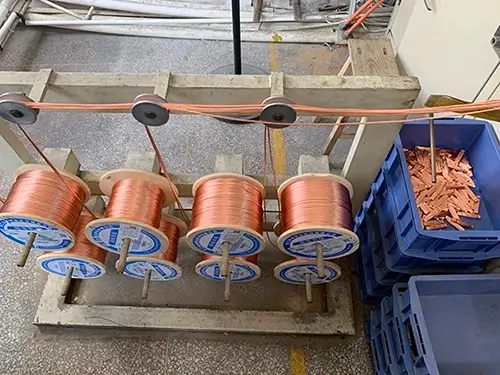
  • Multiple spools of copper brush wire neatly arranged with guide rollers, placed next to a blue plastic bin used for holding finished or semi-finished products. The setup is on a tiled floor in an industrial environment, with additional blue bins and equipment visible in the background.
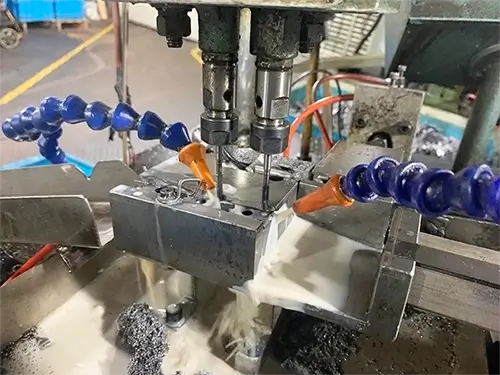
  • A close-up view of the tapping head on an automatic tapping machine, featuring multiple drilling tools and blue flexible hoses, actively working on a metal block. Metal shavings and coolant are visible, with the machine operating on a workbench in an industrial setting.
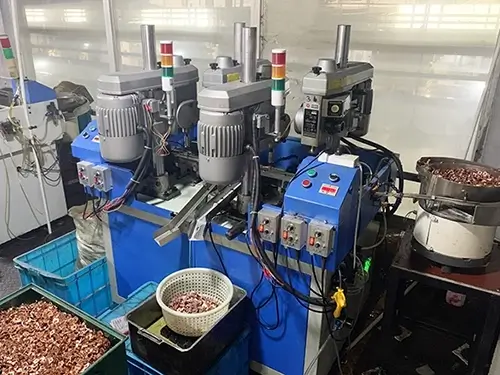
  • An automated tapping machine with multiple motors and control panels, surrounded by blue bins and baskets filled with metal components. The setup includes a feeder bowl and wiring, operating in a well-lit industrial workshop with other equipment in the background.
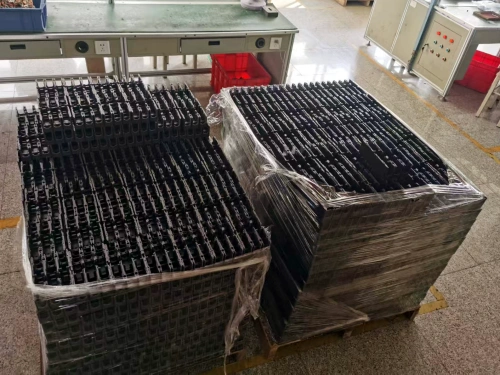
  • A warehouse scene featuring two large pallets stacked with black MCCB (Molded Case Circuit Breaker) bases, wrapped in protective plastic. The pallets are placed on a tiled floor near a green worktable. Under the table, red plastic crates used for holding products is visible, with various equipment in the background.
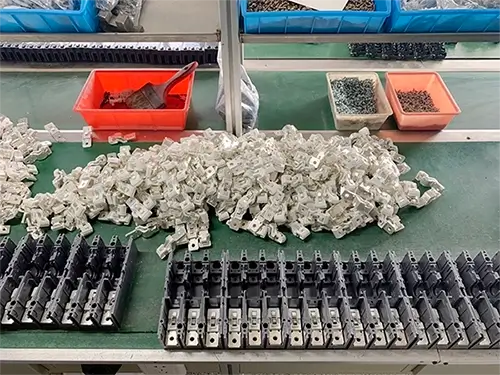
  • An assembly line featuring a green workbench with black MCCB bases and piles of metallic components. The setup includes orange and white trays containing screws and other small parts, set in an industrial workspace with blue storage bins visible in the background.
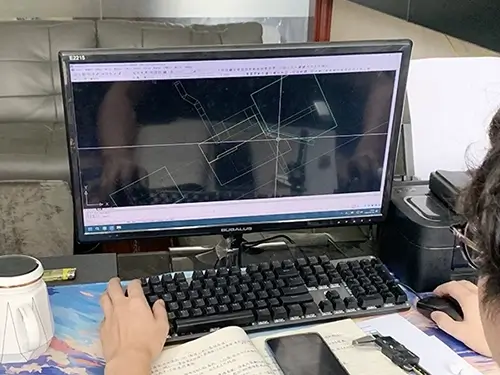
  • A photo of an engineer working at a desk, designing a mold on a computer with a large monitor displaying a CAD (Computer-Aided Design) software interface. The desk includes a keyboard, a smartphone, an open notebook, and a coffee mug. The background shows a modern office setting with a sofa and glass walls
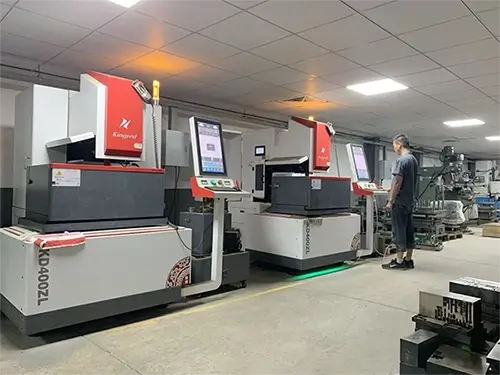
  • A technician operating a Wire Cut EDM (Electrical Discharge Machining) machine in an industrial workshop. The machine features a red, white, and gray color scheme, with a control panel, actively cutting a metal workpiece. The background shows a clean, well-lit workshop with additional equipment and workbenches.
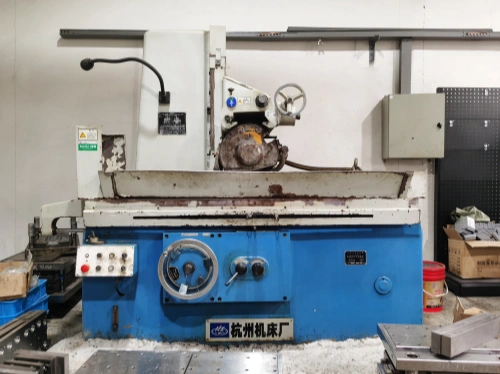
  • A blue industrial surface grinding machine with visible wear and metal shavings scattered around, situated in a workshop with a white wall and various tools in the background.
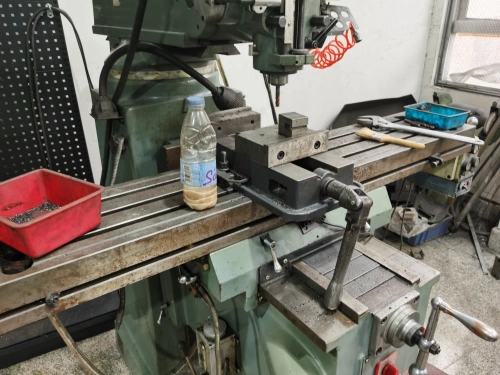
  • A green industrial milling machine with a water bottle and a red tray of metal shavings on its table, featuring a drill bit and coiled air hose, set in a cluttered workshop with tools and equipment in the background.
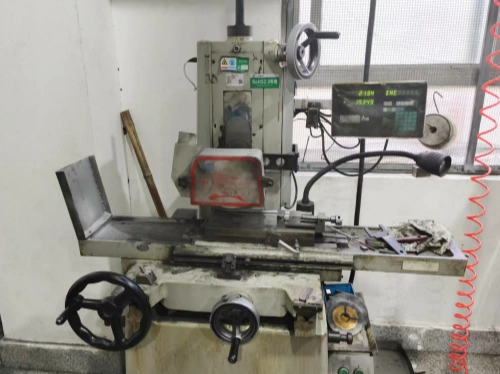
  • An industrial surface grinder machine in a workshop, featuring a sturdy metal frame with a large handwheel, a digital display, and a grinding wheel enclosed in a red safety guard. The machine is equipped with a worktable, control knobs, and a coiled red power cord. A wooden handle and various metal tools are placed nearby, with a window and safety mesh in the background.
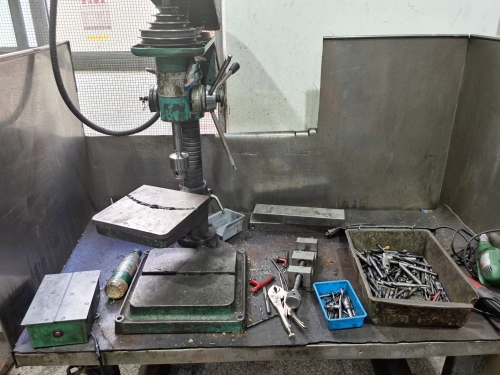
  • A close-up view of an old green bench drill press mounted on a sturdy metal workbench in an industrial workshop. The drill features a tall column with a hand lever and chuck, positioned over a large work table cluttered with metal scraps, a small tray of screws and nails, wrenches, pliers, and a green oil can. The background shows stainless steel panels and a window with safety mesh.
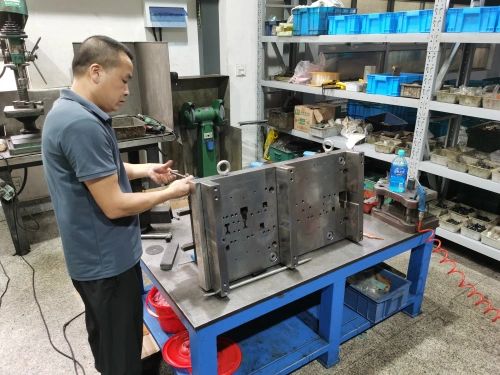
  • A worker in a blue shirt inspects large metal mold parts on a blue workbench in an industrial workshop. The parts have intricate cutouts and are placed next to tools and a red container. In the background, there are shelves with blue bins, a green drill press, and various equipment, with a coiled red power cord visible.
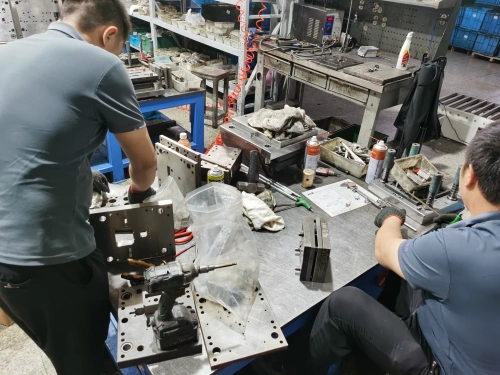
  • Two workers wearing blue shirts and gloves collaborate at a blue workbench in an industrial workshop, maintaining metal molds with intricate cutouts. A small drill is placed nearby. The table is cluttered with tools, a plastic bag, cans, and a green spray bottle. In the background, shelves with equipment, red coiled cords, a pegboard, and storage bins are visible.
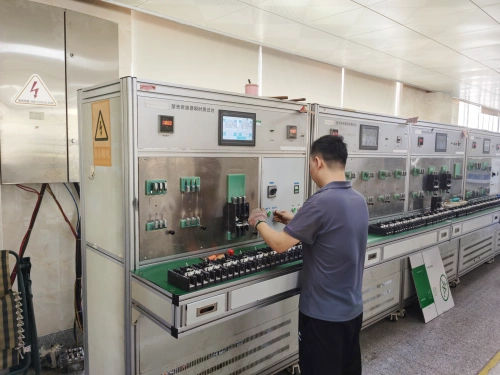
  • A photo of a technician in a gray shirt working at an Instantaneous Trip Test Bench, testing an MCCB (Molded Case Circuit Breaker). The bench features a control panel with a digital display, multiple switches, and electrical components. A warning sign with a lightning bolt is visible on the left side, and the setup is located in an industrial lab with tiled flooring and additional testing equipment in the background.
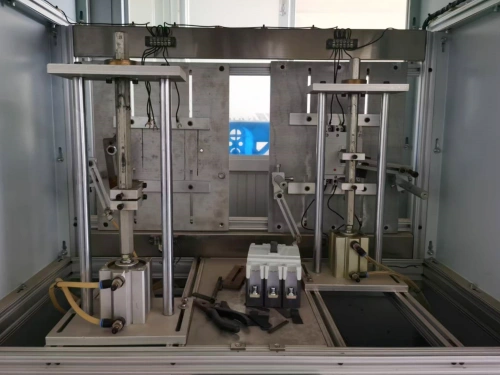
  • A mechanical endurance test device for molded case circuit breakers (MCCBs), featuring a metallic frame with adjustable arms and clamps holding an MCCB unit, set against a background with a blue window visible.
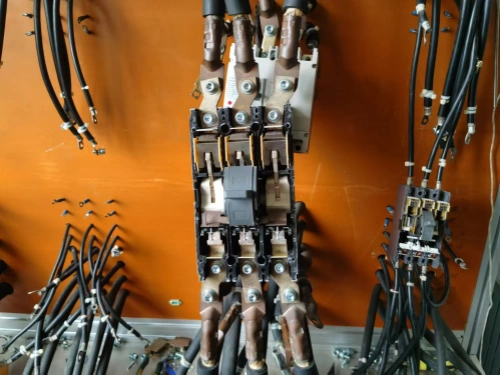
  • A close-up view of a temperature rise test bench for molded case circuit breakers (MCCBs), featuring a central MCCB unit with multiple copper connectors and black cables attached, mounted against an orange panel.
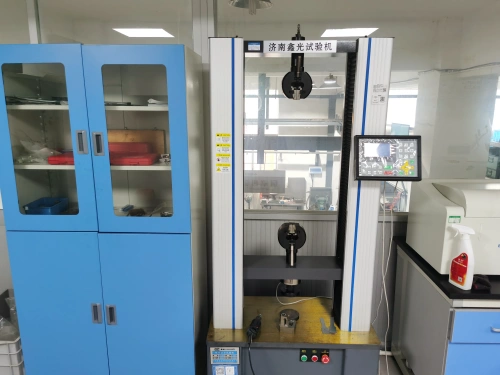
  • An industrial laboratory featuring a tall, white-framed electronic universal testing machine at the center, equipped with a black hydraulic gripper arm suspended from the top crosshead, a digital control monitor displaying interface options, and yellow safety warning labels on the transparent safety enclosure. To the left, two tall blue metal storage cabinets with glass doors hold organized lab supplies including red toolboxes, plastic bins, documents, and small equipment. The right side shows a gray workbench with additional tools like a drill, clamps, and a red-labeled cleaning spray bottle next to a white lab cart. The cleanroom environment includes overhead fluorescent lighting, wire mesh guards, and background machinery visible through large windows。
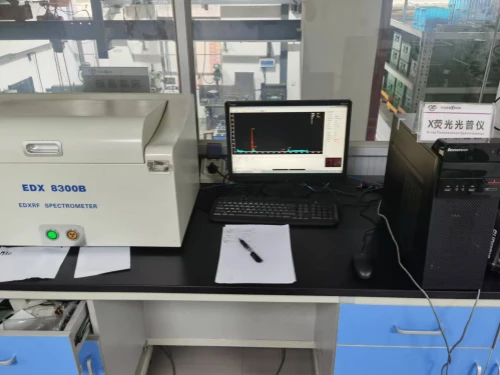
  • A laboratory desk featuring an EDX 8300B X-ray Fluorescence Spectrometer on the left, with a digital display and control button, positioned next to a computer monitor displaying a spectral graph, a keyboard, and a mouse. Papers and a pen are scattered on the desk, with a black computer tower and a labeled sign in Chinese on the right. Blue storage drawers are visible below the desk, and industrial equipment can be seen through the window in the background.
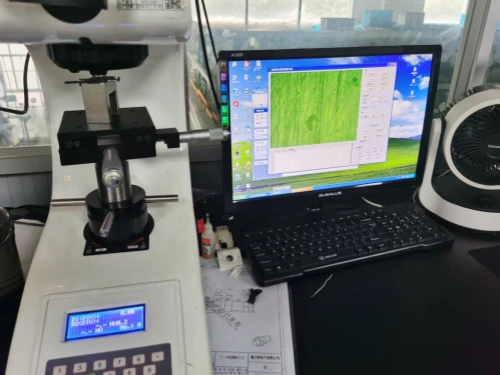
  • A laboratory workstation featuring a white Vickers Hardness Tester machine with a mounted metal sample under the diamond indenter, digital display showing zeroed measurements, and control panel. Adjacent is a Dell monitor running analysis software with a green fibrous material image and data graphs, a black keyboard, scattered blueprints and tools on the desk, and a white electric fan nearby, all in a brightly lit industrial room with window views.
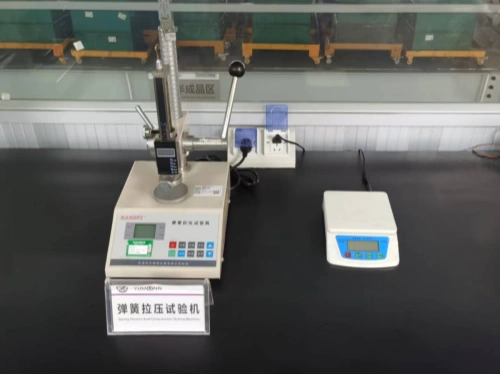
  • A laboratory workbench displaying, on the left, a Spring Tension and Compression Testing Machine with a digital display, control buttons, and manual lever for force application, and on the right, a compact digital scale with an LCD readout. A bilingual label (Chinese and English) is positioned in front of the machine, with industrial shelving and green storage bins visible in the background.
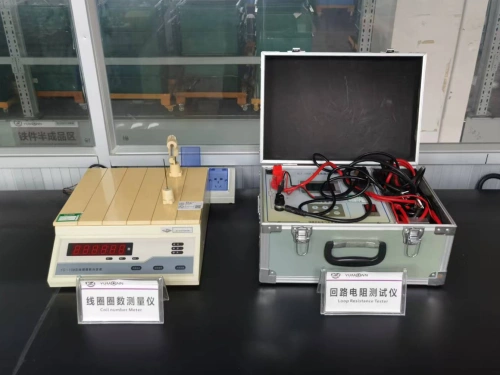
  • A side-by-side display of two electrical testing instruments on a black lab bench, illuminated by soft overhead light in an industrial workshop with glass partitions and shelving in the background. On the left is a compact beige coil turn counter with a digital LCD readout showing measurement values, a detachable blue probe arm on a swivel base, and a power adapter plugged into the side; labeled "Coil Turn Counter" on a white placard in Chinese and English. On the right is a rugged silver aluminum carry case, open to reveal a portable contact resistance tester with coiled red and black test leads, battery clips, a digital multimeter-style interface, and foam-padded compartments for accessories. These tools are essential for verifying electrical integrity in circuit breaker components like coils and contacts, ensuring safety and reliability in manufacturing quality assurance.
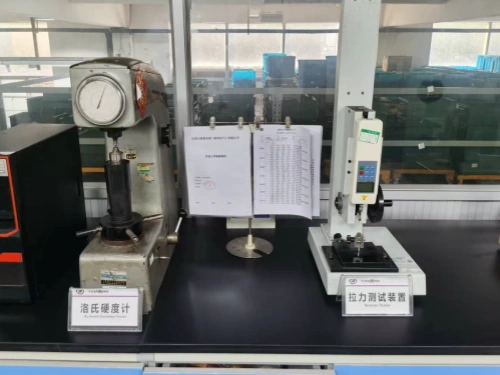
  • A laboratory workbench setup featuring two industrial testing instruments side by side against a blurred background of shelving and storage in a manufacturing facility. On the left is a gray Rockwell hardness tester, with a large analog dial gauge displaying measurements, a vertical drill-like indenter arm, and a sturdy base clamp; it's labeled "Rockwell Hardness Tester" on a white placard. To the right is a modern white digital tensile testing machine, equipped with a vertical column, electronic control panel with LCD display, and a clamp mechanism for pulling samples; labeled "Tension Tester" on a similar placard. Between them sits an open binder of printed test data sheets with tables of measurements and Chinese annotations, clipped to a stand, alongside a small metal disc on a pedestal. The black countertop and glass enclosure emphasize precision engineering for material strength evaluation in electrical component production.
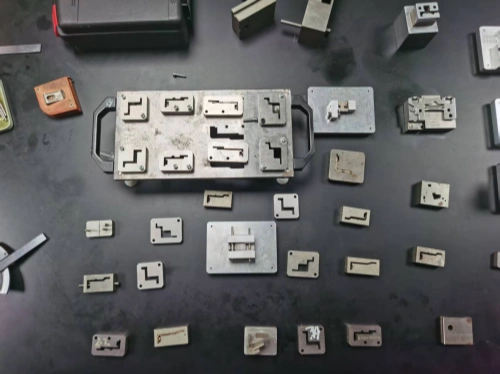
  • A close-up overhead view of an assortment of custom-machined metal inspection fixtures and jigs arranged on a dark workbench surface, used for quality control testing of Molded Case Circuit Breaker (MCCB) components. In the center is a large rectangular steel plate with multiple L-shaped and geometric cutouts, secured with bolts and a black handle for portability. Surrounding it are smaller aluminum and steel pieces including slotted brackets, vise-like clamps, perforated plates with engraved markings (such as "ZJ-24"), and angled fixtures with precise notches for measuring electrical terminals and housings. Nearby tools include a brass tape measure, steel calipers, a black toolbox, loose screws, and a ruler, all casting subtle shadows on the matte black background, highlighting the industrial precision engineering involved in electrical safety component verification.
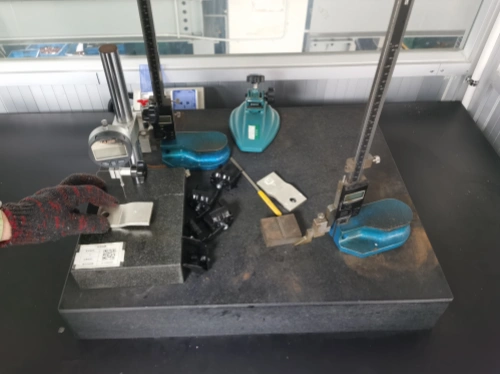
  • A close-up view of a granite surface plate in an industrial metrology lab, with a hand wearing a red knitted glove and green wristband holding a small labeled metal sample with QR code. Nearby are a blue Mitutoyo digital depth gauge, chrome height gauges on adjustable stands, scattered black clamps, brass blocks, a yellow-handled screwdriver, and blue plastic components on the dark surface. The setup is enclosed in a glass-walled room with overhead lighting.
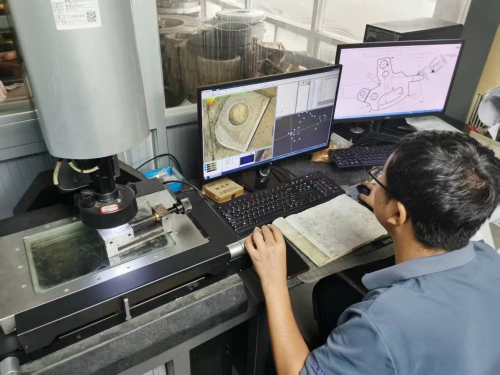
  • A detailed view of a modern industrial metrology lab where an Asian male technician in a light blue collared shirt and glasses sits focused at a sleek black workstation, operating an optical coordinate measuring machine (CMM). The tall, silver cylindrical CMM stands prominently on the left, featuring a precision stage with a glass worktable illuminated from below, a red-knobbed objective lens turret, and adjustable arm for non-contact scanning. On the dual-monitor setup to the right, the left screen displays a high-magnification live image of a circular metal workpiece with overlaid digital grids, measurement points, and color-coded analysis tools, while the right screen shows a detailed CAD blueprint of mechanical components including gears and brackets. Surrounding the setup are a mechanical keyboard, a worn notebook filled with hand-drawn engineering sketches, a small wooden storage box, and scattered tools on a granite surface base for vibration damping. In the background, large windows reveal a workshop with wooden barrels, shelving units, and diffused natural light, highlighting a collaborative environment for quality control and dimensional inspection in manufacturing.
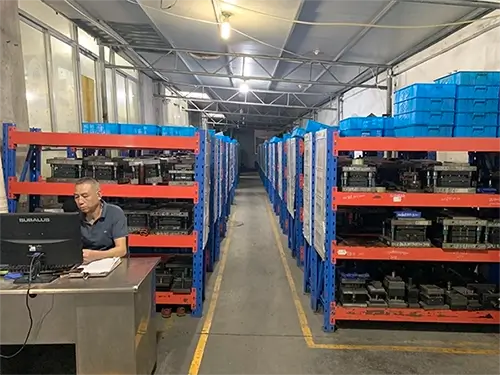
  • A mold warehouse with a worker sitting at a desk with a computer on the left side, surrounded by rows of red and blue shelving units. The shelves are filled with blue crates and various molds, organized neatly along a narrow aisle. The ceiling has exposed pipes and lighting, and the floor is marked with yellow lines for safety.
  • A spacious warehouse with multiple rows of metal shelves filled with iron and copper components used for molded case circuit breakers (MCCBs). Green and blue crates containing parts are placed on the floor and shelves, organized along a central aisle. The ceiling features exposed beams and lighting, with a clean and orderly environment.
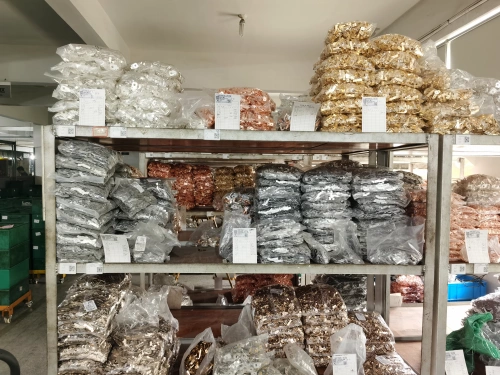
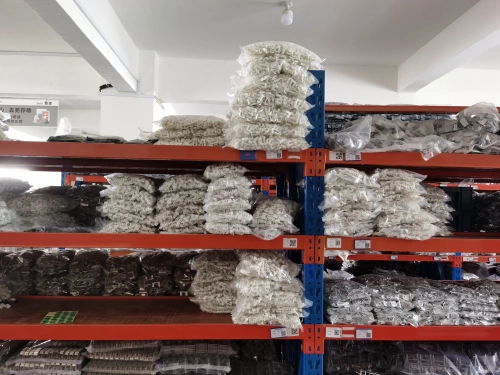
  • A warehouse shelf displaying stacks of iron and copper components for molded case circuit breakers (MCCBs), organized in plastic bags and labeled, with a variety of metallic parts in silver, copper, and bronze tones.
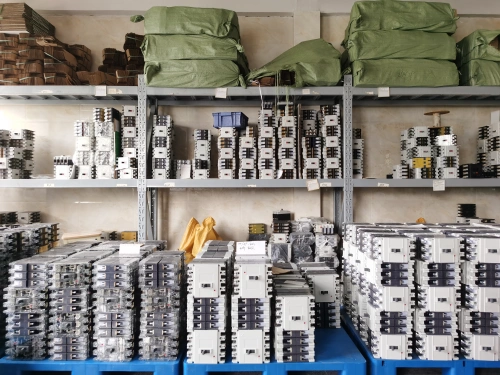
  • A warehouse with rows of orange and blue shelving units filled with semi-finished molded case circuit breakers (MCCBs), featuring a worker operating a forklift among stacks of grey components.
  • A warehouse shelf with orange supports, stocked with stacks of semi-finished molded case circuit breaker (MCCB) parts, primarily white and metallic components, organized in plastic bags and labeled for inventory.
  • A warehouse shelf filled with neatly organized molded case circuit breakers (MCCBs) stacked in rows, with additional green bags and boxes stored on the upper shelves.
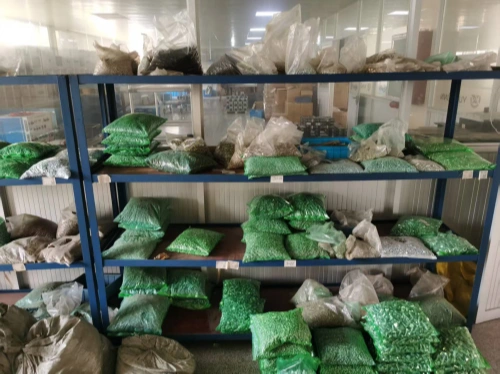
  • A warehouse shelf filled with green plastic bags containing screws, nuts, and similar hardware components, stacked across multiple levels. The shelves are made of blue metal, and the background shows a clean, well-lit room with additional equipment and storage visible through a glass partition.
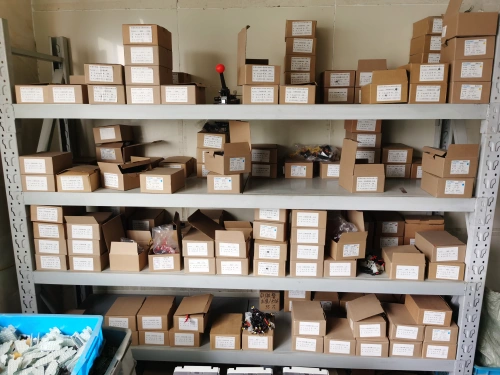
  • A warehouse shelf unit filled with cardboard boxes and containers holding various accessories for molded case circuit breakers (MCCBs), neatly labeled and organized across multiple levels, with some open boxes revealing small components and wires.
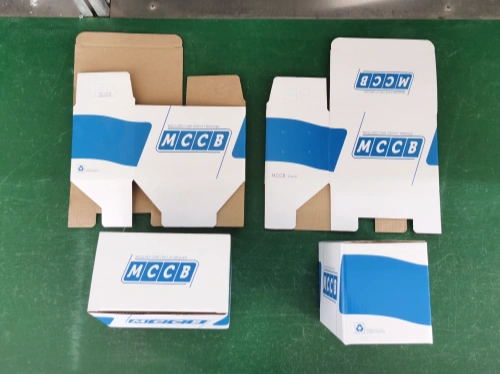
  • A green workbench displaying four cardboard boxes designed as inner color packaging, featuring a blue and white color scheme with "MCCB" branding. The boxes include two partially folded rectangular boxes and two fully formed boxes, one rectangular and one cubic.
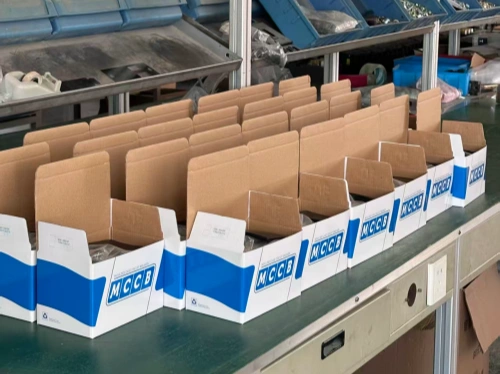
  • A photo showing a row of open cardboard boxes labeled "MCCB" with blue and white branding, neatly arranged on an assembly workstation in an industrial setting. Some boxes contain items inside. In the background, shelving units with blue bins and various materials are visible, indicating a workshop or production environment.
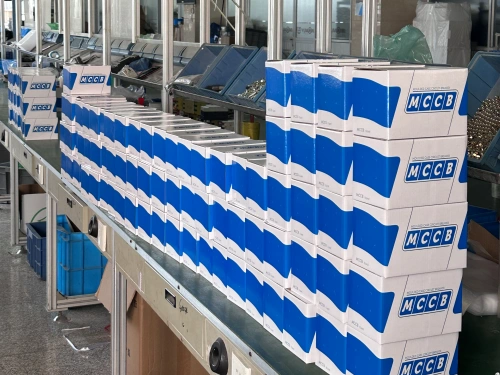
  • A photo showing a long row of white cardboard boxes with blue "MCCB" labels stacked in multiple layers along an assembly line workstation. The boxes vary in height arrangement, with blue bins, shelving units, and factory equipment visible in the background, indicating an active production environment.
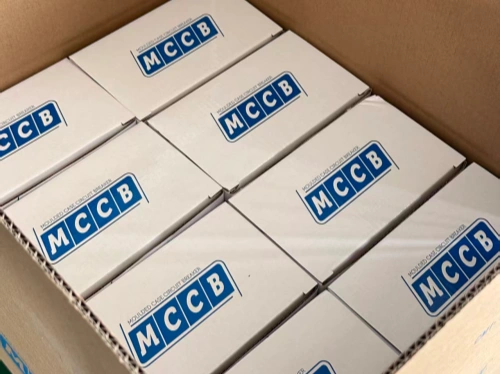
  • An open brown cardboard outer box containing multiple rows of white inner packaging boxes, each prominently labeled "MCCB" in blue text, arranged neatly inside.
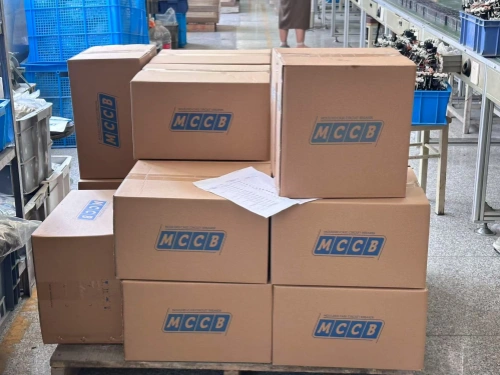
  • A photo showing a stack of cardboard boxes labeled "MCCB" neatly arranged on a pallet, stacked in multiple layers with a piece of paper placed on top of the middle stack. The boxes are positioned beside an assembly line, with a conveyor belt holding blue bins and a person standing nearby visible in the background, along with industrial shelving and equipment.
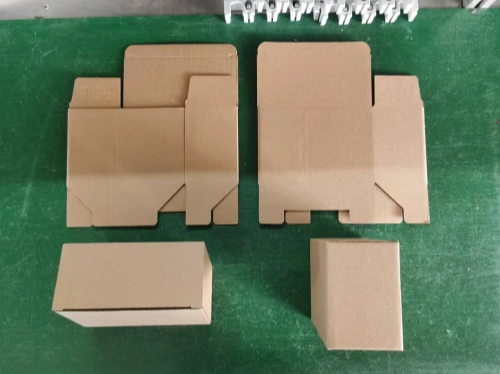
  • A green assembly line surface displaying several unfinished neutral inner packaging boxes made of Kraft paper, including two partially folded rectangular boxes, one fully assembled rectangular box, and one cubic box. Workshop equipment and tools are visible in the background, showing the packaging preparation stage before final product assembly.
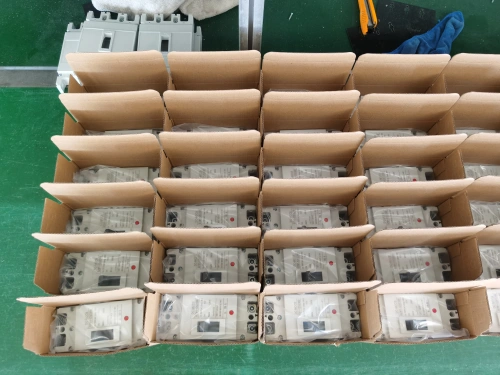
  • A green assembly line workstation displaying multiple open white inner packaging boxes, each containing a white mccb unit sealed in a plastic bag. The inner boxes are arranged neatly in rows, with additional electrical components and tools visible in the background.
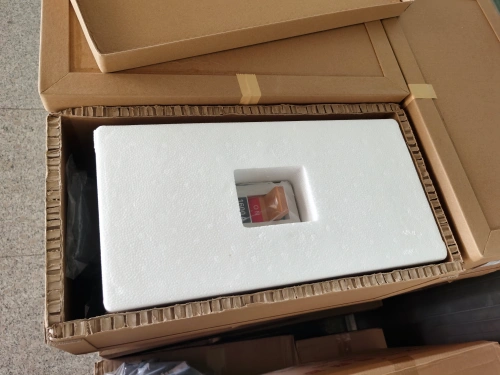
  • An open brown cardboard box containing a white foam padding insert, internally securing a high-current MCCB, featuring a white housing. Additional stacked boxes are visible in the background, placed on the floor.
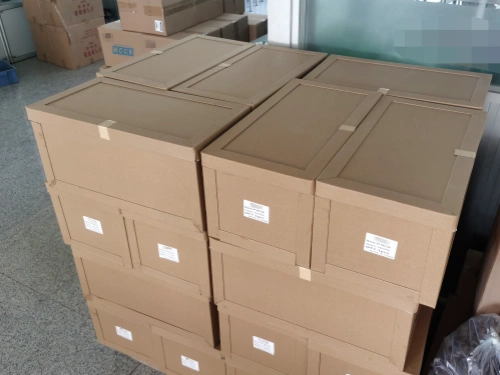
  • A stack of brown cardboard outer boxes with corner protectors, neatly arranged in a warehouse setting. The boxes are labeled and taped, with additional boxes and packaging materials visible in the background on a tiled floor.
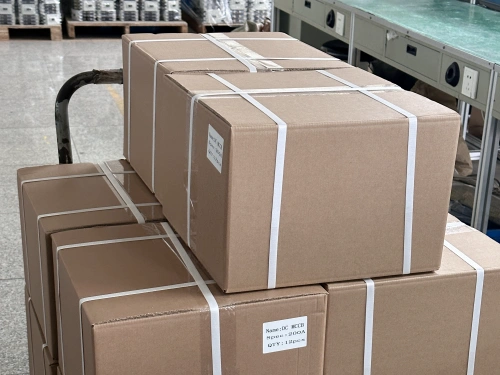
  • A stack of brown cardboard outer cartoons secured with white strapping, placed on a cart in an industrial warehouse. The boxes are labeled with text, and additional boxes and equipment are visible in the background on a tiled floor.
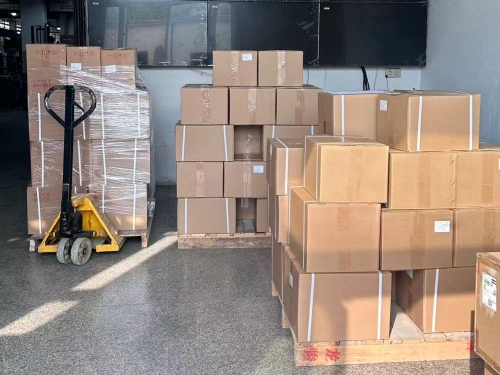
  • A warehouse scene featuring multiple stacks of brown cardboard boxes, some wrapped in plastic, with a yellow pallet truck parked nearby. The boxes are arranged on wooden pallets, and a large screen or window is visible in the background on a tiled floor.
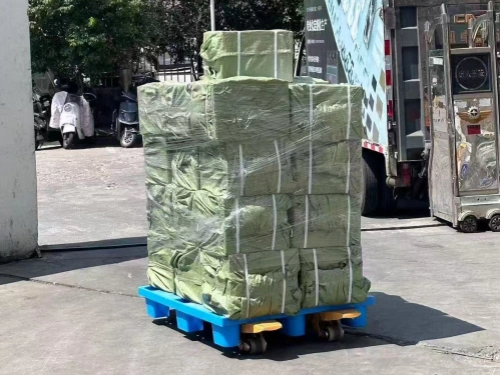
  • A tall stack of goods wrapped in green woven sacks, secured on a blue wheeled pallet in an outdoor loading=

What Is an MCCB?

An MCCB stands for Molded Case Circuit Breaker. It’s a compact, low-voltage electrical device designed to protect circuits by interrupting current flow when it exceeds safe limits.
It features a durable molded housing and a built-in trip mechanism, which can be thermal, magnetic, or electronic.

MCCBs offer adjustable settings, easy installation, and reliable operation. They are essential components in electrical panels for isolating circuits and preventing damage caused by overcurrent conditions, ensuring system reliability and safety.

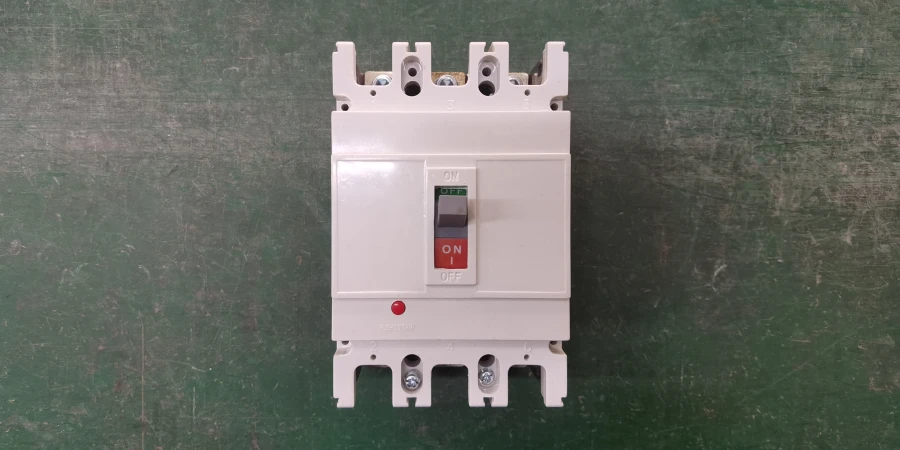
A white three-pole electrical circuit breaker placed on a green surface. The switch handle is in the middle tripped position, with a green "ON" indicator at the top and red "OFF" below. A small red label is visible at the bottom, and connection terminals are at the top and bottom.

What Does a Standard MCCB Contain?

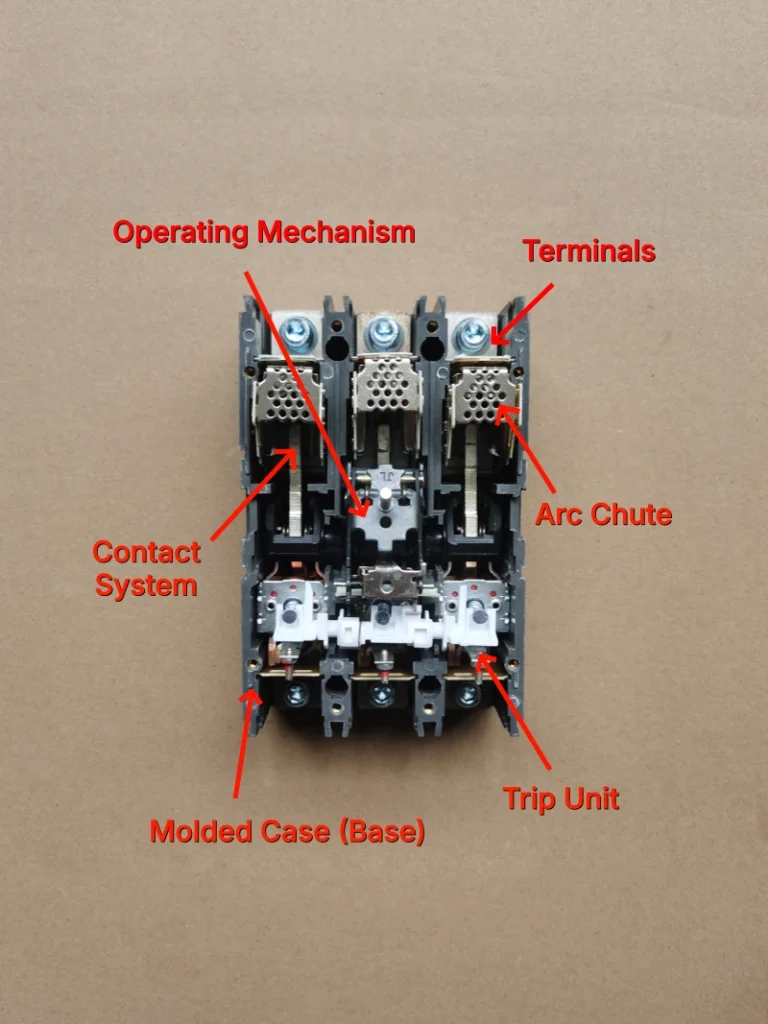
An MCCB is composed of several essential components that work together to protect electrical systems and ensure safe power distribution.

  • Operating Mechanism

    The operating mechanism controls the opening and closing of the contacts, allowing the MCCB to switch safely under normal conditions and disconnect quickly during faults.

  • Terminals

    The terminals connect the MCCB to power cables and ensure stable, secure current flow for long-term operation.

  • Contact System

    The contact system carries and interrupts current. High-quality contacts ensure stable conductivity, low resistance, and long service life.

  • Arc Chute

    When a fault occurs, an arc is generated. The arc chutes system suppresses the arc quickly to ensure safe and reliable circuit interruption.

  • Molded Case

    The molded case provides insulation and mechanical protection. Its flame-retardant structure allows the MCCB to operate reliably in industrial environments.

  • Trip Unit

    The trip unit detects abnormal current and automatically trips the breaker. It provides overload and short-circuit protection, while electronic trip units offer higher accuracy for advanced power systems.

A close-up view of an open molded case circuit breaker showing its internal components, clearly labeled with red text and arrows. Key parts include: the molded case (base), operating mechanism at the top, trip unit at the bottom centre, contact system with visible contacts, arc chutes on both sides, and line/load terminals at the top. The breaker is placed on a plain brown background.

How Does an MCCB Work?

  • Normal Operation

    Uninterrupted Monitoring

    In normal conditions, the current flows through the MCCB without interruption. Thermal-magnetic MCCBs use mechanical elements to monitor the current, while electronic MCCBs use sensors and microprocessors. As long as the current stays within the rated range, the MCCB allows power to flow safely to the load.

  • Overload Protection

    Thermal Bending & Calculation

    If the current exceeds the rated value for several seconds to tens of seconds, a thermal-magnetic MCCB heats up and triggers the trip mechanism. An electronic MCCB continuously measures the current and trips automatically as soon as it detects an overload. Both methods prevent equipment overheating and reduce the risk of damage.

  • Short-Circuit Protection

    Instant Magnetic Trip

    During a short circuit, the current spikes very quickly. Thermal-magnetic MCCBs respond instantly with magnetic elements, while electronic MCCBs detect the surge through sensors and trip immediately. In both cases, the MCCB quickly cuts the current to protect the system and equipment.

  • Arc Interruption

    Quenching the Energy

    When the contacts open, an electric arc forms. The MCCB’s arc extinguishing system splits and cools the arc, stopping it safely. This prevents damage to the breaker and is especially important for high-capacity industrial MCCBs.

  • Earth Leakage Protection

    Residual Current Detection

    Some MCCBs also protect against earth leakage. They detect small currents flowing to the ground and trip if the leakage exceeds a safe limit. Electronic MCCBs can monitor leakage continuously, giving complete protection against overload, short circuit, and ground faults.

  • Reset and System Recovery

    Restoring Power Safely

    Once the fault is cleared, the MCCB can be reset manually or automatically. Electronic MCCBs may also record fault data and communicate with monitoring systems. After resetting, the contacts close and power returns to normal safely.

Common Types of MCCB

MCCBs are commonly classified by frame size and rated current. These classifications help engineers and buyers quickly select the correct breaker for different distribution levels and load types in low-voltage systems.

Pros and Cons of MCCB

MCCBs provide strong protection and flexibility for industrial and commercial power systems, but whether they are suitable depends on the application and installation conditions.

Limitations

  • Higher Initial Cost

    Compared to MCBs, MCCBs generally need higher upfront costs due to advanced protection features and greater breaking capacity.

  • Larger Physical Size

    MCCBs are typically larger than miniature circuit breakers, which may restrict their use in compact panels or space-limited installations.

  • More Complex Selection Process

    Selecting the correct MCCB requires careful evaluation of ratings, breaking capacity, and coordination with other protective devices.

  • Requires Technical Configuration

    Adjustable trip settings must be configured by trained personnel to prevent nuisance tripping or insufficient circuit protection.

  • Not Ideal for Low-Power Circuits

    For low-current or residential applications, MCCBs are often unnecessary where simpler and more cost-effective breakers are enough.

  • Longer Replacement Time

    Due to their size and wiring requirements, replacing an MCCB can take longer than replacing smaller circuit breakers during maintenance.

Advantages

  • High Reliability

    MCCBs provide dependable protection against overloads and short circuits, ensuring stable operation of industrial equipment and power distribution systems.

  • Wide Range of Ratings

    With multiple current, voltage, and pole options, MCCBs can be applied in both small installations and large-scale industrial power systems.

  • Adjustable Protection Settings

    Many MCCBs feature adjustable thermal and magnetic trip settings, allowing protection levels to be optimized for different loads and operating conditions.

  • High Breaking Capacity

    MCCBs are designed to handle high short-circuit currents, making them suitable for demanding electrical environments with elevated fault levels.

  • Compact and Modular Design

    Despite their performance capabilities, MCCBs maintain a compact, modular form that helps save panel space and simplify system layout.

  • Long Service Life

    Built with high mechanical and electrical endurance, MCCBs deliver long-term reliability while reducing replacement frequency and maintenance costs.

How to Choose the Right MCCB?

Choosing the right MCCB ensures reliable protection and safe operation of your electrical system. Follow these steps to select the best breaker for your projects.

  1. Step 1: Determine the Rated Current

    Start by identifying the circuit’s rated current. The MCCB should slightly exceed the actual load to avoid nuisance trips while still protecting against overloads. Consider startup currents and load fluctuations for industrial applications.

  2. Step 2: Select the Breaking Capacity

    The breaking capacity is the maximum short-circuit current the MCCB can safely interrupt. Choose a breaker with a rating above the highest possible fault current to ensure reliable protection during short-circuit events.

  3. Step 3: Determine the Number of Poles

    Select the number of poles according to the circuit type. Single, double, three, and four-pole MCCBs are available. Three-phase systems typically require three or four poles to provide complete protection and balanced operation.

  4. Step 4: Choose the Trip Type

    The trip unit determines how the MCCB responds to overloads or faults. Thermal trips protect against overloads, magnetic trips respond to short circuits, and electronic trips offer adjustable and precise protection for modern systems.

  5. Step 5: Consider Environment and Installation

    Assess the operating environment, including temperature, humidity, dust, and vibration. Choose an MCCB with suitable housing and protection ratings to ensure reliable, long-term performance in industrial and commercial installations.

  6. Step 6: Check Certifications and Standards

    Verify that the MCCB meets international standards such as CE or UL and complies with local regulations. Proper certification guarantees product quality, operational reliability, and easier project approval and maintenance.

MCCB Price Factors and Guidance

MCCB pricing is influenced by multiple technical and commercial factors. A clear understanding of your project requirements helps ensure both performance and cost efficiency.

Price Factors

  • Current Rating & Breaking Capacity

    MCCBs with higher current ratings or stronger breaking capacity cost more because they require bigger and stronger components.

  • Raw Materials

    The cost of raw materials, including copper, silver, steel, can fluctuate over time, affecting production cost and the final price of MCCBs for your project.

  • Number of Poles & Voltage Rating

    MCCBs with more poles or higher voltage need extra insulation and structure, which increases production cost and complexity.

  • Standards & Certifications

    Meeting IEC, UL, CB, CE or other standards adds testing and manufacturing steps, which raises the overall price of the MCCB.

  • Trip Unit Type

    Electronic or adjustable trip units are more expensive than standard thermal-magnetic units due to more precise protection technology.

  • Volume & Project Scale

    Buying in larger quantities or as part of a long-term project often lowers unit prices and provides more competitive offers.

Guidance & Cost Overview

  • Relative Cost Range

    Basic MCCBs for standard industrial use cost less, while high-current or electronically protected MCCBs represent a higher investment.

  • Application Matters

    Low-current MCCBs are suitable for simple circuits, but critical or high-power systems require higher-quality, higher-cost devices.

  • Customization Impact

    Special requirements, OEM designs, or unusual specifications can increase the cost and production lead time of MCCBs.

  • Technical Specs Needed

    Providing current rating, breaking capacity, and application details ensures the supplier can give an accurate and competitive price.

  • Project Scale Effect

    Large-scale projects or long-term supply agreements typically allow suppliers to offer lower unit prices for MCCBs.

  • Consultation Recommended

    For exact pricing, contact our technical sales team with project specifications to receive a tailored quote.

Where Are MCCB Used?

MCCBs are more than just protective devices—they are enablers of safe and continuous operation. No matter the scale or complexity of the system, MCCBs provide the assurance that critical electrical infrastructure remains secure. Below are some of the most common contexts where their value becomes indispensable.

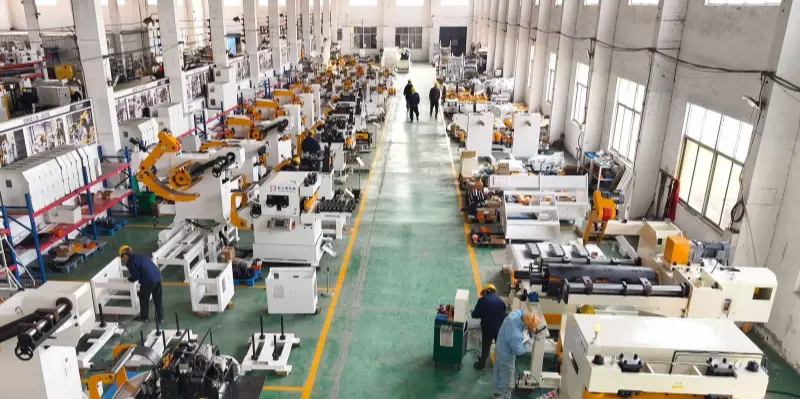
  • Industrial Power Distribution

    Used in factories and manufacturing plants to protect motors, machines, and main distribution panels.

    A very large factory workshop with high ceilings and rows of various metalworking machines, including lathes, milling machines, and CNC equipment. Workers in helmets and blue uniforms are operating machines along the green floor with yellow walkway lines. The space is filled with white and orange machinery, tools, and workstations under bright indoor lighting.
  • Commercial Buildings

    Installed in office buildings, malls, hospitals, and hotels for lighting, HVAC, and elevator protection.

    A spacious, multi-storey shopping mall interior with elegant curved escalators connecting several floors. The design features smooth white and beige architecture, glass railings, warm wooden ceiling panels, and bright overhead lighting. Shoppers walk along the walkways, while luxury and fashion brand stores.
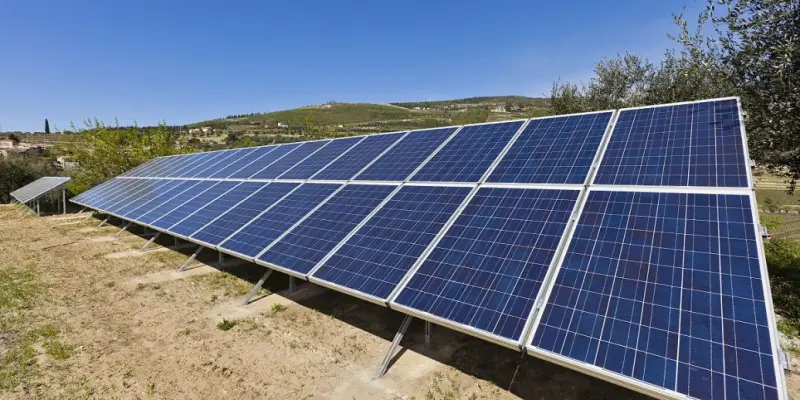
  • Renewable Energy Systems

    Applied in solar and wind power systems to protect inverters, combiner boxes, and AC/DC circuits.

    A large set of blue solar photovoltaic panels mounted on metal frames, installed on a grassy hillside. The panels are arranged in rows under a clear blue sky, with green olive trees, rolling hills, and a small village visible in the background.
  • Data Centers & IT Facilities

    Ensures safe and reliable power distribution for UPS systems, PDUs, and critical server equipment.

    A long row of tall server racks in a large data center, illuminated with bright blue LED lights. The room has a dark floor, blue glowing server panels, and a high ceiling with grid lighting.
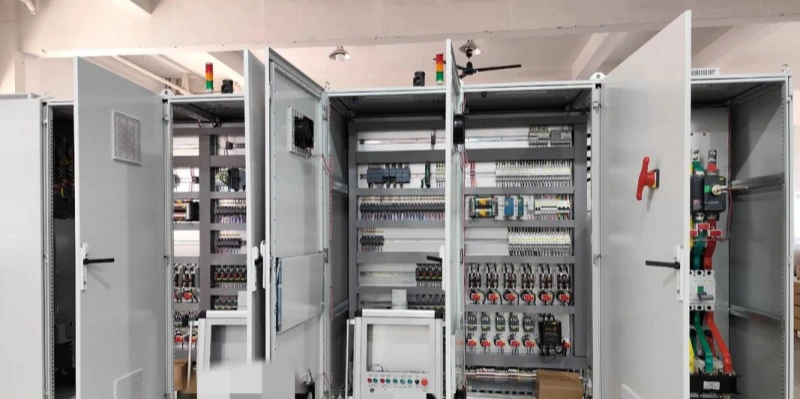
  • OEM Electrical Panels

    Widely used in switchboards, control panels, and automation systems built by OEM panel makers.

    Several large grey metal electrical control cabinets with open doors, revealing neatly organized internal components. Visible inside are rows of circuit breakers, terminal blocks, relays, wiring, contactors, and control modules. Red and green indicator lights, emergency stop buttons, and a small control panel with switches are mounted on the front. The setup is installed in an industrial indoor space with concrete floor and ceiling fans.
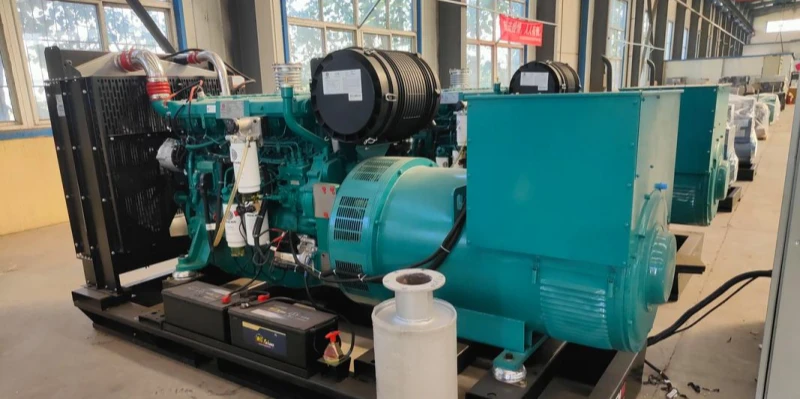
  • Generator & Backup Power

    Protects generator outputs and supports safe load transfer in backup power systems.

    Several large teal-coloured diesel generator units lined up inside a spacious industrial workshop. Each generator has a diesel engine, large alternator, black radiator fan, exhaust piping, control panels, and batteries mounted on a metal base. The floor is concrete, with natural light coming through windows in the background.
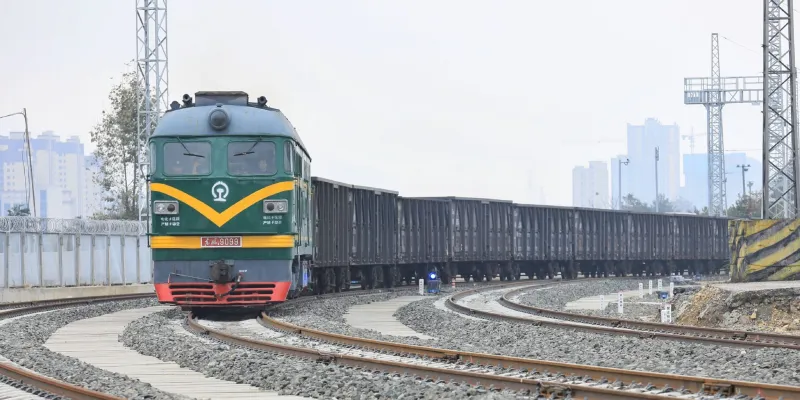
  • Infrastructure & Utilities

    Used in airports, railways, and water treatment plants for large-scale power distribution protection.

    A classic green freight locomotive with yellow and red stripes leading a long railway cargo train on curved tracks in a busy rail yard. The train consists of multiple black covered hopper cars running along railway lines with gravel ballast and overhead electric wires. Tall city buildings appear in the hazy distance under a cloudy sky, highlighting a typical railway transportation scene.
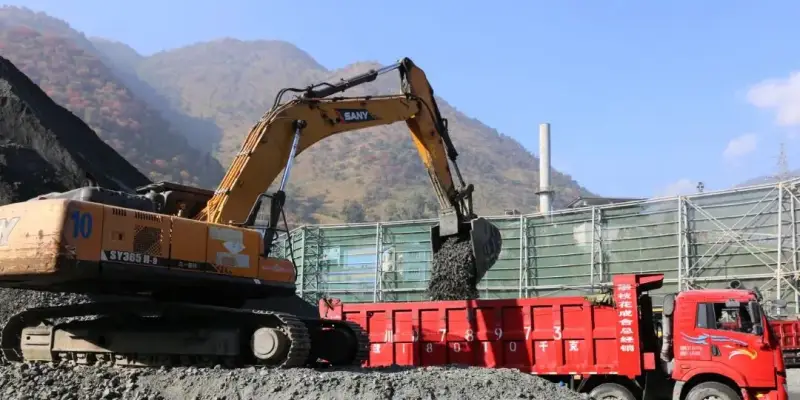
  • Marine, Mining & Harsh Environments

    Designed for ships, mines, and oil & gas sites where high durability and reliability are required.

    A bright yellow tracked excavator digging and loading=
Get a Quote

Why Choose Our MCCB?

Choosing a partner in power protection is about more than just products — it’s about trust, expertise, and long-term reliability. At Sincede, we are committed to combining innovation with responsibility, ensuring that every collaboration helps our customers achieve greater efficiency and confidence in their projects.

  • Quality Assurance

    Certified by CCC, CB, CE, and GB, our products meet the highest quality standards and we can get additional certificates according to customers’ needs.

  • Attractive Prices

    As a direct factory with 26 years, we offer great prices. We know how to keep costs moderate while still providing you with good-quality products.

  • Warranty

    We proudly offer a 1-Year warranty on all our products. If there’s any quality issue, we’ll take care of returns or exchanges to ensure you’re satisfied.

  • Certified Factory

    Our factory is ISO9001, ISO14001 and ISO45001 certified, ensuring we meet high standards for quality, environmental care, and workplace safety.

  • OEM / ODM / SKD

    We provide OEM and ODM services tailored to your needs. Additionally, we supply complete SKD parts for your easier assembly and cost savings.

  • All-In-House

    All of our products’ components are Made By Ourselves, allowing us to better control overall quality and consistently maintain the high standards we set.

  • Own Mold Crew

    We have our Own Mold Team made of 10 designers. This lets us customize quickly, save costs, keep quality steady, and adjust easily for production needs.

  • Easy Trial

    Our Low MOQ policy makes it easy for you to start working with us. You can test our products with a small trial order, reducing risk and upfront costs.

  • Proven Sucess

    We have been successfully working with big companies like Delixi, Tengen for years, which has made us true experts in handling large partnerships.

Case Studies: MCCB Solutions

German Industrial MCCB Upgrade Boosts Panel Reliability by 35%

By replacing aging circuit breakers with high-performance MCCBs, this mid-sized German manufacturer minimized unexpected downtime, cut annual maintenance costs by 50%, and improved energy efficiency, boosting overall operational reliability.

  • Location Frankfurt, Germany

  • Industry Electrical Equipment Mfg.

  • Company Type Mid-sized industrial supplier

  • Annual Production 5,000 Panels

The Challenge

The client was experiencing frequent downtime due to aging circuit protection devices. Existing MCCBs could not handle the growing load demands, leading to unexpected trips.

Identified Pain Points
  • ⚠️ Overload Trips: Existing MCCBs often tripped under moderate load, disrupting production schedules.
  • 🛠️ Maintenance Burden: Older devices required frequent inspections and replacements, significantly increasing labor costs.
  • 🔒 Limited Scalability: The previous system did not allow easy upgrades for higher-capacity circuits.
  • ⚡ Energy Inefficiency: Outdated MCCBs had higher internal losses, leading to increased operational costs.

Our Solution

We supplied high-quality MCCBs optimized for industrial loads, featuring intelligent thermal-magnetic protection. Staff received full training on preventive maintenance.

Reliability +35%Maintenance -50%Energy Cost -18%
Metric (Yearly) Before After
Maintenance Costs $120,000 $60,000
Energy Costs $45,000 $36,900
Downtime 320 Hours 208 Hours
"The new MCCBs have completely stabilized our distribution panels. Installation was smooth, and the training was excellent. We’ve seen real cost savings already."

Michael Bauer, Operations Manager

Egyptian Light Industrial Manufacturer Saves 22% on MCCB Costs and Cuts Lead Time to 2 Weeks

Facing rising prices of international circuit breakers, this medium-sized company successfully replaced MCCBs, achieving lower costs, faster delivery, and stable, reliable production.

  • Location Cairo, Egypt

  • Industry Light Industrial Mfg.

  • Company Type Electrical Assembly Plant

  • Annual Production ~12,000 devices

The Challenge

The client had long relied on high-end international MCCBs, but prices continued to rise and lead times were long, increasing operational costs. Key pain points included:

Identified Pain Points
  • 💰 Cost Pressure: ABB product prices rose ~18%, adding ~$60,000 per year in procurement costs.
  • 📦 Long Lead Times: International supplier lead time of 6–8 weeks impacted assembly and shipping schedules.
  • ⚡ System Reliability Requirements: Each device required at least 2 MCCB modules, and production stability could not be compromised.
  • 🔄 Bulk Procurement Challenges: Original supplier lacked flexible small-batch purchasing options, leading to inventory pressure and limited ability to respond to order fluctuations.

Our Solution

We provided IEC60947-2 compliant MCCBs to replace the original brand. They offer multiple current ratings, reliable protection, and a standardized interface for direct replacement. Flexible batch options reduced customers' inventory pressure, and the client installed them without on-site support.

Procurement Costs -22%Downtime -15%Lead Time -67%Inventory Flexibility: +500%
Metric (Yearly) Before After
Procurement Costs $270,000 $210,600
Lead Time 6 wks 2 wks
Downtime 200 hrs 170 hrs
Inventory Flexibility 500 units 3,000 units
"Switching to the new MCCBs has significantly lowered our costs, and lead times are much faster. Production line stability remained unaffected. This solution is ideal for a medium-sized company like ours, and flexible ordering helps us respond better to fluctuating demand."

Ahmed Salah, Operations Manager

Vietnamese OEM Reduces Assembly Time by 40% with SKD MCCB Supply and One-Stop Testing Support

By switching to SKD supply and outsourcing most of the assembly process, this OEM manufacturer simplified operations, reduced labor pressure, and launched production faster with a fully supported testing setup.

  • Location Ho Chi Minh City, Vietnam

  • Industry OEM Electrical Assembly

  • Company Type Small Contract Mfgs.

  • Annual Production ~18,000 LV distribution boxes

The Challenge

As order volumes grew, the client’s fully in-house assembly model became a growth bottleneck. All MCCB sub-assembly was handled internally, requiring skilled labor, long cycles, and separate sourcing of testing equipment.

Identified Pain Points
  • 🧑‍ High Labor Dependency: MCCB sub-assembly required experienced workers, making production difficult to scale and increasing labor costs..
  • ⏳ Long Assembly Time: Each unit required 25–30 minutes of assembly, limiting daily output capacity.
  • 🔍 Fragmented Testing Setup: Testing equipment had to be sourced separately, leading to inconsistent quality checks and delays.
  • 📦 Complex Supply Coordination: Components, accessories, and equipment were managed through multiple suppliers, increasing operational overhead.

Our Solution

We provided a complete SKD MCCB solution, pre-assembled up to the final step. The client only needed to install the cover and perform final inspection. We also sourced testing equipment to ensure standardized quality checks without managing multiple suppliers.

Assembly Time -40%Direct Labor Cost -28%Production Capacity +30%First-pass Test Success Rate +4.5%
Metric (Yearly) Before After
Assembly Time per Unit 28 min 17 min
Labor Costs $210,000 $151,000
Annual Output 18,000 units 23,400 units
First-Pass Test Rate 94.0% 98.5%
"The SKD supply model completely changed how we operate. We no longer need to manage complex MCCB assembly, and the testing equipment they sourced for us works perfectly. Now our team only focuses on final assembly and inspection, which made scaling much easier."

Nguyen Minh Tuan, Production Manager

FAQs About MCCB

MCCB Related Resources

Secure Your Power Needs Now!

No more delays. We’re here to power your project with reliable circuit breakers and fast service.

Photo gallery from our international guests' visit to Sincede Electric Factory: warm welcome with traditional Chinese tea in the office, friendly group photos with the team, guided tour through the production workshop, close-up inspections of electric components and samples, machinery in operation, casual team lunches, and final portraits in front of display cabinets and the modern factory floor.

Prefer to email us directly? You can contact us at: sincede.zhejiang@gmail.com