
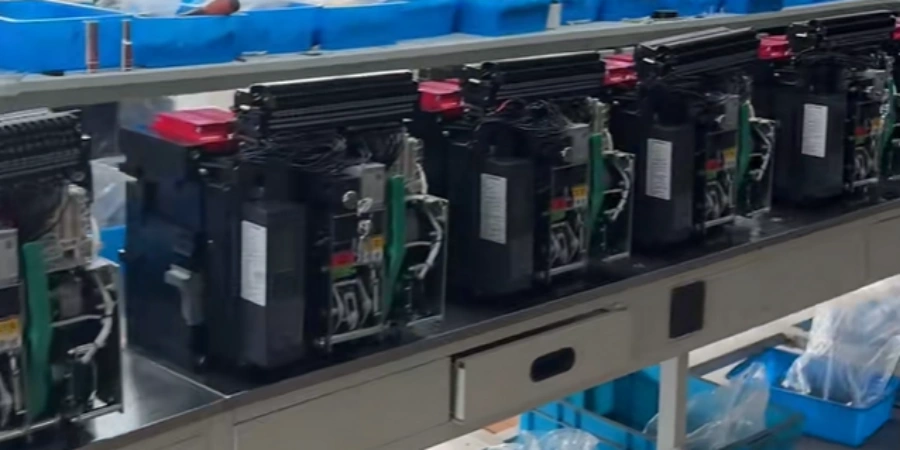
Sometimes, customers ask us, “Why can the same model of breaker have such different prices?” It’s a question we hear all the time, and it’s one that often surprises people who are new to buying ACBs. From our experience supplying different markets, it’s actually very common.
When we look closer, even the same model can have differences inside—different trip units, accessories, certifications, or even the way it’s sold. Those small details don’t show up on the label, but they can make a big difference in cost. Most customers don’t realize this until they compare quotes.
Over the years, we’ve learned that smart purchasing isn’t just about the numbers on the nameplate. Knowing what’s inside a breaker and how it’s configured helps avoid unexpected costs and ensures you get the right product for the job.
What "Identical" Actually Means in the ACB Market?
I’ve sat through more sales calls than I can count where a customer says something like, "We just need the same breaker — 400 A, 3-pole, 690 V, same as last time." And from their side, that makes perfect sense. The numbers match. The nameplate looks the same. So why is the quote different?
This is one of the most common points of confusion in the ACB market, and honestly, it’s easy to understand why the misunderstanding happens.
The Nameplate Is Just the Starting Point
When most buyers call two breakers "identical," they’re usually looking at the four core nameplate ratings: voltage, current rating, number of poles, and breaking capacity. These are the numbers that show up first on a datasheet and the ones that engineers typically specify on a bill of materials.
But the nameplate doesn’t tell the whole story.
It doesn’t tell you which certification standards the breaker has been tested and approved under. It doesn’t tell you whether the trip unit is a basic fixed-function type or an advanced electronic unit with adjustable settings. It doesn’t tell you whether the breaker supports communication protocols like Modbus or Ethernet, or whether it’s configured for a draw-out chassis or a fixed mount. It says nothing about the accessories installed — auxiliary contacts, shunt releases, motorized mechanisms — and it certainly doesn’t tell you which sales channel the unit is moving through or how many units the buyer is ordering.
All of these factors are things that the manufacturer’s pricing team looks at before a number is put on a quote. A 400 A, 3-pole, 690 V ACB from a global brand with IEC and UL dual certification, an advanced electronic trip unit with metering and Modbus, and a fully loaded accessory configuration is a fundamentally different product from a 400 A, 3-pole, 690 V ACB with a basic thermal-magnetic trip unit, no communication options, and a single IEC certification — even if both datasheets start with the same four numbers.
How the Industry Actually Differentiates Products?
Inside a mid-sized ACB manufacturer, the product catalog isn’t small. One frame size can have dozens of variants when you factor in trip unit types, pole configurations, certifications, accessories, and rated diversity factors for different markets. What looks like a single product to an end buyer is often five to fifteen separate SKUs internally.
This is important to understand because it reframes the whole question. When someone sees two quotes for the “same” breaker with a big price difference, the first thing to check is whether the two items are actually the same SKU — not just the same nominal rating. The price gap between two breakers with identical nameplate specs can be huge once you see what’s inside.
The short version: if you’re comparing ACBs by amps and voltage alone, you’re judging the cover of the book, not the content.
The Brand Premium
Not all 400 A, 3-pole, 690 V ACBs are created equal — even if their datasheets look identical. Often, the biggest difference isn’t the electrical specs at all; it’s the brand. A well-known global brand comes with a premium, and understanding what you’re really paying for can help avoid surprises.
Why Global Brands Cost More?
When you buy an ACB from Siemens, ABB, Schneider Electric, or Square D, you’re not just buying the device itself. You’re paying for:
-
The R&D behind the design
-
The testing infrastructure that validates it to multiple international standards
-
The global service and spare parts network that supports you years after purchase
-
The brand recognition that eases approvals from consultants, insurers, and inspectors
These aren’t just “nice-to-have” extras — they come with real costs that manufacturers build into the list price. A well-known brand also usually maintains tighter quality control and more consistent production, which matters when a breaker failure isn’t just inconvenient — it could be a safety incident or a major operational loss.
That said, the brand premium isn’t always proportional to performance. In less critical applications, or where budgets are tight, a regional or domestic brand with solid basic certification can reliably do the job at a lower cost.
Where Cost-Competitive Brands Fit?
Brands like CHINT, Hyundai Electric, and other Chinese manufacturers have built real positions in price-sensitive markets — particularly across Asia and other regions where the electrical infrastructure is expanding quickly and buyers are making volume purchases. In many cases, the electrical performance of a well-made regional-brand ACB can meet the same basic standards as a global-brand equivalent.
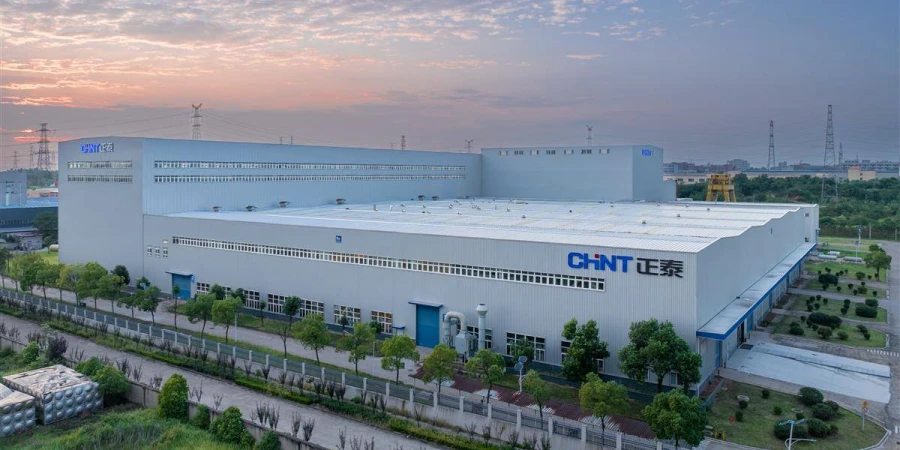
The price difference usually comes down to three things: perceived risk, after-sales support, and whether the product is accepted by the project’s approval chain. If a consultant or EPC contractor has specified a particular brand, substituting a cheaper option — even one with matching ratings — may not get approved regardless of how the specs compare on paper.
Here’s a rough comparison of what brand tiers typically look like:
| Brand Tier | Examples | Relative Price | Strengths | Considerations |
|---|---|---|---|---|
| Global Premium | ABB, Siemens, Schneider Electric, Square D | Highest | Broad certifications, global support, widely accepted | Higher upfront cost |
| Regional / Mid-Tier | Hyundai Electric, LS Electric | Mid-range | Good performance, regional support | Acceptance varies by project |
| OEM / Budget | CHINT, Delixi, various Chinese OEMs | Lowest | Cost-effective, adequate for basic applications | Limited approvals in some markets |
The right choice depends on the project requirements, not just the price. Contractor forums regularly discuss this exact tradeoff — and the consensus is usually that brand selection should follow the spec and the application first, with cost as a secondary filter.
Certifications and Compliance
One key note: even if two ACBs have the same electrical ratings, their certification portfolios can be very different. These differences affect how the breakers are made, which in turn impacts their cost and the price you ultimately pay.
What Certifications Actually Require?
Getting an ACB certified to a major standard isn’t just a one-time checkbox. It involves:
-
Type testing at accredited labs
-
Design validation under a range of operating conditions
-
Extensive documentation — sometimes thousands of pages
-
Periodic re-audits to maintain the certification
Each additional certification scheme — IEC 60947-2, UL 489, CE marking, CCC for China, and so on — adds its own layer of testing and compliance cost.
Manufacturers who pursue dual or triple certification are making a strategic investment. They’re betting that the broader market access and premium pricing will offset the upfront and ongoing compliance costs. This is why a breaker certified to both IEC and UL usually costs more than a functionally similar unit certified only to IEC.
The "Same Rating, Different Code" Problem
This issue comes up when buyers compare quotes for what appears to be the same product. Some manufacturers offer the same physical frame in different “code” versions — an IEC-only variant and a globally certified variant with IEC plus UL and CE. On paper, the specs may look identical. The price won’t be.

For buyers, this matters because the cheaper option may not be usable for certain projects. Many industrial projects — especially international or multi-region installations — require specific certifications as part of the project specifications. The high cost of air circuit breakers often comes down to exactly this: maintaining broad, multi-standard certification portfolios.
When a Cheaper Breaker Ends Up Costing More?
This is the part that surprises many people An uncertified or partially certified breaker may look very attractive on price — sometimes 30–50% cheaper than a fully certified equivalent. But if it fails inspection, causes issues during commissioning, or voids a panel warranty because it doesn’t meet the required standard, the replacement cost — plus project delays — often outweighs any upfront savings.
Electricians and project engineers who’ve faced this once become very specific about certifications on subsequent projects. It’s not about being brand-loyal; it’s about avoiding re-work costs that no one budgeted for. The certification question is one of the clearest examples of where the cheapest quote and the lowest total cost can be very different things.
A quick reference for common ACB certifications and what they cover:
| Certification | Region / Market | What It Covers |
|---|---|---|
| IEC 60947-2 | International | Standard low-voltage circuit breaker performance and testing |
| UL 489 | North America | Molded-case circuit breakers for branch circuit protection |
| CE Marking | European Union | Conformity with EU safety and EMC directives |
| CCC (China Compulsory Certificate) | China | Mandatory for products sold in the Chinese market |
| CB Scheme | International | Mutual recognition of test results across member countries |
Specification Differences Hidden Behind the Same Rating
Two ACBs can have the same current rating on paper but behave very differently in the field. This becomes clear when you look beyond the datasheet’s main numbers and consider the engineering inside.
Short-Circuit Breaking Capacity
The breaking capacity (kA) indicates how much fault current a breaker can safely interrupt. A 400 A breaker rated at 50 kA is very different internally from one rated at 85 kA. Higher kA requires stronger arc chambers, better contacts, heavier components, and more testing. These factors increase manufacturing costs, which are reflected in the price. Choosing a breaker with too low a kA rating to save money is a real safety risk.
Trip Unit: Fixed vs. Adjustable
Trip units control how the breaker reacts to overloads and faults. A basic fixed-trip unit offers preset protection for simple applications — reliable and low cost. Advanced electronic trip units allow adjustable settings for overload, short-circuit, instantaneous, and ground-fault protection. This flexibility is important in complex systems, where multiple breakers need coordinated protection.
| Trip Unit Type | Adjustability | Typical Use | Relative Cost |
|---|---|---|---|
| Thermal-Magnetic | Fixed | Simple distribution | Low |
| Basic Electronic | Limited | General industrial | Mid |
| Advanced Electronic | Fully adjustable | Complex systems | Higher |
| Intelligent / Communicating | Fully adjustable + metering + comms | Smart grids / critical facilities | Highest |
Communication and Metering
Intelligent ACBs with built-in metering, logging, and Modbus or Ethernet communication can cost $500–$1,500 more than basic units of the same frame. For facilities needing real-time monitoring or remote control, the extra cost is justified. For simple distribution boards, these features may be unnecessary. Knowing your project’s needs ensures the right spec — and a realistic budget.
Accessories, Trip Units, and Configuration Choices
One thing that surprises many people when they first browse an ACB catalog is how long the options list can get. What looks like a single product is often a configurable platform, and each option you add can shift the final price — sometimes more than you expect.
From a Base Unit to a Fully Loaded System
A bare ACB frame with a basic trip unit and no accessories is just the starting point. From there, configuration options branch out considerably:
-
Mounting type — Fixed-mounted breakers are simpler and less expensive. Draw-out versions allow the breaker to be removed from the switchboard for maintenance or replacement without shutting down the entire panel. That convenience comes at a premium, but it’s often required in critical applications where downtime is unacceptable.
-
Operating mechanisms — Motorized operating mechanisms let the breaker be opened or closed remotely, essential in automated or remotely monitored systems. Manual-only mechanisms are cheaper and sufficient where local operation is practical.
-
Releases and contacts — Shunt releases, undervoltage releases, and auxiliary contact blocks expand what the breaker can do in a protection scheme. Each one adds to the price.
The table below shows how a typical ACB price can grow as accessories are added:
| Configuration | Key Features | Indicative Price Uplift (vs. Base) |
|---|---|---|
| Base unit, fixed mount, basic trip | Minimal | Baseline |
| + Draw-out chassis | Removable from panel without shutdown | +15–30% |
| + Motorized mechanism | Remote open/close operation | +10–20% |
| + Shunt + undervoltage release | Extended protection scheme | +5–15% |
| + Advanced trip unit with metering | Energy monitoring, adjustable settings | +20–50% |
| + Communication module (Modbus/Ethernet) | BMS/SCADA integration | +10–30% additional |
These percentages compound. A fully accessorized draw-out ACB in a critical switchboard can realistically cost three to four times the base unit — and both would show the same current rating on a BOM if someone didn’t look closely.
Why Two “Same” Catalog Numbers Can Be Very Different SKUs?
This is where miscommunication often happens between buyers and suppliers. A customer might reference a model number from a previous project without specifying the options. The supplier quotes the base configuration. The customer expects the full spec from last time. Prices don’t match, and neither side immediately understands why.
Referencing the full catalog code — not just the model family or amp rating — is one of the simplest ways to avoid confusion. Most major manufacturers use structured catalog numbering where every option is encoded in the part number. If two part numbers don’t match character for character, the products aren’t the same — regardless of how similar the basic specs look.
Where You Buy It Changes What You Pay?
The same breaker — same brand, same full catalog number, same everything — can show up at three different prices depending on where and how it’s being purchased. This is one of the more confusing parts of the ACB market if you’re not familiar with how distribution and pricing strategy work.
How Project-Based and Volume Discounts Work?
Manufacturers don’t sell everything at list price. Large switchboard builders, panel assemblers, and OEM partners who buy in volume negotiate frame agreements that give them access to tiered pricing that standard buyers don’t see. These discounts can be significant — sometimes 30 to 50 percent off list — and they’re tied to purchase volume, product range commitments, and the strategic value of the buyer’s relationship with the manufacturer.
For a one-off replacement purchase, none of those discounts apply. The buyer pays something much closer to list price, through a distributor who has their own margin on top.
Contractor discussions illustrate this clearly. One example shows a 400 A Siemens breaker quoted at around $825 USD when purchased as part of a panelboard package, versus roughly $2,900 USD as a stand-alone replacement — with online retailers listing a similar new unit at around $725 USD. Same breaker. Very different prices. Different channels, different volumes, different pricing structures.
The End User vs. Contractor vs. OEM Pricing Gap
Here’s how the same product moves through different buyer tiers:
| Buyer Type | Purchase Context | Typical Net Price vs. List |
|---|---|---|
| End User (one-off) | Replacement, ad hoc purchase | Closest to list price |
| Electrical Contractor | Project-based, moderate volume | Moderate discount |
| Panel Builder / OEM | High volume, frame agreements | Significant discount |
| Large EPC / Utility | Strategic partner, bulk procurement | Deepest discount |
None of this means the system is unfair. Volume-based pricing is standard practice across most manufacturing industries. But it does mean that if you’re a facility manager buying a single replacement breaker and you see it quoted at $2,500, while a panel builder you know mentioned paying much less, the difference is structural, not a mistake.
Online Surplus vs. Authorized Distributors
Online sellers are a category of their own. Some operate on genuinely thin margins with new stock. Others specialize in surplus inventory — breakers removed from decommissioned panelboards, orverstock from cancelled projects, or liquidated equipment from closed facilities. These units can be in perfectly good condition and represent real value, but they may also lack current documentation, have unknown service history, or be discontinued models without available spare parts.
Authorized distributors, by contrast, include technical support, local inventory holding, warranty handling, and credit terms in their pricing. Whether that premium is worth it depends on what you actually need beyond the physical product itself.
Regional Markets and Local Competition
Geography has a bigger impact on ACB pricing than most buyers realize — and it’s not just about shipping costs or currency exchange rates.
How Region Shapes Pricing?
Different regions have different regulations, dominant brands, and cost structures for distribution and after-sales support. These factors combine to create regional list prices that can vary significantly even for the same product from the same manufacturer.
North America and Europe are high-value, regulation-heavy markets. Strict safety standards, liability concerns, and a preference for premium brands with documented quality systems keep average selling prices high. Technical support and after-sales infrastructure in these regions is well-developed — but expensive — which also drives up pricing.
Asia-Pacific is the fastest-growing ACB market globally, driven by industrial expansion and large-scale power infrastructure investment. But it also hosts a large number of domestic manufacturers, creating intense price competition in standard and mid-tier segments. Buyers in Southeast Asia can often access competitive products at price points that would be unusual in North America for equivalent specifications.
Tariffs, Import Costs, and Trade Policy
Trade policy adds another layer of complexity. Tariffs on electrical equipment — including adjustments affecting Chinese electrical exports to the United States in recent years — can significantly increase the landed cost of a product without changing the product itself. A breaker that costs $X ex-factory can end up costing much more after import duties, customs clearance, and logistics are added.
This is why regional price lists for the same global brand product can differ. Manufacturers set different list prices for each market to account for these structural cost differences. A buyer comparing a US-market quote to an Asia-Pacific market quote for the same model number may see a gap that has nothing to do with product differences and everything to do with tariff and distribution cost structures. The global ACB market dynamics make this especially visible in markets with active trade policy changes.
Market Forces That Drive Price Volatility
Even when everything else stays the same — same product, same brand, same channel, same region — ACB prices can still shift quarter to quarter. Market-level forces pricing in ways that individual buyers often don’t see coming until a quote comes back higher than expected.
A Growing Market Under Supply Pressure
The global air circuit breaker market was valued at approximately $4.2 billion USD in 2024 and is projected to grow at around 7.6% CAGR through 2034. The drivers behind this growth — grid modernization, industrial expansion, and integration of renewable energy infrastructure — are real and sustained, not just short-term spikes.
Rapid demand growth, particularly in Asia-Pacific, puts pressure on supply for popular frame sizes and ratings. When lead times stretch, spot-market prices for available stock rise. Buyers who have experienced a 16-week lead time extending to 24 weeks due to demand spikes know exactly how this plays out.
Raw Materials, Semiconductors, and Shipping
Intelligent ACBs with advanced electronic trip units rely on semiconductor components — the same supply chains that saw major disruptions in 2021–2022 and continue to experience periodic volatility. When semiconductor availability tightens, manufacturing costs for intelligent trip units rise, and those costs are reflected in product pricing.
Raw material costs — copper, silver for contacts, steel for the frame — also fluctuate with commodity markets. A sustained rise in copper prices or a spike in ocean freight rates for international shipping directly affects manufacturer cost structures.

The result is that two "identical" ACBs bought in different quarters of the same year can be quoted at noticeably different prices, not because anything changed about the product, but because the input costs shifted. Industry market data consistently points to these supply-side variables as a key driver of price volatility across low-voltage equipment.
Trade Policy as a Wildcard
Trade policy changes can also hit prices quickly and unexpectedly. For example, tariff adjustments on Chinese electrical exports to the U.S. have altered the competitive landscape for certain ACB categories, pushing some buyers toward alternative sourcing and changing the relative price positioning of domestic versus imported products.
For procurement teams managing multi-year projects or long-term service agreements, this volatility is a real planning challenge. Building price contingencies into project budgets — especially for larger, higher-spec ACBs — has become standard practice in markets with active trade policy changes.
Conclusion
ACB pricing can be tricky, but it doesn’t have to be confusing. Take the time to check configurations, certifications, and supplier channels. Think about your project needs and the long-term reliability of the equipment. A careful approach ensures safety, avoids costly mistakes, and gets you the right breaker for the right price.