
After working for years in the electrical industry, I’ve been asked countless times, “Why do we use AC instead of DC in our homes?” It’s a question that gets to the heart of how we power our lives. I recall a project electrifying a remote village where our team debated whether to use AC or DC for distribution. The discussion got heated, with solid arguments on both sides. That experience showed me this isn’t just a technical issue—it’s about choices that impact real communities.
We use AC instead of DC in homes because AC can be easily transformed to different voltages using transformers, making it efficient for long-distance power transmission and safer for household use.
There’s more to this than just wires and currents. The history, infrastructure, and future trends all shape why AC powers our homes. Let me share some insights from my time in the field to spark your curiosity about how this all works.
What Are AC and DC Currents?
You might wonder what makes AC and DC different. Without knowing the basics, it’s hard to see why one powers your home. Let me explain it simply.
AC, or Alternating Current, is electricity that reverses direction periodically, typically in a sine wave. DC, or Direct Current, flows steadily in one direction. Household electricity is mostly AC, while batteries and electronics use DC.

Understanding the Basics
Think of electricity like water in a pipe. DC is like a steady river, always flowing one way. AC is like ocean waves, moving back and forth. This back-and-forth motion in AC allows transformers to work, which we’ll explore later.
These differences aren’t just technical—they shape how we design power systems. In the late 1800s, AC and DC competed in the “War of Currents.” Thomas Edison backed DC, while Nikola Tesla pushed AC. This history set the stage for our modern grid.
In my work, I’ve seen these differences in action. Once, while upgrading an old building’s electrical system, we found DC components from decades ago. We had to ensure compatibility with the modern AC grid. Knowing the distinction saved us from costly errors. For anyone in the electrical field, understanding AC and DC is key to smart decision-making.
What Was the War of Currents?
The choice of AC over DC wasn’t just technical—it was a dramatic showdown. Why did AC win? Let’s look back.
In the late 1800s, AC and DC competed to become the standard for electricity distribution. AC won because it could be transformed to high voltages for efficient long-distance transmission.

The Rivalry
Edison championed DC, which powered his early inventions like the light bulb. But DC couldn’t easily change voltages, requiring thick, expensive wires for long-distance transmission. Tesla’s AC could use transformers to step up voltage, reducing losses, and step it down for safe use.
The “War of Currents” wasn’t just about technology. Edison tried to portray AC as dangerous, even staging animal electrocutions to scare the public. Despite this, AC’s efficiency won out, shaping our power grids.
In my career, I’ve worked on projects involving old DC systems in historic buildings. Knowing this history helped us modernize them to work with AC grids. It’s a reminder that past decisions still influence our work today.
(Related Reading: War of The Currents)
Why Does AC Excel in Power Transmission?
Why does AC deliver electricity to our homes so efficiently? The answer lies in its ability to handle long distances.
AC is more efficient for long-distance transmission because it can be stepped up to high voltages, reducing current and minimizing resistive losses in wires. DC requires complex equipment for voltage changes.
Reducing Energy Loss
Electricity loses energy as heat when traveling through wires, proportional to the square of the current (I² * R). By increasing voltage with transformers, AC reduces current, cutting losses significantly. For example, stepping up from 10,000 V to 100,000 V reduces losses by a factor of 100.
DC can’t use transformers, requiring costly converters for voltage changes, making it less practical for long-distance transmission.
In my previous job, My team helped design power lines for new developments. We focus on voltage levels to minimize losses, relying on AC’s efficiency. Here’s a comparison:
| Property | Alternating Current (AC) | Direct Current (DC) |
|---|---|---|
| Flow Direction | Alternates periodically | Flows in one direction |
| Transmission Efficiency | Efficient for long distances | Less efficient |
| Voltage Adjustment | Easy via transformers | Needs complex converters |
| Common Usage | Household and industrial power | Batteries, electronics |
How Do Transformers Enable Efficient AC Voltage Conversion?
Transformers are key to AC’s success. Why can’t DC do the same? Let’s find out.
Transformers work only with AC and allow voltage to be easily increased or decreased, enabling efficient transmission at high voltages and safe household use.
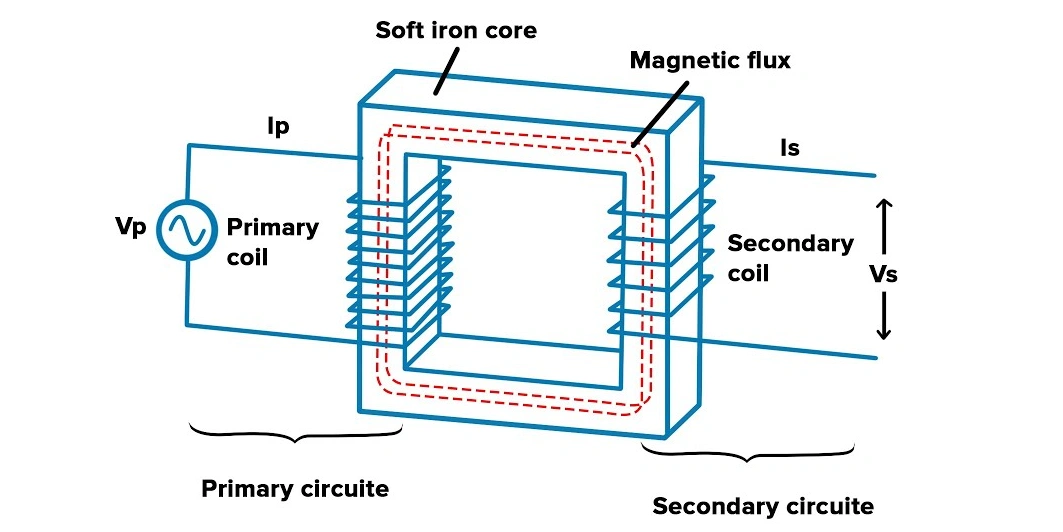
A transformer has two coils around an iron core. AC’s changing current creates a magnetic field, inducing voltage in the second coil. More or fewer turns adjust the voltage up or down. DC flows steadily, producing no changing magnetic field, so transformers can’t adjust its voltage. This limits DC’s practicality.
My uncle once troubleshot voltage fluctuations caused by a faulty transformer. Understanding how transformers work with AC helped us fix it quickly, ensuring safe power delivery.
Is AC or DC Safer for Household Use?
Safety is a top concern when powering homes. We all want electricity that won’t harm our families. But which is safer, AC or DC?
Voltage Conversion and Safety
Transformers allow AC to be reduced to safe levels, like 120V or 240V, for home use. DC requires complex, costly converters, which can be risky if not managed properly.
Infrastructure and Safety Features
AC systems have been refined for over a century, with circuit breakers, fuses, and grounding designed to prevent overloads and shocks. DC systems can have similar protections, but they’re less standardized and more complex.
Shock Hazards
When it comes to shocks, DC can be more dangerous because its continuous flow can cause muscles to lock, making it hard to let go of a live wire. AC’s alternating nature allows a brief moment at zero voltage, potentially easing release, though both are hazardous at high voltages. Household AC frequencies (50 or 60 Hz) are designed with safety in mind.
In short, while both AC and DC can be dangerous, AC’s ability to use transformers and its established safety systems make it the safer choice for homes.
What Are the Cost and Infrastructure Advantages of AC?
Cost is always a factor when powering homes. Beyond initial setup, what makes AC cheaper in the long run? Let’s break it down.
AC has cost and infrastructure advantages because global grids are built for it, maintenance is cheaper, and transformers reduce the need for expensive, thick wires.
Existing Infrastructure
The world’s power plants, transmission lines, and distribution networks are designed for AC. Switching to DC would require a complete overhaul, costing billions and causing disruptions. It’s like rebuilding every road for left-hand driving—possible, but impractical.
Transformers and Material Costs
Transformers allow AC to be transmitted at high voltages, using thinner, cheaper wires. DC needs thicker wires or costly converters, increasing material costs.
Power Generation and Maintenance
Most power sources, like coal, gas, and nuclear, naturally produce AC. Converting to DC adds steps and costs. Even renewable sources like solar generate DC, but they’re converted to AC for the grid. AC systems are also easier to maintain due to their maturity and widespread expertise.
Device Compatibility
Most appliances are designed for AC. While many devices convert AC to DC internally, switching to DC would require redesigning or adding converters, raising costs.
In summary, AC’s cost advantages come from its established infrastructure, transformer efficiency, and compatibility with existing systems.
Can Homes Run Entirely on DC?
With electronics and renewables on the rise, you might wonder if homes could run on DC alone. It’s an interesting idea, but is it practical?
Technically, homes can run on DC, but it’s not practical due to inefficient long-distance transmission and the need for complex voltage conversion systems.
Feasibility of DC Homes
To power a home with DC, you’d need a DC source like batteries or solar panels, and all appliances would need to be DC-compatible or use converters. Many modern devices already use DC internally, but large appliances like fridges and air conditioners are designed for AC, requiring costly modifications.
Off-Grid vs. Grid-Connected Homes
In off-grid setups, like remote cabins, DC from solar panels or batteries is common. These systems often use inverters to convert DC to AC for standard appliances. A fully DC home could skip inverters, saving some energy, but grid-connected homes rely on AC from power plants, requiring conversion to DC, which adds complexity.
Transmission and Infrastructure Challenges
As we discussed, AC is better in long-distance transmission. DC would need high-voltage DC (HVDC) systems, which are expensive and complex. Current electrical codes and safety standards are also built for AC, requiring new regulations for DC.
Flexibility and Cost
AC’s transformers offer flexible voltage changes. DC systems need converters, which are less efficient and pricier. While DC homes are possible in niche cases, widespread adoption isn’t practical due to these challenges.
What Role Does DC Play Today?
Despite AC powering homes, DC is everywhere, from phones to solar panels. What makes DC so vital in modern tech?
DC powers most electronics internally and is generated by renewable sources like solar panels, making it essential for modern devices and green energy systems.
Electronics and DC
Devices like smartphones and computers use DC because digital circuits and chips work best with steady current. AC is converted to DC using [rectifiers], adding complexity but ensuring compatibility.
Renewable Energy and DC
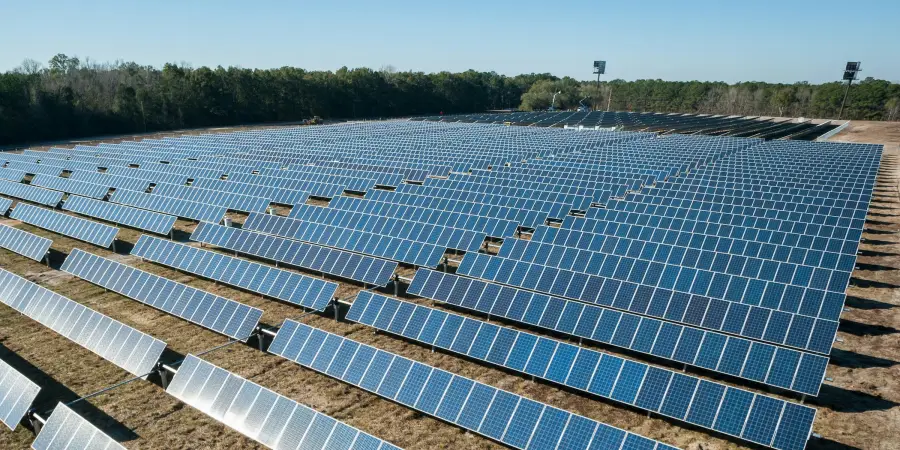
Solar panels generate DC directly from sunlight. Wind turbines produce AC but often convert it to DC for storage or transmission. Batteries, used in homes or electric vehicles, store DC.
Efficiency Gains
DC microgrids in homes with many electronic devices can reduce conversion losses, which can be 10-20% when switching from DC to AC. LED lights also run on DC, benefiting from direct power.
Electric Vehicles and Data Centers
Electric vehicles use DC for batteries and motors, requiring DC charging stations. Data centers use DC internally for servers, improving efficiency. While AC dominates grids, DC is growing in specific applications.
Is DC Making a Comeback in Homes?
With talk of renewables and efficiency, you might hear DC is making a comeback. Is this real or just hype?
DC is gaining traction in renewable energy and efficient buildings, but it’s unlikely to replace AC entirely due to infrastructure challenges.
Growth Areas for DC
Renewables like solar generate DC, and keeping it as DC longer avoids conversion losses. Data centers use DC distribution to save energy. Electric vehicle charging stations deliver DC directly to batteries. Smart homes with DC systems for lighting or HVAC are also emerging.
Limitations of DC’s Comeback
Despite these trends, AC remains dominant due to its transmission efficiency and established infrastructure. DC microgrids may grow in niche applications, but a full shift is unlikely.
Comparison Table
| Application | AC Advantage | DC Advantage |
|---|---|---|
| Long-Distance Transmission | Efficient with transformers | Requires costly converters |
| Electronics | Converted to DC internally | Native compatibility |
| Renewables | Grid-compatible | Directly generated |
Conclusion
AC powers homes due to its efficiency in long-distance transmission, cost-effective infrastructure, and historical dominance. While DC is vital for electronics and renewables, AC remains the standard. This balance of history, technology, and practicality ensures AC will light our homes for years to come.