
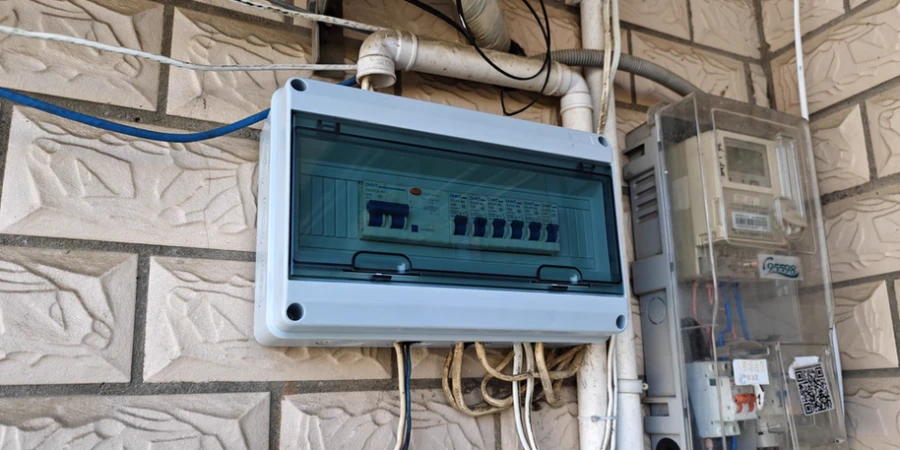
Water and electricity don’t mix—yet we often underestimate just how dangerous their combination can be. A small leak or even persistent humidity can quietly turn an everyday electrical panel into a hidden hazard. The results aren’t always immediate, but they can be serious.
Think of your circuit breaker as a carefully designed system with paths that electricity should follow. Introduce water, and those paths can suddenly disappear, replaced by shortcuts that shouldn’t exist. That’s when sparks, shocks, or worse can happen—often before you even realize there’s a problem.
It’s easy to assume that minor moisture is harmless. But the truth is, even a little water can compromise safety, cause fires, and lead to costly repairs—let’s take a closer look at how it affects your electrical system.
The Dangers of Water and Electricity
Water changes everything about how electricity behaves in a circuit breaker system. The fundamental issue is that water is highly conductive. Even small amounts of moisture can create pathways for electricity where it shouldn’t go.
Think of it this way: your circuit breaker is designed with very specific paths for electricity. When water gets in, it creates unauthorized shortcuts—and that’s when things get truly dangerous.
The Immediate Shock Hazard
The most obvious risk is electrocution. When water enters a circuit breaker box, it can form conductive bridges between live components and the metal enclosure. Touching a wet panel in that state completes the circuit—and the results can be fatal.
What many people don’t realize is that standing water isn’t necessary for this risk. Even high humidity can leave enough moisture on components to pose a serious risk. In coastal areas or regions with persistently high humidity, this is a constant concern.
Fire Risks That Keep Me Up at Night
The fire risk is what really concerns me, though. According to research on electrical fires, electrical malfunctions caused approximately 24,200 residential fires in 2021 alone, resulting in 295 deaths and roughly 900 injuries. Water damage can make these numbers even worse.
Here’s how it works: when water compromises insulation, electricity can flow where it shouldn’t. This generates heat—sometimes a lot of it. The water itself may eventually evaporate from that heat, but by then the damage is done. Insulation is weakened, connections are corroded, and you’ve got a ticking time bomb.
The really scary part is that these conditions can happen without triggering the circuit breaker’s protective mechanisms. Breakers are designed to detect certain faults, but water damage can create problems that go unnoticed until it’s too late.
The Financial Impact
Let me put this in perspective with some numbers. According to FEMA data, just one inch of water in a typical home can cause up to $25,000 worth of damage. When water reaches your electrical panel, you’re not just looking at the cost of replacing the panel itself—you’re dealing with potential fire damage, water damage to other systems, and the cost of emergency repairs.
| Risk Type | Immediate Danger | Long-Term Impact | Average Cost |
|---|---|---|---|
| Electrocution | Fatal shock hazard | Ongoing safety risk | Medical/legal costs |
| Fire | Property destruction, injury | Complete system replacement | $25,000+ per incident |
| Equipment Failure | Loss of power | Frequent repairs, downtime | $2,500-$15,000 |
Looking at these numbers, the financial argument for waterproof protection becomes clear. Investing in proper waterproof enclosures upfront costs only a fraction of what you’d spend dealing with water damage later.
How Water Damages Circuit Breakers?
Over the years, I’ve seen plenty of water-damaged circuit breakers, and the destruction isn’t always dramatic or obvious. Sometimes it’s subtle—a bit of rust here, some corrosion there. But don’t let that fool you. Even minor water intrusion can trigger a chain reaction of failures that worsens over time.
water doesn’t just cause one problem—it sets off a cascade of interconnected failures. Understanding this cascade helps you see why prevention is far better than trying to fix things after the fact.
Insulation Breakdown: The First Domino
The first thing water attacks is insulation. Electrical wiring and components are wrapped in insulation for a reason—it keeps electricity contained within its intended path. When water penetrates this insulation, it reduces the material’s dielectric strength. In simple terms, that means the insulation stops doing its job.
I’ve seen water-damaged breakers in recycling facilities, and you can actually see the degradation. The insulation becomes soft, discolored, and in severe cases, it starts to separate from the conductor. Once that happens, you’ve got exposed wires, and current can jump to nearby metal components. This is how short circuits happen—and remember, these shorts don’t always trip the breaker right away, which is what makes them so dangerous.
Corrosion: The Silent Killer
Here’s where things get really sneaky. Even if you dry out a wet circuit breaker, corrosion damage continues to progress. Water—especially if it contains minerals or contaminants—leaves behind residues that accelerate metal degradation.
Inside a circuit breaker, you’ve got metallic contacts, copper bus bars, steel springs, and various other components. When water reaches these metals, corrosion begins almost immediately. There are several types of corrosion:
-
Surface Corrosion – the most familiar form, seen as visible rust on metal surfaces. It increases electrical resistance at connection points, leading to heat buildup during normal operation. Over time, that heat accelerates further degradation, creating a self-reinforcing cycle of damage.
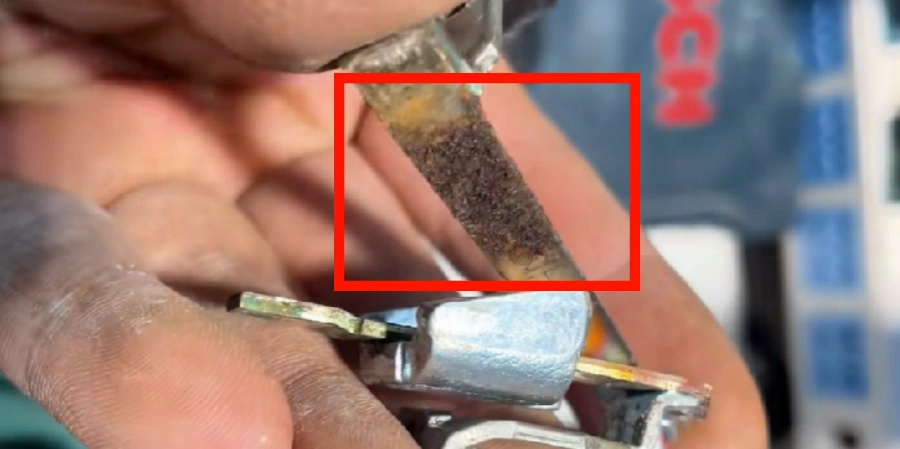
Corroded Bimetal Strips from MCCB Due to Moisture -
Galvanic Corrosion – occurs when water forms an electrolytic bridge between dissimilar metals. This process can gradually destroy the copper traces on modern “smart” breaker circuit boards, as electrochemical reactions cause the metal to dissolve at a microscopic level.
-
Dendritic Corrosion – perhaps the most unusual form. Metal ions migrate through moisture and grow into tiny, tree-like structures called dendrites between electrical connections. These dendrites create unintended conductive paths, leading to unpredictable malfunctions. A breaker may appear to work normally for weeks after water exposure, then suddenly fail once a dendrite bridges two critical points.
Condensation: The Hidden Threat
This is the one that catches people off guard. You don’t need external water intrusion to have moisture problems. Condensation inside electrical enclosures can be just as destructive, and it’s often completely invisible until the damage is done.
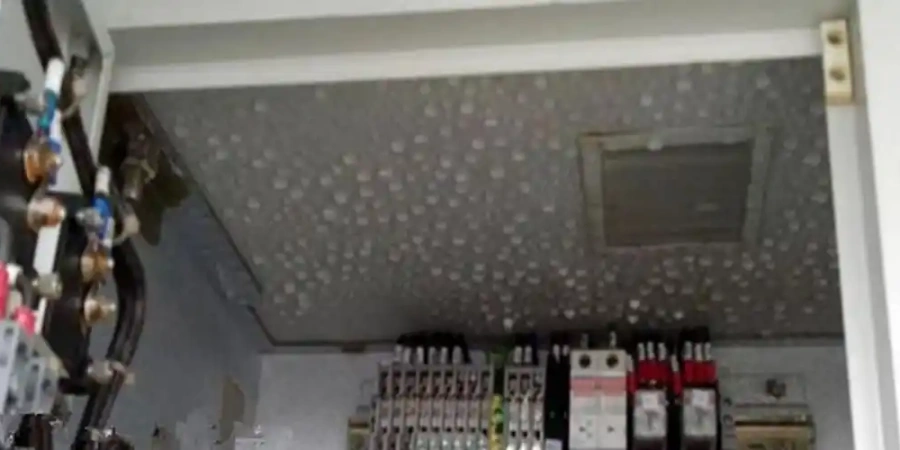
Here’s how it happens: humid air enters the enclosure. When temperatures drop—at night or with weather changes—moisture condenses on cooler surfaces inside the box. Wires, contacts, and circuit boards all become coated in tiny droplets.
| Damage Type | Onset Time | Visibility | Repair Possibility |
|---|---|---|---|
| Insulation Failure | Immediate | Moderate | Replacement required |
| Surface Corrosion | Days to weeks | High | Sometimes salvageable |
| Galvanic Corrosion | Weeks to months | Low (microscopic) | Usually requires replacement |
| Dendritic Growth | Weeks to months | Very low | Replacement required |
| Condensation Damage | Ongoing | Low until failure | Prevention is key |
Even when equipment appears dry, water-damaged components can pose long-term safety risks. The Electrical Safety Foundation International emphasizes that dried-out breakers may still fail months later. That’s why replacement is usually recommended.
In harsh environments where moisture is inevitable, the quality of the breaker’s internal components matters even more. Superior plating and material selection can significantly extend the lifespan of your equipment.
The Domino Effect
The worst part about water damage is how one problem leads to another. Corroded connections create heat. Heat accelerates more corrosion. Weakened insulation allows more current leakage. Current leakage creates more heat. It’s a feedback loop that only gets worse over time.
I’ve seen panels that looked okay after minor water exposure, only to fail catastrophically six months later. The damage was already done—it just took time for the effects to compound to the point of failure. This is why being proactive about waterproofing is so important. Once water gets in, you’re already behind.
Conclusion
Water and electricity teach a simple lesson: the smallest things can have the biggest consequences. By pausing to notice potential risks, we move from chance to control, turning everyday spaces into safer places for everyone.
To ensure your projects are built to withstand these challenges, explore Sincede’s industrial-grade circuit protection solutions designed for safety and durability.