
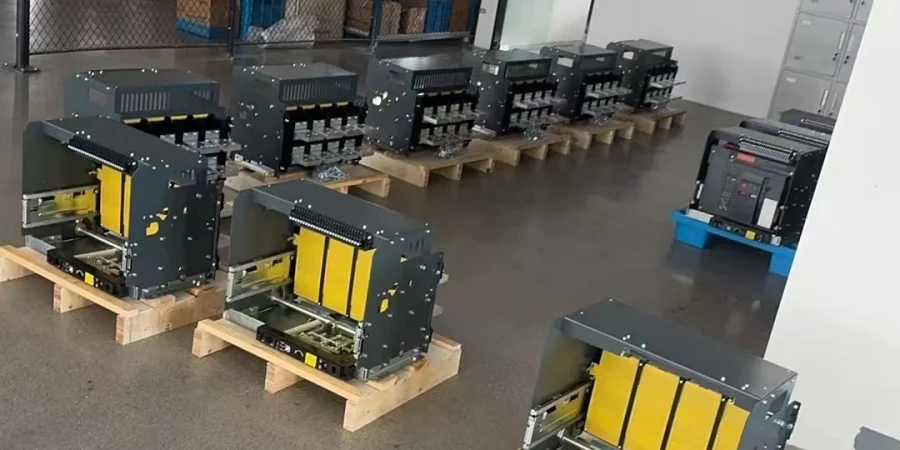
If you’ve ever looked at low-voltage circuit breaker prices, you’ll notice that air circuit breakers (ACBs) are a lot more expensive than other types. That difference is clear, even to experienced buyers, and it naturally makes you wonder why the cost is higher.
Even when comparing breakers of the same current rating, ACBs consistently come with higher price tags. The numbers stand out on a quote, not because they’re surprising, but because they are noticeably above the rest. That gap alone is enough to make you pause and take a closer look.
That price difference sparks curiosity. It makes you want to understand what’s behind the numbers and whether the higher cost really matters for your systems.
How Much Do Air Circuit Breakers Cost?
Let me be honest—ACB prices can be surprising if you’re not prepared. Air circuit breakers sit at the high end of the low-voltage protection market, and once you understand the cost drivers, the numbers begin to make more sense.
Current market quotations show a wide range depending on frame size, breaking capacity, and configuration. For mainstream industrial brands, a 1600–2000A fixed-type ACB typically falls in the range of $1,800–$3,000 per unit for standard electronic trip versions.
Move up to a 3200–4000A frame, and prices commonly range from $3,500–$7,000, especially when higher breaking capacities (65kA–100kA) are required.
At the top end, 6300A withdrawable ACBs—particularly those with advanced electronic trip units, metering, and communication modules—often range from $8,000 to $15,000 or more, depending on brand and specification. Premium international manufacturers may price even higher.
These figures reflect the breaker itself only—ex works or wholesale pricing. They do not include shipping, duties, local distribution margins, or panel integration. Once installed into a main switchboard, complete with busbar systems, protection coordination, testing, and commissioning, a breaker that costs $5,000–$8,000 at the equipment level can easily become part of a $20,000–$40,000 fully integrated distribution section in a commercial or industrial project.
The Market Landscape
The air circuit breaker market continues to grow despite these prices. According to industry projections, it was valued at about $5.11 billion in 2024 and is expected to reach $8.16 billion by 2030. That growth matches what I’ve seen in our own order books. Facility managers and electrical engineers aren’t walking away from ACBs—they’re choosing them because other options simply don’t meet their requirements.
Brand reputation also has a strong influence on pricing. Established global manufacturers like ABB, Schneider Electric, Siemens, and Eaton command premium prices based on decades of trust and performance. At the same time, the market has expanded to include manufacturers such as Sincede, offering ACBs in the $500–5,000 range. That gives buyers more flexibility. In procurement meetings, I’ve seen teams carefully weigh brand premiums against their actual technical needs and risk tolerance.
One final point I always share: these prices don’t stay still. Raw material costs have been volatile, especially copper, which has averaged close to $12,000 per metric ton in 2025–2026. Manufacturers often adjust pricing quarterly, and sometimes even more frequently when material costs spike. We’ve had periods where we had to secure materials months in advance just to honor previously quoted prices.
Why Air Circuit Breakers Cost More Than Other Breakers?
Some beginners might ask: "Why can’t I just use a bigger MCCB instead?"
It’s a fair question, especially when you compare the prices. A molded case circuit breaker handling 630-800 amperes might cost $300-600, while an ACB at similar current ratings starts at several times that amount. But the difference isn’t just about current capacity.
ACBs are typically used in applications starting around 800–1000A and above. They provide overcurrent protection for low-voltage systems under 450V, and many models also handle applications up to 1000V and beyond. The real difference becomes obvious when you look at how they’re built.
MCCBs are compact devices with the entire mechanism sealed inside a molded insulating case—that’s where the name comes from. This sealed design keeps manufacturing costs lower and makes them ideal for distribution boards and smaller feeders.
ACBs, on the other hand, use an open construction with accessible and serviceable components. That openness isn’t a weakness—it’s a feature.
During a plant tour for our customers, I showed them how an ACB’s arc-chute assembly can be inspected and serviced. You can check contact wear, examine the arc plates, and verify the operating mechanism without replacing the entire breaker. That’s simply not possible with most MCCBs, which are sealed for life.
This serviceability dramatically extends operational life. We have customers still running ACBs installed in the 1990s, operating reliably with proper maintenance. That kind of lifespan is rare with MCCBs.
Breaking Capacity and Fault Current Reality
One of the most overlooked differences is breaking capacity.
High-performance MCCBs may be rated up to 50–70 kA. That sounds impressive—until you calculate the available fault current in a large facility’s main switchboard. I’ve reviewed studies where main bus fault currents exceeded 100 kA. In those cases, an ACB rated for 120–150 kA breaking capacity isn’t nice-to-have—it’s the minimum safe requirement.
Adjustability is another major advantage. Most MCCBs offer limited or no adjustment of their trip characteristics. You choose a fixed or slightly adjustable trip curve, and that’s what you live with.
ACBs, however, typically include advanced electronic or microprocessor-based trip units. These allow precise adjustment of overload protection, short-circuit response, ground fault protection, and timing delays. I’ve been in coordination meetings where engineers discussing settings to achieve selective tripping—making sure only the breaker closest to a fault trips while the rest of the system stays energized. That level of coordination simply isn’t possible with fixed-trip MCCBs.
Air circuit breakers are typically used for main distribution panels and critical feeders where high current, high breaking capacity, adjustable protection, and remote control monitoring are needed.
The comparison chart makes the practical differences clear:
| Feature | MCCB | ACB |
|---|---|---|
| Current Range | Up to ~3200A | 800A-6300A+ |
| Breaking Capacity | Up to 70 kA | Up to 150 kA |
| Adjustability | Limited/None | Fully adjustable trip curves |
| Serviceability | Sealed, replace at end of life | Open, serviceable components |
| Typical Applications | Sub-distribution, feeders | Main distribution, critical incomers |
| Monitoring/Communication | Rarely available | Standard on modern models |
| Typical Price Range | $50-2000 | $500-9000+ |
Raw Materials and Supply Chain Pressures
I still remember the internal meeting in early 2025 when our purchasing manager showed us the copper price charts. The trend was hard to ignore—prices had been climbing steadily, and the forecasts offered little relief. What really caught everyone’s attention was his reminder that copper makes up roughly 25–30% of the total material cost of a typical ACB. When copper prices move, our entire cost structure moves with them.
Copper is expected to average close to $12,000 per metric ton in 2026, a sharp increase compared to historical levels. And ACBs use a lot of copper. The main busbars, contact assemblies, terminals, and other current-carrying parts are made from copper or copper alloys. A 4000A ACB can contain 40–60 kilograms of copper. At around $12 per kilogram, that’s $480–720 in raw copper alone—before processing, machining, assembly, or scrap allowance. For a breaker that wholesales at $3,000, that’s a major share of the cost.
Copper isn’t the only concern. Steel forms the frame and many mechanical parts. Aluminum is increasingly used in bus systems and housings. The World Bank’s base metal price index is projected to rise by nearly 2% in 2026–2027, with aluminum, nickel, tin, and copper seeing some of the largest increases. These aren’t abstract market trends—they show up directly on our bill of materials and affect what we ultimately have to charge.
The Supply Chain Reality
Material pricing is only part of the story. In 2025, we also faced extended lead times for specialized components, especially the high-grade electrical copper used in contact systems. ACB contacts have strict material requirements. You can’t switch to lower-grade copper and expect the same conductivity, heat performance, or contact life. I’ve watched purchasing teams scramble to secure allocations from approved suppliers, sometimes paying extra money just to keep production on schedule.
Demand pressures add another layer. Electrification projects, AI-driven data centers, renewable energy, and defense investments are all pushing up copper demand. Even when sourcing from local suppliers, domestic prices are influenced by global trends. When international copper prices rise, local suppliers often adjust their pricing, which flows through to our material costs.
Tariffs have a more indirect effect. While they may not directly affect our raw material sourcing, international trade policies can still influence export markets, logistics costs, and overall pricing strategies. So even with stable local supply, these global factors remain part of the broader pricing environment we monitor.
What’s Inside an ACB That You’re Paying For?
There’s always a moment during factory tours when visitors see an ACB with its covers removed—their eyes immediately widen. The complexity is striking: layers of arc-chutes, spring-loaded mechanisms, massive copper busbars, auxiliary contacts, trip unit electronics, position indicators, and intricate mechanical linkages all working together. One engineer jokes that an ACB is “a Swiss watch married to a bulldozer,” and honestly, that’s not far off.
The Arc-Chute Assembly
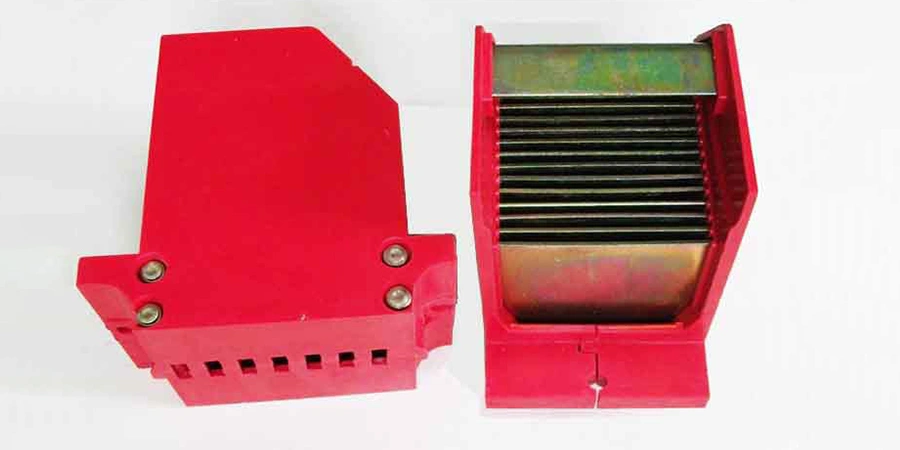
The arc-chute assembly alone demonstrates much of the engineering sophistication. Interrupting a high-fault current isn’t just opening a switch—it’s dealing with an electrical arc that can exceed 10,000°C. At these temperatures, the arc wants to keep conducting, so it must be extinguished safely and quickly.
ACBs use multi-stacked metal or insulated plates arranged to divide the arc into smaller segments, cool them rapidly, and blow them out using magnetic forces generated by the fault current itself. The spacing, material choice, geometry, and magnetic properties of these plates are all carefully engineered. Get any detail wrong, and the breaker can fail to interrupt the fault—or even damage itself in the process.
The Contact System and Mechanism
The main contacts are substantial pieces of engineering. Unlike small residential breaker contacts, ACB contacts are large copper or silver-alloy components designed to carry continuous currents of 1,000–6,300A while withstanding repeated mechanical and thermal stress. During maintenance, technicians inspect for pitting, erosion, and discoloration, which indicate wear. The contact pressure springs must maintain consistent force over thousands of operations, and the mechanism linkage must overcome magnetic forces that try to hold the arc closed.

The operating mechanism is another major cost driver. Most modern ACBs use a stored-energy system with heavy-duty charging springs. Closing the breaker first charges the springs, which then drive the contacts closed at high speed. This ensures consistent performance regardless of how slowly the handle is operated. The mechanism includes an over-toggle design that snaps contacts fully open or closed—there’s no stable middle position. This “trip-free” feature ensures that even if someone holds the handle, the breaker will trip when protection detects a fault. Every spring, latch, trip bar, and linkage must be precisely manufactured and assembled.
ACBs in the 1,000–6,300A frame size can achieve ultimate breaking capacities up to 120 kA at 400V and short-time withstand currents up to 100 kA. Withdrawable versions add another complete subsystem: the racking mechanism, isolation shutters, primary and secondary disconnects, and position interlocks. The draw-out carriage alone is a feat of mechanical engineering, built to operate safely and reliably through thousands of cycles.
Material and Manufacturing Precision
Materials selection directly affects cost. High-conductivity copper for busbars and contacts, specialized alloys for arc resistance, high-strength steel for the frame, and engineered plastics with specific arc-tracking resistance and flame ratings for insulation—none of it is cheap. Even minor changes in copper purity or alloy composition can impact contact life and breaking performance, which is why substitutions require extensive testing.
Manufacturing precision matters more than most realize. Contact alignment must be within tight tolerances for even wear. Arc-chute assemblies must be positioned accurately. Units that fail dimensional or functional checks are reworked, adding labor costs but ensuring reliability. When you’re building a device that might operate only once in a lifetime during a major fault—but absolutely must work—there’s no room for marginal quality.
Standards, Testing, and Certification Requirements
Air circuit breakers must pass extensive—and expensive—testing before they can be sold, and every test contributes to the price you pay. IEC 60947-2 sets the performance, safety, and testing requirements for ACBs in low-voltage systems (≤1000V AC or ≤1500V DC). It covers key parameters like rated current, short-circuit breaking capacity, and overload protection. Compliance isn’t optional if you want to sell in most markets.
I’ve joined test planning meetings for new ACB models, and the type-testing program is intense. It starts with verification tests to confirm that the breaker meets its rated specifications under normal conditions. Then come the short-circuit breaking tests, where things get dramatic. The breaker must interrupt its rated ultimate breaking capacity (Icu) multiple times under different power factors, simulating various fault types. We send sample breakers to independent labs equipped to deliver 100+ kA fault currents. If a breaker fails—whether it can’t interrupt the fault, shows excessive contact erosion, or has safety issues—the design goes back to the drawing board.
The Testing Investment
The short-time withstand test is particularly demanding. The breaker must carry a high fault current for a set duration (typically 1-3 seconds) without tripping instantly, providing it can withstand the mechanical and thermal stresses while upstream protection operates. Temperature rise tests verify that the breaker won’t overheat under continuous at rated current. Dielectric tests confirm insulation integrity at specified test voltages. Mechanical endurance tests cycle the breaker thousands of times to verify long-term mechanism durability.
Each of these test programs can cost tens of thousands to hundreds of thousands of dollars depending on the breaker rating and the laboratory. And these are type tests that must be done for each breaker design. Any significant design change—different arc-chute, revised mechanism, or updated trip unit—can require retesting. Production testing adds another layer, as every manufactured unit undergoes an abbreviated sequence to confirm it meets specifications. All these testing costs are spread across production but remain a real expense.
Certification and compliance documentation add further expense. Technical files must track design details, materials, test results, quality procedures, and manufacturing controls. Certifications need periodic renewal and surveillance audits. Selling internationally can require multiple approvals—IEC certification, UL listing, and various national approvals, each with their own requirements and costs. Our team maintains a detailed calendar to track all requirements, fees, and audit deadlines.
Standards Drive Design Conservatism
Standards compliance also impacts design choices. Once an ACB design is approved and type-tested, manufacturers are cautious about changes because any modification can trigger retesting. This leads to conservative design decisions: sticking with proven processes and materials even when newer, potentially cheaper alternatives exist. Innovation continues, but deliberately and measuredly. The customer ultimately pays for this conservatism—receiving mature, reliable products that cost more to develop than they would in a lightly regulated environment.
Smart Features and Intelligent ACB Technology
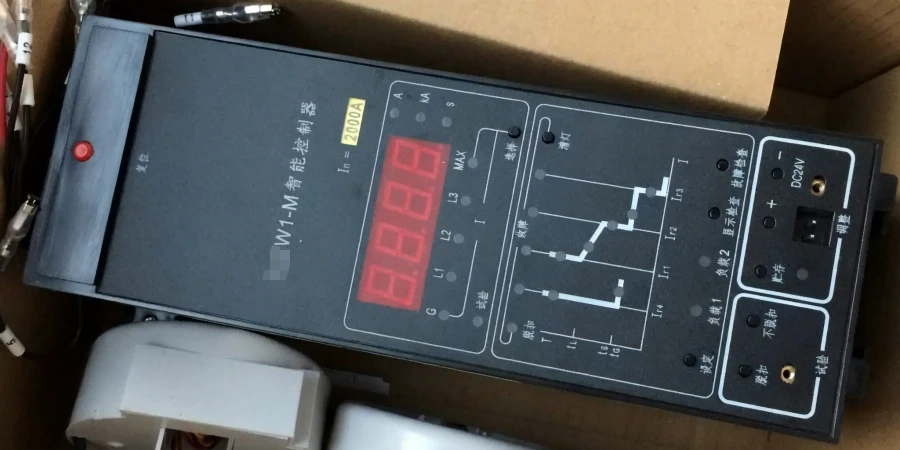
Air circuit breakers are becoming increasingly intelligent. Today’s smart ACBs combine advanced trip units with communication capabilities, which adds both functionality and cost. These breakers use sensors to measure current and analyze it in real time, letting users program protection settings.
You can adjust trip points, time delays, ground fault sensitivity, and inrush current limits. This goes far beyond a simple on-off switch, and achieving it requires careful software design, user interface development, and thorough testing.
Monitoring and Communication
Beyond protection, smart ACBs provide detailed system visibility. They can monitor voltage, current, power, energy, and even harmonics, essentially acting as built-in power meters. Communication features allow them to connect with building management or SCADA systems using protocols such as Modbus, Profibus, Ethernet/IP, or IEC 61850. High-end models, like the ABB SACE Emax 2, offer touchscreens, Bluetooth, and modular communication upgrades. In a data center I visited, operators could instantly see which breaker tripped, why it tripped, and which loads were affected—making system operation much easier and safer.
Naturally, these added capabilities come at a price. A basic breaker remains relatively inexpensive, but a fully featured intelligent ACB with metering and communication can cost $500–1,500 more. For facilities with many breakers, this extra cost can be quickly offset by reduced downtime, better load management, and more effective predictive maintenance.
Development and Cybersecurity
Behind every intelligent ACB is sophisticated software, which introduces its own hidden costs. Engineers develop protection algorithms, user interfaces, communication protocols, and diagnostic tools. Every firmware update requires testing to ensure the breaker functions correctly and safely. Since some units connect to networks, cybersecurity measures are essential. Modern breakers incorporate encryption, secure boot, and authentication to prevent unauthorized access. All these considerations contribute to the overall cost of the unit.
| Level of Intelligence | Features | Extra Cost | Best Use |
|---|---|---|---|
| Basic thermal-magnetic | Fixed trip curves, mechanical indicator | None | Small facilities, non-critical loads |
| Electronic trip unit | Adjustable protection, basic display | +$200–400 | Standard distribution |
| Intelligent with metering | Full protection, voltage/current/power metering, alarms | +$500–800 | Monitored systems, energy management |
| Advanced with comms | Above plus Modbus/Ethernet, event logs, diagnostics | +$800–1,500 | Data centers, critical facilities, smart buildings |
Conclusion
Air circuit breakers may cost more, but they’re built to last and keep systems safe. Choosing the right one means fewer surprises, smoother operations, and reliable protection—making that initial investment feel worthwhile over time.