
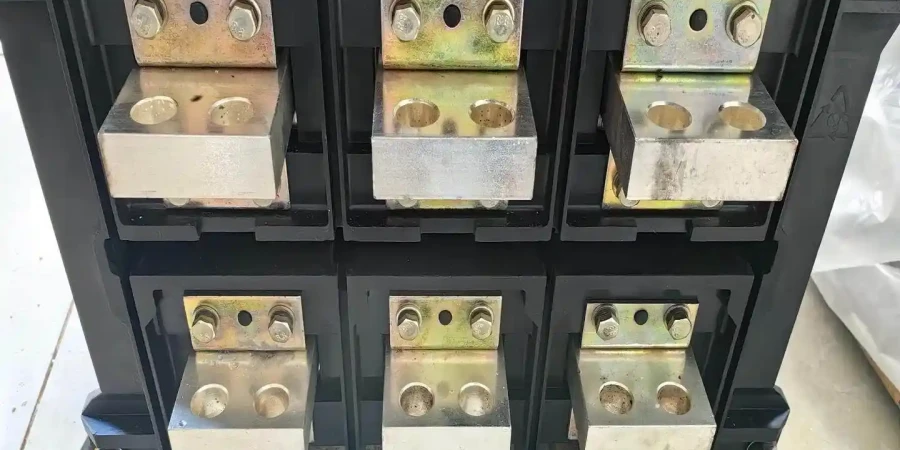
Do you know why the busbar at the back of an air circuit breaker is often silver-plated? On the surface, copper conducts electricity well, but in real-world operation, tiny issues like imperfect contact, corrosion, or heat buildup can impede current, reduce efficiency, and increase maintenance risks.
In high-current applications, even small amounts of resistance add up, creating noticeable energy loss and higher temperatures. Ordinary copper busbars may work, but in critical systems, these small differences can shorten equipment life and compromise reliability.
Silver plating isn’t just for show—it improves conductivity, reduces contact resistance, and protects against corrosion, keeping busbars performing reliably under harsh conditions. Understanding why it matters helps engineers and operators make smarter design and maintenance decisions.
Superior Electrical Conductivity and Lower Contact Resistance
I’ll be honest—when I first started in this industry, I thought copper was copper. Why would adding a thin layer of silver make any real difference? But later I changed my mind.
Here’s what makes silver special: it’s the most conductive metal we have. When you look at the materials, pure silver boasts 105% IACS (International Annealed Copper Standard) compared to 100% for copper. While tin falls far behind at ~15% IACS.
Although the plating is thin, this surface difference is critical. Silver plating ensures that the current flow at the connection points—where it matters most—faces minimal restriction, unlike tin, which adds inherent resistance.
How Contact Resistance Actually Works?
Let me break this down in practical terms. When two metal surfaces come together—like where your busbar connects to a circuit breaker—they don’t actually touch perfectly. Even surfaces that look smooth to our eyes have microscopic peaks and valleys. The actual contact happens at tiny points where these peaks meet, and electricity has to squeeze through those limited contact areas.
This is where silver’s softness becomes a huge advantage. Unlike harder metals, silver compresses slightly under normal connection pressure. It literally molds itself to fill in those microscopic gaps, creating more contact area between surfaces. The result is significantly lower resistance: contact resistance values can drop to the low micro-ohm range (often less than10 μΩ), which is significantly lower than what you typically see with tin-plated or bare copper alternatives.
💡 Manufacturer Tip
Achieving this consistent low resistance requires precision control over the plating thickness. At Sincede, we strictly monitor the silver-plating process for our Air Circuit Breakers, ensuring that every unit leaving our factory maintains optimal conductivity for critical infrastructure projects.
After switching from bare copper to silver-plated busbars, contact point temperatures can drop significantly. This reduction in generated heat lowers the thermal load on the switchgear room’s cooling system. While individual component savings might seem small, the cumulative reduction in resistive losses contributes to better overall energy efficiency and reduced operational costs over the system’s lifecycle.
The Conductivity Comparison
Here’s a simple comparison to show what these differences look like on paper:
| Metal / Coating | Surface Conductivity (IACS) | Stability Limit (°C) | Contact Performance |
|---|---|---|---|
| Silver | 105% | 200°C | Excellent |
| Copper (bare) | 100% | 85°C | Poor (Oxidation) |
| Tin (plating) | ~15% | 120°C | Good |
What this table tells you is that every connection point in your system benefits from silver’s superior properties. When you multiply this across dozens or hundreds of connections in a large installation, the cumulative effect on system efficiency becomes significant. It’s not just about the 6% better conductivity—it’s about maintaining that performance over years of operation without degradation.
Enhanced Corrosion Protection and Longevity
Corrosion is one of those problems nobody talks about—until it becomes a headache.
The thing is, copper hates oxygen. Leave bare copper exposed to air, and it immediately starts forming copper oxide—that black crusty layer you’ve probably seen. Copper oxide is an insulator, not a conductor. So over time, that protective-looking layer actually becomes a barrier that increases resistance and generates heat at every connection.
Silver behaves completely differently. When silver reacts with sulfur compounds in the air (which happens in most industrial environments), it forms silver sulfide—that tarnish you might see.
But here’s the key difference: silver sulfide is soft and mechanically weak. Unlike hard copper oxide, which forms a stubborn insulating layer, silver sulfide is easily displaced under connection pressure, allowing metal-to-metal contact to be maintained without performance taking a nosedive.
Real-World Corrosion Performance
Let me share some actual test data. In standard salt spray corrosion testing, bare copper busbars show significant corrosion after just 24-48 hours, while silver-plated busbars can withstand 500+ hours before showing any meaningful degradation. That’s not a 2x improvement—that’s 10-20 times better protection.
Harsh Environment Performance
The advantages of silver become even clearer in chemically aggressive environments. In places with hydrogen sulfide (H₂S)—like refineries, wastewater plants, or certain manufacturing facilities—silver-plated busbars show a resistance change of just 3 μΩ after 72 hours. Bare copper? 48 μΩ. That’s a 16-fold difference.
| Environment Type | Bare Copper Performance | Silver-Plated Performance | Improvement Factor |
|---|---|---|---|
| Salt spray (coastal) | 24–48 hours protection | 500+ hours protection | 10–20× |
| H₂S exposure (72 hrs) | 48 μΩ resistance change | 3 μΩ resistance change | 16× |
| Extended harsh conditions | Significant degradation at 1800 hrs | Minimal degradation at 1800 hrs | Significant |
For your facility, this translates to fewer maintenance shutdowns, longer equipment life, and more reliable operations. The upfront cost of silver plating quickly pays for itself through reduced replacements and avoided downtime.
Better Temperature Management and Thermal Performance
Temperature management is where theory meets reality. You can have the most conductive material in the world, but if it can’t dissipate heat effectively, you’re just asking for thermal failures down the line.
Thermal issues rarely arrive with a dramatic bang. Instead, they creep up slowly—connections running a bit warmer than expected, insulation aging faster than it should, efficiency dropping by fractions of a percent each year. Then one summer when loads peak, something finally fails.
Silver’s thermal conductivity is 429 W/(m·K) compared to copper’s 401 W/(m·K). That 7% improvement might not sound huge, but combined with silver’s lower electrical resistance, it creates a compound effect: less heat generated from resistance losses, and better heat dissipation—it’s a one-two punch for thermal management.
Temperature Ratings That Matter
Here’s where the difference becomes tangible. Bare copper busbars are typically limited to an operating temperature of 85°C, while tin-plated versions can handle up to 120°C.
Silver-plated busbars? The coating itself remains chemically stable up to 200°C. While the circuit breaker’s insulation materials typically limit the overall system operating temperature (e.g., to 105°C or 125°C), this high thermal ceiling of silver provides a massive safety margin. It ensures that the contact surface won’t oxidize or degrade even during temporary overloads or localized hotspots, unlike other coatings that might fail prematurely
In compact power systems, space is often limited, but designers want to carry more current in a smaller footprint. With bare copper, heat limits can force bigger components or expensive cooling systems. Silver-plated busbars let you carry higher currents in the same space without exceeding safe temperatures.
Wide Operating Range Benefits
Another advantage often overlooked is temperature stability across a wide range. Silver-plated busbars maintain stable performance from -55°C to 105°C, with contact resistance drift staying under 3% even under high-frequency harmonics.
Think about what this means for installations in extreme climates. Arctic renewable energy projects? No problem. Tropical industrial facilities with high ambient temperatures? No problem. Desert solar farms with wild temperature swings between day and night? Silver plating handles it all without derating.
In high-temperature environments, enclosure temperatures can easily reach 50–60°C. Add the heat generated by electrical current, and components are under significant stress. Silver-plated busbars continue to perform reliably under these conditions, while bare copper alternatives may already be approaching—or exceeding—their operational limits.
Silver Plating vs. Other Coating Options
Let’s talk about the elephant in the room: cost. Silver plating typically adds a 30-40% premium over bare copper or tin-plated alternatives. So why not just use the cheaper options? Because the question isn’t what something costs—it’s what it delivers.
As a generic rule for sourcing, always verify if your breaker manufacturer treats silver plating as a standard specification or an expensive add-on. Reliable factories won’t cut corners here.
Tin Plating: The Budget Choice
Tin plating is the most common alternative you’ll encounter. It’s cheaper than silver, provides decent corrosion protection, and for light-duty applications, it works fine. While tin plating protects against corrosion, it introduces higher contact resistance compared to silver.
Tin is significantly harder than silver and has much lower surface conductivity (~15% IACS). This creates bottlenecks at every connection point, limiting efficiency even if the copper core remains highly conductive.
Nickel Plating: Hard but Limited
Nickel plating provides excellent wear resistance and hardness, making it attractive for some industrial uses. But electrically, it falls short. Nickel has much higher contact resistance than silver, requiring greater clamping force to make acceptable connections. It’s also less conductive than copper, so it can actually reduce performance.
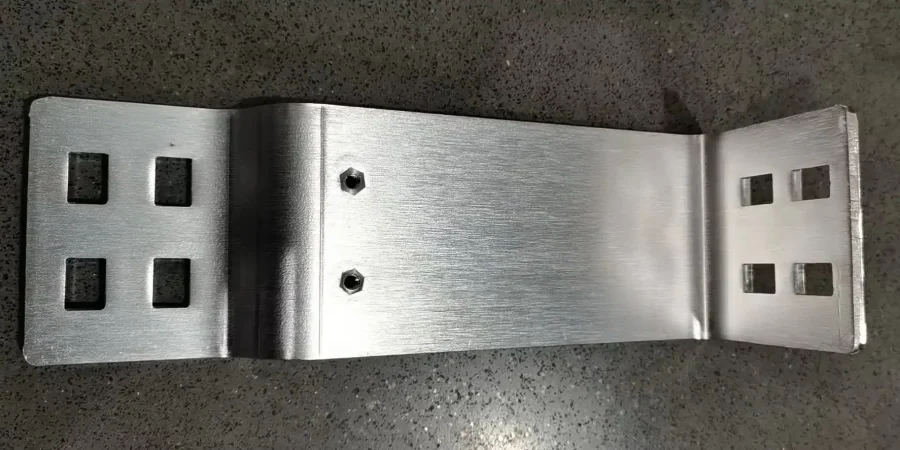
Nickel are often recommended for low-current applications (under 100A) where contact resistance isn’t critical, or in extreme mechanical wear environments where nickel’s hardness prevents surface degradation. For air circuit breakers and switchgear—the applications we’re discussing—silver is the engineered choice.
When Alternatives Make Sense?
Silver plating isn’t always necessary. For very low-current applications (under 50A) in clean, non-corrosive indoor environments where temperature rise is minimal, bare copper or tin plating can be justified economically. Light-duty, cost-conscious installations don’t always need the performance silver provides.
But for critical systems, high-current applications (1000A+), harsh environments, or where reliability matters, don’t cut corners on busbar plating. The small upfront savings will almost always be offset by higher energy costs, more maintenance, and potential downtime.
| Coating Type | Best Use Case | Contact Resistance | Max Temp | Relative Cost |
|---|---|---|---|---|
| Bare Copper | Low-current, clean indoor environments | High (Due to oxidation) | 85°C | Baseline |
| Tin Plating | Budget applications, light duty | Medium | 120°C | +10-15% |
| Nickel Plating | Mechanical wear environments, low current | High (But stable) | ~150°C | +15-25% |
| Silver Plating | High-current, critical systems, harsh environments | Very Low (Excellent) | 200°C | +30-40% |
The number tells the story: for ACB applications and switchgear systems, silver plating consistently outperforms alternatives where it matters most: electrical efficiency, thermal management, and long-term reliability.
Final Thoughts
The best materials aren’t always the cheapest or the most obvious. Sometimes the smartest choice is about resilience, predictability, and peace of mind—investing in reliability today can prevent headaches, downtime, and costs tomorrow. How we value performance over price often defines the systems we build.