
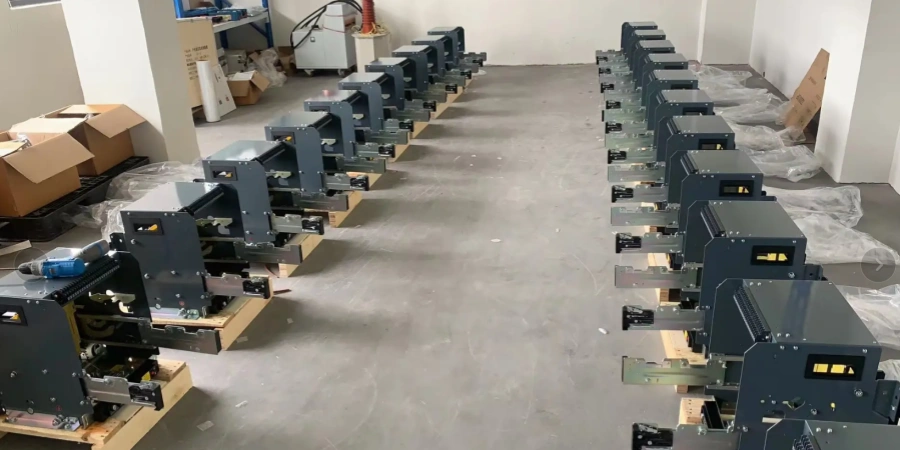
Some countries use ACBs everywhere, while in others they’re much less common. From our experience exporting to different regions, the differences can be surprising. How industries grow, how cities develop, and how energy is generated all affect how people set up electrical systems.
When we prepare and test breakers for customers abroad, we see patterns. Countries with big factories or fast-growing cities usually need more heavy-duty protection, while places investing in wind or solar power need breakers that can handle changing power flows. One engineer on our team likes to say you can almost map a country’s energy habits just by looking at the breakers it installs.
Even neighbors can be very different. Rules, supply chains, and climate all change how widely ACBs are used. Learning these differences helps us design equipment that works reliably, no matter where it’s installed.
China
China’s ACB market reflects its role as the world’s biggest manufacturer and a major infrastructure builder. Rapid urbanization and rising electricity demand have made it possibly the largest market for electrical protection equipment in the world. Visiting trade shows in Shanghai or Guangzhou makes the scale of local production and deployment obvious.
China makes everything from phones to cars, and every factory needs reliable electrical protection. The “Made in China 2025” plan pushes manufacturers to upgrade with automated, smarter equipment, increasing demand for advanced ACBs. Companies like Sincede have large production capacity, and production costs can be up to 30% lower than in Western countries, helping them compete globally.
China’s push for smart grid technology also drives demand for premium ACBs. The State Grid requires digital communication, remote monitoring, and integration with SCADA systems. Government policies support local production while ensuring high quality, creating a growing and advanced market.
Renewable energy adds even more demand. Solar and wind projects, plus large-scale energy storage, need specialized ACBs in big numbers. Some projects specify hundreds of units, which multiplies the points that need protection.
The market is shifting toward smarter, connected products. Customers now expect IoT features, predictive maintenance, and integration with building or industrial management systems. With China’s manufacturing scale, infrastructure investment, and technological progress, it will remain the world’s leading ACB market for years to come.
India
India’s ACB market is among the world’s fastest-growing. The market is projected to grow from USD 0.21 billion in 2025 to USD 0.35 billion by 2033, driving longer production runs for India-specific configurations, more complex specifications, and a rising need for local certification and technical support.
The country’s power sector faces both expansion and replacement at the same time. Some regions need entirely new systems, while others are upgrading decades-old equipment. Government-backed plans include thousands of ACBs per project, and strict standards from the Bureau of Indian Standards (BIS) and Central Electricity Authority (CEA) ensure demand for high-quality, certified products that go beyond cost considerations.
Industrial growth under the “Make in India” initiative is further shaping demand. New and upgraded factories increasingly require ACBs with electronic trip units, adjustable sensitivity, and communication capabilities to support automation. Sector-specific needs are rising: pharmaceutical clean rooms require interference-free protection, while electronics manufacturing demands ultra-precise overcurrent control.
Renewable energy expansion adds another layer. Utility-scale solar and wind projects, along with rooftop installations, create thousands of distributed protection points. Energy storage systems multiply both AC and DC protection needs, driving demand across multiple segments simultaneously.
Domestic manufacturers like CG Power, Kirloskar Electric, and L&T are becoming more competitive, while international players such as Schneider Electric continue to innovate for India. As the market shifts from pure cost competition to value-based decisions, local engineering and support teams now manage complex installations, enabling faster project execution and more sophisticated applications.

United States
By 2022, “Buy America” compliance had become a key consideration in the U.S. market, reflecting a broader focus on domestic production and infrastructure investment. This shift is shaping the American ACB market, which now balances the replacement of decades-old equipment with the construction of new capacity for emerging technologies. The market is projected to surpass USD 920 million by 2034, driven by both grid modernization and renewable energy integration.
Much of the existing infrastructure dates from the 1960s–1980s, designed for lower and more predictable loads. Modern electricity demands—driven by electric vehicles, heat pumps, and variable renewable generation—stress these systems beyond their original design. As a result, replacement projects increasingly require smart monitoring, cybersecurity, and integration with advanced grid management systems. Policies like the Inflation Reduction Act have accelerated these timelines, compressing what might have been multi-decade upgrades into just 5–7 years, creating production and planning challenges for manufacturers.
At the same time, the rapid growth of data centers adds another layer of demand. Operators require near-perfect uptime—often 99.999%—which demands highly reliable ACBs accompanied by detailed documentation and precise installation protocols. The rise of edge computing is also spreading this demand geographically, moving beyond traditional data center hubs to smaller facilities across the country.
Meanwhile, renewable energy integration is driving the need for specialized features. Solar, wind, and energy storage systems require ACBs that can handle variable loads, reverse power flow, and integrate seamlessly with plant control systems. In this context, domestic production is increasingly important—not only to meet compliance requirements, but also to shorten lead times and simplify logistics. Expanding North American manufacturing ensures critical equipment can be delivered quickly, reducing downtime from weeks to hours.
Middle East (UAE, Saudi Arabia, Qatar)
In recent years, the Middle East market has seen rising demands for air circuit breakers (ACBs) that can handle higher temperatures. Standard 40°C ratings are often not enough, with many projects requiring equipment that can operate continuously at 50°C or 55°C. This shows how extreme climate conditions in the region place high demands on electrical equipment reliability.
The Middle East automatic circuit breaker market is forecast to reach 67 million units and $1.1 billion by 2035, with Saudi Arabia as the largest consumer. Large-scale construction, national development plans, and tough environmental conditions are driving demand for high-performance equipment. Saudi Arabia’s Vision 2030, the UAE’s Energy Strategy 2050, and Qatar’s infrastructure projects are building entirely new cities, industrial zones, and utility networks. These projects often integrate smart infrastructure from the start, including IoT connectivity, remote monitoring, and building management system integration, increasing the need for advanced ACB technologies.

Fast project timelines add pressure to supply chains. Many developments are completed in just two to three years, and specifications are often finalized late in the schedule. Keeping regional inventory is essential. High-quality standards are also critical—projects require certified equipment, multilingual documentation, and reliable technical support.
Environmental challenges remain significant. Summer temperatures regularly exceed 45°C, and dust and sand can affect equipment performance. Buyers need ACBs with strong protection, proper ventilation, and reliable components to ensure safe operation. The rise of solar installations adds another layer of stress: thermal cycling—high loads during the day, low loads at night—requires equipment that can handle variable conditions.
The market is still heavily import-dependent, with imports reaching 66 million units in 2024, far exceeding local production. Saudi Arabia accounts for nearly half of the region’s consumption. Local manufacturing is growing thanks to government incentives and “In-Country Value” programs, and the UAE is becoming a production and export hub. This helps shorten lead times and can reduce costs in some segments.
Southeast Asia (Singapore, Malaysia, Thailand)
Southeast Asia is one of the fastest-growing markets for air circuit breakers (ACBs). Demand is rising quickly, driven by the region’s role as a manufacturing hub and rapid urbanization. Malaysia, China, Indonesia, and Thailand account for 70% of Asia Pacific’s circuit breaker imports, showing strong and growing need for modern electrical protection equipment.
Manufacturing growth is a key factor. Electronics factories in Vietnam, automotive plants in Thailand, and semiconductor facilities in Malaysia all need reliable power systems. Thailand’s auto industry, producing over two million vehicles a year, requires precise, stable power with features like selective coordination and facility system integration. Malaysia’s semiconductor sector needs ultra-clean, fast-response protection, and Indonesia’s “Making Indonesia 4.0” plan boosts demand across automotive, electronics, and other industries. Together, these developments create steady and diverse ACB demand.
The region also produces as well as consumes circuit breakers. Singapore is a major export hub, supplying neighboring countries with high-value, premium products. Local manufacturers in Thailand and Malaysia have improved technical capabilities, added testing labs, and gained international certifications, creating both competition and partnership opportunities for international suppliers.
Urbanization adds another layer of demand. Cities like Bangkok, Jakarta, and Manila are growing fast, and every new residential or commercial project needs reliable electrical protection. Modern buildings increasingly include EV charging, solar systems, and smart building controls. Large government projects—such as mass transit and airport expansions—also increase ACB demand.

The region is also adopting technology quickly. IoT connectivity, remote monitoring, and smart system integration are becoming standard. High industrial activity, fast urban growth, and advanced technology needs together create unique patterns of ACB demand. In Malaysia, per capita circuit breaker use reached 1,658 units per 1,000 people in 2024, one of the highest rates in the world.
European Union (Germany, UK, France)
The first time I saw a spec for an SF6-free circuit breaker, I had to look it up. That was four years ago, before environmental rules really influenced product design. Europe was ahead—customers were asking for sustainable features before regulations required them. The European circuit breaker market reached $4.2 billion in 2024 and is expected to grow 5.8% annually through 2034, driven by strict rules, complex requirements, and renewable energy growth.
Renewable energy changes the type of ACB demand. In 2024, renewables provided 46.9% of EU electricity, with wind and solar at 29%. Every megawatt needs multiple layers of circuit protection—from inverters to the grid—so a single large wind farm might need hundreds of ACBs. Variable power, bidirectional flow, and energy storage add challenges that older grids never faced.
EU rules like the F-gas regulation have pushed companies like Siemens and ABB to make SF6-free breakers. Hitachi Energy installed Italy’s first eco-friendly SF6-free units. These rules don’t just enforce compliance—they drive innovation in materials, insulation, and design. European buyers also consider total costs, including energy use, maintenance, and disposal, so decisions focus on long-term value, not just price.
Modernizing old grids adds another layer. Germany’s Energiewende pushes ACBs that handle variable renewable power, while France focuses on high-voltage breakers for nuclear security. Battery storage—5.4 GW installed in 2024 with 60 GW needed by 2030—requires special DC and AC protection. Growing data centers, expected to use 149–287 TWh by 2030, need highly reliable, efficient breakers with precise monitoring.
Europe isn’t one market. Germany leads in industry, France’s nuclear grid has different needs, and the UK’s island grid has unique stability challenges. Success means tailoring products to each country, not using a one-size-fits-all approach.
Brazil
Brazil’s market is changing quickly. Industrial orders are shifting from standard three-phase ACBs to units with advanced monitoring and renewable energy compatibility. This trend is happening across multiple industries, showing that demand is growing faster than previously expected.
Brazil accounted for about 15% of the global circuit breaker market in 2024, making it the largest market in Latin America. Growth is driven by industrial expansion and the push for modern, eco-friendly energy systems, particularly in automotive, petrochemical, mining, and food and beverage sectors. Buyers are looking for ACBs that balance reliability with cost-effectiveness, focusing on total lifecycle value rather than just the lowest upfront price.
Renewable energy expansion is also driving demand. Hydroelectric power has long dominated Brazil, but wind and solar are growing rapidly, especially in the northeast and in industrial and commercial projects. Each installation needs protection at turbines, collection systems, and grid connections. This requires ACBs that handle variable power generation, bidirectional flow, and integration with grid management systems. The combination of hydro, wind, and solar creates complex grid conditions, so breakers need fast fault detection and harmonic filtering.
Urbanization and infrastructure modernization add another layer of demand. Cities like São Paulo, Rio de Janeiro, and Brasília are expanding, with new construction alongside upgrades to old electrical systems. Modern ACBs must support higher loads, distributed generation, electric vehicle charging, and increased energy use due to climate and lifestyle changes. Brazil’s 1–72.5 kV circuit breaker imports are projected to grow at 1.63% CAGR through 2028, while local companies like WEG S.A. are producing advanced, energy-efficient, and durable breakers.

Competition is strong among international firms such as ABB, Schneider Electric, Siemens, and GE, alongside capable local manufacturers. Success requires more than competitive products—it needs local presence, Portuguese-language support, understanding of Brazilian standards, and flexible payment options. Government incentives for renewable energy create opportunities, but import rules and local content requirements make partnerships essential.
Australia
Mining projects in Australia often require ACBs that go beyond standard industrial ratings. For example, iron ore operations in Western Australia’s Pilbara region may require equipment rated for continuous operation at 45°C ambient temperature under Class G3 (harsh industrial) conditions. In some cases, equipment operates inside unconditioned buildings where summer temperatures can exceed 50°C. These environments demand specially designed breakers that can handle extreme heat, dust, and vibration.
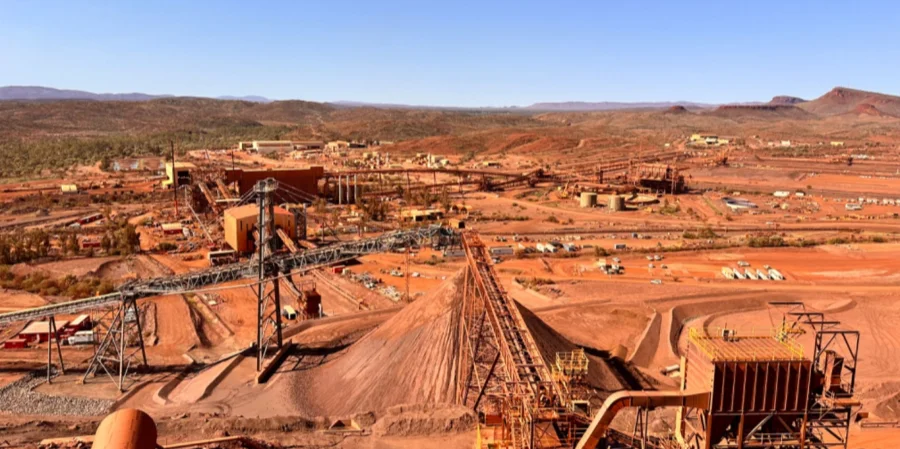
Australia’s circuit breaker market is expected to grow from USD 248.22 million in 2024 to USD 354.21 million by 2033. Growth is supported by large-scale mining activity, renewable energy targets, and ongoing infrastructure upgrades.
Australia is a major global producer of lithium, iron ore, and other minerals. Each mining site depends on extensive electrical systems to power crushers, conveyors, mills, pumps, and ventilation equipment. These systems often operate in remote areas with limited maintenance access. Because downtime can cost hundreds of thousands of dollars per hour, reliability is critical. As lithium production continues to expand, demand for heavy-duty electrical infrastructure will grow accordingly.
At the same time, mining operations are becoming more electrified. Diesel-powered equipment is gradually being replaced with electric alternatives to reduce emissions and improve underground air quality. Charging large electric haul trucks creates high and repeated inrush currents, which means ACBs must offer fast fault detection and strong coordination with other protection devices.
Renewable energy expansion is another key driver. Solar and wind projects, including those integrated into remote mine sites with battery storage, require ACBs that can manage variable generation and bidirectional power flow. Combined with aging infrastructure that needs upgrading, these trends are increasing demand for reliable, high-performance circuit protection across Australia.
Conclusion
The global ACB market is dynamic, shaped by technology, policy, and local conditions. Success depends on understanding each region’s unique needs, from climate and regulations to industrial trends. Companies that adapt quickly and offer reliable, smart solutions will be best positioned for growth worldwide.