
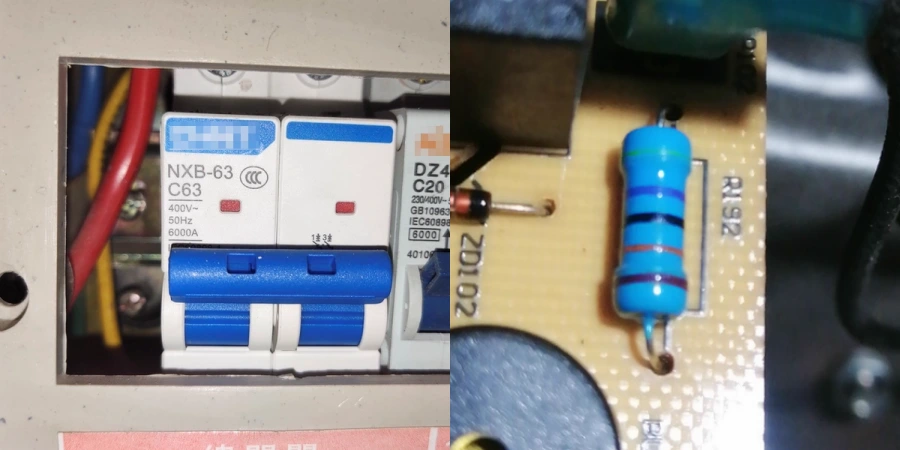
In modern power and automation systems, the terms “electrical” and “electronic” are often used as if they mean the same thing. Since both rely on electricity, the difference can seem minor. In practice, though, they describe two very different ways electricity is used, and mixing them up can lead to poor design choices or incorrect equipment selection.
Electrical devices are mainly about delivering power. They handle higher voltages and currents and turn electrical energy into things like heat, light, or motion. Electronic devices work differently. They use much lower power and small components, such as transistors and chips, to control, measure, or process signals and information.
Today’s systems usually combine both. Motors need electrical power to run, but electronic controllers manage speed, protection, and efficiency. Knowing where electrical power ends and electronic control begins helps create systems that are safer, more reliable, and easier to maintain.
Defining Electrical and Electronic Devices
You might think all gadgets are pretty much the same inside once you plug them in. But that’s not the case—mixing up electrical and electronic devices can lead to using the wrong tools or even damaging your equipment.
Electrical devices focus on turning electrical energy into things like heat, light, or movement through conductors like wires, often with high-voltage AC power. Electronic devices go further by using semiconductors to manage electron flow for processing signals or data, typically on low-voltage DC.
Let me tell you more about what sets them apart— it’s the kind of thing that clicks once you see the details.
Breaking Down the Basics
In my time working with engineers and technicians, one thing’s clear: knowing the basics helps you communicate better with your team or clients.
Electrical devices are all about converting power. Think of them as straightforward tools that follow basic laws, like Ohm’s Law (voltage = current × resistance), where voltage pushes current through resistance to create output. They’re passive, meaning they don’t actively change signals; they just transform energy. For example, a heater coil takes AC power and turns it into warmth. That’s it. No complicated tech involved.
Electronic devices, on the other hand, are smarter, they are the brains of the operation. They use components like transistors and diodes (made from semiconductors like silicon) to control how electricity flows. This allows them to amplify signals, make decisions, and complete complex tasks. That’s how your phone runs apps, makescalls, and connects online—it’s managing signals on a tiny scale with low power.

This difference matters in every step of the process—from design and repair to buying the right equipment. To break it down further:
| Category | Electrical Devices | Electronic Devices |
|---|---|---|
| Core Focus | Energy Conversion | Signal Control |
| Power Type | High-Voltage AC | Low-Voltage DC |
| Components | Wires, Resistors | Transistors, Chips |
| Market Impact | Used in power grids, manufacturing plants, HVAC systems, and transportation infrastructure | Found in smartphones, laptops, medical devices, automotive systems, and consumer electronics |
Electronics are a branch of electrical engineering, but they’re not the same. In modern systems—like solar power setups—you’ll find both. Electrical components handle raw power; electronic ones monitor and control everything behind the scenes.
Key Differences at a Glance
It’s easy to assume two similar-looking devices do the same thing. But that assumption can lead to some pretty big headaches. I’ve watched small mix-ups snowball into project delays and unexpected costs.
While their appearances may be similar, their functions differ—something the table below clearly outlines. Let’s take a closer look at what this means in real terms.
Functional Contrast
Electrical devices are all about raw power. They rely on materials like copper to carry current and typically run on high-voltage alternating current (AC)—sometimes in the hundreds of volts. They’re built for simple, high-power jobs like heating, spinning, or lighting. Their responses are fast and direct, like a relay switching in milliseconds. But they’re not smart—they don’t “think,” they just act. They also use a lot of energy. For example, in Canada, household electrical devices make up about 14–15% of home energy use in 2025. Data Source: Natural Resources Canada
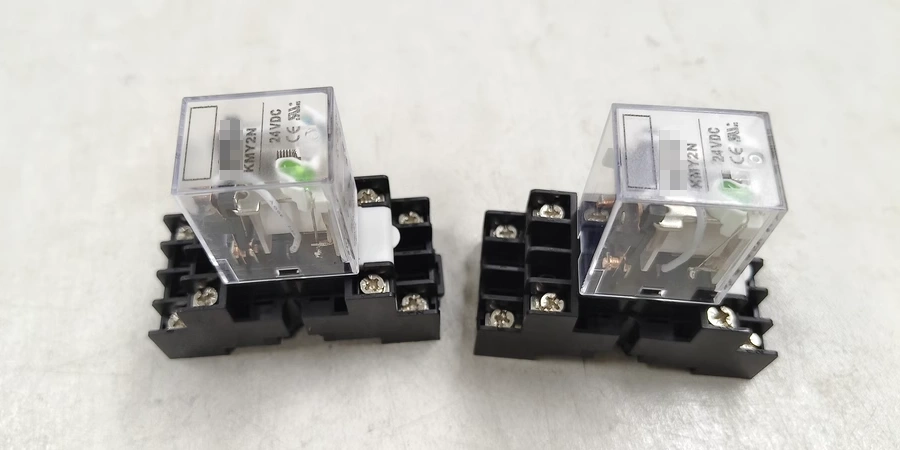
Electronic devices are designed for precision and complex decision-making. With parts like MOSFETs—more than 13 sextillion made since the 1960s—they can control, amplify, or switch signals using low-voltage direct current (DC). What sets them apart is their ability to handle data, process input, and follow programmable logic. That’s what makes smartphones, smart thermostats, and computers possible. They respond more slowly than a switch, but with far more intelligence.
Safety works differently for each. Electrical devices carry higher voltage, so the risk of electric shock is greater if not handled properly. Electronics usually operate at much lower voltages, so shock risk is reduced—but they’re more sensitive to static discharge, which can silently damage internal components. Also, some electronics (like power supplies) contain high-voltage sections inside.
Size is another difference. Electrical gear is often bulky to handle large currents safely, while electronics can be small enough to fit in your pocket—sometimes even on a chip smaller than a fingernail.
Quick Comparison Table
Here’s a quick table for you to check the difference:
| Aspect | Electrical Devices | Electronic Devices |
|---|---|---|
| Function | Converts electricity to heat/motion | Processes or amplifies signals |
| Components | Conductors (e.g., copper wires) | Semiconductors (e.g., silicon chips) |
| Voltage | High-voltage AC (100–1000V) | Low-voltage DC (millivolts) |
| Power Usage | High (100–1000W or more) | Low (just a few watts or less) |
| Size | Larger and heavier | Small and compact |
| Response | Fast and direct | Precise and complex |
| Safety | Higher shock risk | Lower, but sensitive to static |
Real-World Implications
These differences aren’t just technical—they affect real-world choices.
At a construction site, I saw how combining a heavy-duty electrical motor with an electronic speed controller improved efficiency by 15%. The motor provided the strong power needed to run machinery, while the electronic controller fine-tuned the motor’s speed to save energy and reduce wear.
If you’re wiring a building, use electrical devices for core power delivery—lighting, heating, motors. Use electronic devices for control, automation, and energy management.
As both sectors grow—electronics are forecasted to reach $1467.94 billion by 2032—we’re seeing more hybrid devices that combine the best of both. For those of us in the industry, that keeps things exciting.
How Do These Devices Work?
It’s frustrating when a device doesn’t work as expected—and often, it comes down to not fully understanding how it operates inside. That kind of oversight can stall a job and turn a quick install into hours of fixing.
Both devices operate on distinct principles: electrical ones follow basic physical laws to convert energy, while electronic ones use components like transistors to process signals. Once you get the hang of how each type works, diagnosing problems and choosing the right device becomes a lot easier.
How Electrical Devices Work?
Over the years, when teaching layperson, I always start with the basics because that’s where real clarity begins.
Electrical devices rely mainly on passive elements. Current flows through conductors and creates effects based on resistance or inductance. Take a motor: electricity generates magnetic fields that produce rotation—there’s no decision-making involved, just a direct energy conversion. In practice, this means electrical devices are robust and well-suited for continuous heavy-duty use, like in factories where transformers step down voltage for safe distribution.
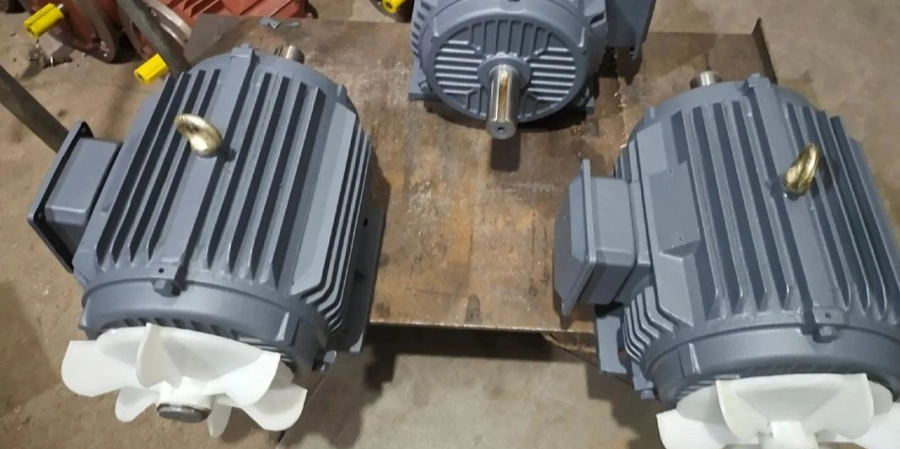
Sometimes problems happen when parts are connected without checking if their power ratings match. For example, if a motor is connected to a power source that gives it more voltage than it’s built for, it can overheat, shake too much, and break down. We can learn from that even though electrical systems are simple in how they work, they still need to be set up carefully to avoid damage.
How Electronics Work?
Electronics focus on control, precision, and efficient handling of information.
Unlike electrical devices that mainly transfer energy, electronic devices actively process signals and data using components such as transistors, diodes, and integrated circuits. These allow the device to switch, amplify, filter, and manipulate signals, typically using low-voltage DC power.
Here is a simple example: when you speak into your phone, a microphone converts your voice into an analog electrical signal. This signal is then digitized—converted into binary code (0s and 1s)—and processed by a microcontroller before being transmitted, all within milliseconds. This digital logic is the foundation for electronic devices to perform complex information processing tasks.
Because they use less power and support programmable logic, electronic devices can perform sophisticated functions in compact sizes. That’s why a smartwatch can monitor your heart rate, run applications, and send messages—things that would have required an entire room full of equipment just decades ago.
They’re also more adaptable. With software updates or firmware changes, a single electronic device can take on new features without any physical modification—something traditional electrical systems can’t do.
This versatility explains the booming global electronics market, which drives innovation across consumer tech, healthcare, aerospace, and beyond.
Applications in Daily Life And Beyond
Think about how often a device mismatch disrupts your workflow—like using a simple electrical device in a smart system. It might technically work, but not well. Over time, mismatches like that cause delays, inefficiency, and even safety risks.
That’s why it’s important to understand how these devices complement each other. Electrical systems deliver power; electronic ones add control. Using the right one—or both—can make projects smoother, safer, and more efficient. Let’s break it down.
How They Affect Daily Life?
In my job, I’ve worked with both homeowners and professionals. One thing is clear: electrical devices are the backbone. They keep the lights on, machines running, and buildings powered. For example, transformers in the grid step voltage up or down, powering industries. Without them, we’d be stuck in the dark—literally.
Electronic devices, meanwhile, bring the intelligence. Smartphones connect us, processing data for navigation or emails. Wearables track your heart rate or sleep using tiny sensors. This blend affects work too; in construction, electrical wiring powers sites, while electronic tools like digital multimeters provide accurate readings.
In many industrial settings, combining electrical and electronic devices leads to better performance. For example, a common setup uses electrical heaters for high-power heat generation, paired with electronic temperature controllers to monitor and adjust output in real time. This kind of upgrade can reduce energy waste by 10–15%, making operations more efficient and cost-effective.
Industry-Level Impact
In fields like engineering, construction, and energy, professionals regularly work with both electrical and electronic devices.
Electrical engineers typically focus on large-scale power systems such as power plants, transmission lines, and high-voltage infrastructure. Their work is especially critical in the renewable energy sector, which is experiencing steady job growth—about 3% projected through 2029.
Electronics engineers, by contrast, concentrate on low-power systems. They design and develop components like IoT sensors, embedded systems, and microcontrollers that are essential in automation, smart devices, and data-driven applications. In healthcare, electronic devices power medical imaging equipment like MRI and CT scanners, which rely on precise signal processing to create detailed images. In transportation, electronic control units (ECUs) manage traffic signaling and vehicle systems, improving safety and efficiency.
Despite the clear differences, confusion still arises. A common misconception is that any device using electricity must be electronic. In reality, many powered tools—such as drills or fans—are electrical because they convert energy directly without processing information.

Safety is another important distinction. Electrical systems can present risks like power surges or overloads, making protective devices such as surge protectors essential. In fact, demand for these protective systems is growing at an estimated 5% annually. On the electronic side, static electricity poses a major threat. A small electrostatic discharge (ESD) can easily damage sensitive components, especially in microchips or circuit boards.
Lastly, e-waste is an increasingly urgent issue. By 2025, only 17% of discarded electronics are expected to be properly recycled. This reality is pushing manufacturers and engineers to design more sustainable products with longer life spans and easier recyclability.
Overlaps and Future Connections
Today, hybrid systems are everywhere. In smart grids, for example, electrical components manage the flow of bulk power, while electronic systems optimize distribution and monitor usage. The same goes for electric vehicles—the motors that drive the wheels are electrical, but the batteries, sensors, and control units are all electronic.
Here’s a clear breakdown of how both types are used across different areas:
| Area | Electrical Role | Electronic Role |
|---|---|---|
| Home | Appliances, Wiring | Smart Devices, Controls |
| Industry | Motors, Generators | Sensors, Automation |
| Renewables | Power Transmission | Monitoring Systems |
| Daily Tech | Basic Tools | Phones, Computers |
In practice, knowing how electrical and electronic systems overlap can make a big difference—especially when advising clients or leading project teams. As the electrical and electronics manufacturing market continues to grow rapidly, the ability to navigate both fields isn’t just helpful—it’s essential.
Modern circuit protection is a perfect example of this convergence. High-end Molded Case Circuit Breakers (MCCBs) now combine robust electrical contacts with sophisticated electronic trip units, offering precise control over heavy power loads.
Conclusion
Understanding the difference between electrical and electronic devices guides you to make smarter choices—whether it’s selecting energy-efficient hybrids or cutting-edge tools. In short, electrical systems deliver the ‘muscle’, while electronic components add the ‘brain’—working together to improve performance and efficiency.” Together, they create powerful synergies that boost performance, save energy, and improve outcomes.
This knowledge helps avoid costly mistakes and leads to better results on the job. As technology evolves, focusing on efficiency and the collaboration between electrical and electronic components will always pay off.
Whether your project requires traditional electrical protection or advanced electronic control, finding a manufacturer that masters both technologies ensures seamless integration. You can explore our full range of circuit protection solutions to see how Sincede’s manufacturing excellence can support your specific needs.