
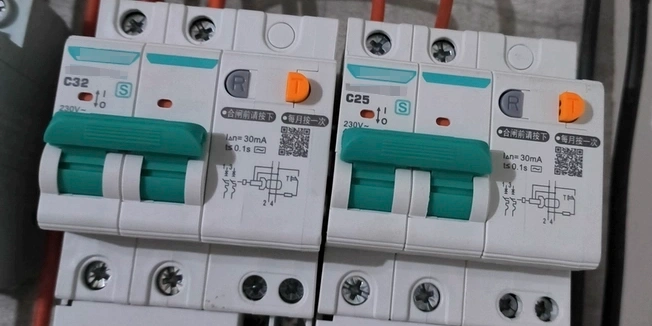
Have you ever had a breaker trip when nothing seemed wrong? No sparks, no overloaded outlet—just the lights going out for no obvious reason. This kind of unexpected shutdown is often called nuisance tripping, and it can leave anyone scratching their head.
It’s the kind of problem that feels mysterious. The breaker flips, power disappears, and you’re left wondering: did I do something wrong? Or is the system just acting up? That uncertainty is part of why nuisance trips can be so frustrating—and a little unsettling.
These trips can be more than just annoying. They interrupt work, spoil food, or halt machines, and over time they can make people stop paying attention to warnings. Understanding why they happen gives you a peek behind the scenes of your electrical system—and shows how small signals can reveal bigger stories.
Understanding Nuisance Tripping
Few things in electrical systems cause more confusion than a breaker that trips without warning. It’s a problem many homeowners and electricians encounter—and it often leads to the same frustrated question: “Why does my breaker keep tripping for no reason?”
Here’s the truth about nuisance tripping: it’s never really “for no reason,” even though it feels that way. When your circuit breaker cuts power without an obvious fault or hazard, that’s what we call nuisance tripping. The breaker is technically doing its job—but it’s reacting to conditions that don’t actually pose a danger.
Strictly speaking, nuisance tripping isn’t a formal textbook term. It’s an industry phrase used by electricians and engineers to describe when sensitive protective devices—like GFCIs or RCDs that detect ground leakage, or AFCIs that monitor arc faults—trip even though the circuit is healthy.

Think of it like a car alarm that goes off when a cat walks by. The sensor works fine—it’s just too sensitive for the situation. Nuisance trips happen because of small current leakages, transient surges, or the way different devices interact within your electrical system. The term “nuisance” might sound minor, but these trips can also hint at deeper issues in the system’s overall health.
What’s Really Happening During a Nuisance Trip?
When I talk to electricians who’ve been in the field for decades, they explain it like this: your electrical system has gotten more complex, but your protection devices are still trying to keep up with old standards. Modern homes and facilities are packed with electronics that leak tiny amounts of current to ground. Individually, each device is perfectly safe. But add them all together on one circuit, and suddenly you’ve crossed the threshold that makes your GFCI or AFCI trip.
Your breaker isn’t broken—it’s just detecting something. Maybe it’s a rush of current when your air conditioner compressor kicks on. Maybe it’s the combined ground leakage from your computer, printer, and LED desk lamp. The breaker sees the numbers add up and does what it’s programmed to do: shut everything down.
What makes this so frustrating is that nothing is actually wrong in the traditional sense. There’s no short circuit, no exposed wire, and no fire hazard. It’s just a system that’s too sensitive for the load it’s managing—or a mix of devices interacting in ways the breaker interprets as unsafe.
Why This Problem Matters?
In many industries, nuisance tripping isn’t just an inconvenience—it can quickly escalate into a costly operational issue. When a circuit breaker trips unexpectedly, it can shut down production lines, refrigeration systems, or data servers without warning. Even if the system itself is perfectly healthy, the sudden interruption still leads to lost productivity, wasted materials, and frustrated teams.
In the U.S. alone, nuisance trippings are estimated to cause more than $150 billion in lost productivity every year. That figure is far from trivial. A factory producing garden furniture can lose around $100,000 per hour during unplanned downtime. In metallurgy operations, where environmental control is critical, the cost can easily double to $200,000 per hour.

The Hidden Costs Nobody Talks About
But here’s what the statistics don’t show: the human cost. When breakers trip over and over again, workers get desensitized to alarms. They start ignoring warning signs. They reset breakers without investigating. That’s when real safety issues can slip through unnoticed.
I’ve seen small factories where maintenance teams stopped recording breaker trips because they happened so often. Resetting the breaker became part of their daily routine. Then one day, a real electrical fault occurred—and no one took it seriously, because they’d grown numb to the constant alarms. That kind of alarm fatigue is real, and it’s dangerous.
From a productivity standpoint, the damage goes far beyond a few minutes of downtime. Take data centers, for example: a single nuisance trip can cost around €100,000 (about $110,000) per hour. And it’s not just about halted work—it’s corrupted data, lost transactions, unhappy customers, and hours of recovery time.
Even smaller businesses feel the pain. A neighborhood bakery might lose an entire night’s worth of dough when the walk-in cooler shuts off. A small, family-run hardware store might lose several thousand dollars in inventory when a heat wave causes their air conditioning system to trip. Without proper cooling, temperature-sensitive products like paint, adhesives, and batteries can spoil or become unusable within hours.
These aren’t abstract corporate losses—they’re real people losing real money because their electrical systems can’t keep up with modern demands.
| Industry Setting | Average Cost Per Hour | Common Trigger |
|---|---|---|
| Manufacturing Facility | $50,000 | Motor inrush, cumulative leakage |
| Pharma/Food Processing | $100,000+ | Temperature control, VFD harmonics |
| Computer/Data Center | $110,000 | Sensitive electronics, power quality |
| Small Retail/Food Service | $2,000–$10,000 | Overloaded circuits, old breakers |
The economic impact hits industrial settings harder because they’re dealing with more sensitive electronics, harsher conditions, and complex loads. But residential nuisance tripping matters too—it’s a safety and convenience issue that erodes trust in your electrical system and can hide genuine problems waiting to happen.
Common Causes of Nuisance Trips
The causes of nuisance trippings aren’t mysterious—they’re usually straightforward once you know what to look for.
The most common culprit? Overloaded circuits. This one’s simple: you’re asking a single circuit to power more devices than it was designed to handle. It’s not that any one appliance is faulty—you’ve just exceeded the system’s capacity. I see this constantly in older homes where people have added multiple power strips to a single outlet.
Another frequent cause is ground fault leakage. Modern electronics—especially anything with a switch-mode power supply—leak tiny amounts of current to ground. Your laptop charger does it. Your LED bulbs do it. Even your phone charger does it. Each device might leak just a milliamp or two, but when you connect ten of them to a circuit protected by a 5 mA GFCI, those small leaks add up fast. Once the total exceeds the threshold, the GFCI does exactly what it’s designed to do: trip.
The Modern Electronics Challenge
Inrush currents are another common surprise. When a motor or compressor starts up—think refrigerator, air conditioner, or power tool—it draws several times its normal running current for a split second. That surge can trip a breaker if the circuit is already near its limit or if multiple devices start at once.
Then there’s harmonic distortion, often caused by variable frequency drives (VFDs) and LED lighting. These harmonics can confuse protective devices, making breakers trip early or causing equipment to overheat. Studies show that when total harmonic distortion (THD) reaches 10%, equipment lifespan can drop by as much as 32.5% for single-phase machines and 18% for three-phase systems. That’s not just nuisance tripping—it’s long-term damage.
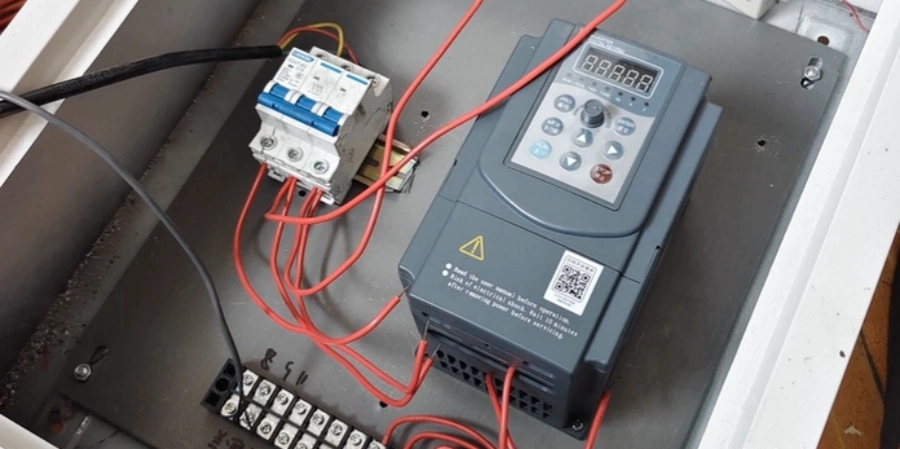
Poor breaker coordination is another issue I see in commercial settings. When you have breakers in series—say, a main panel feeding sub-panels—the trip curves need to be coordinated so the right breaker opens first. If they’re not properly coordinated, a minor fault downstream can trip the main breaker, killing power to the entire building instead of just one circuit.
And don’t underestimate environmental factors. High temperatures make breakers trip at lower currents than their rating. Vibration from nearby machinery can cause nuisance trips. Moisture infiltration corrodes connections and creates leakage paths. I’ve reviewed warranty claims where breakers installed in hot, humid mechanical rooms tripped constantly until they were relocated or the environment was controlled better.
| Cause | What Triggers It | Common Locations |
|---|---|---|
| Overloaded Circuits | Too many devices, undersized wiring | Residential kitchens, home offices |
| Ground Leakage | Cumulative current from multiple electronics | Anywhere with modern devices |
| Inrush Currents | Motor/compressor startup | HVAC, refrigeration, power tools |
| Harmonic Distortion | VFDs, LED drivers, switch-mode supplies | Industrial facilities, modern offices |
| Poor Coordination | Mismatched breaker settings | Multi-level electrical systems |
| Environmental Stress | Heat, moisture, vibration | Mechanical rooms, outdoor panels |
How to Prevent Nuisance Tripping?
Many facility managers throw money at this problem in all the wrong ways. They replace breakers, upgrade panels, call electrician after electrician—and the trips keep happening. The truth is, preventing nuisance tripping isn’t about finding one magic fix. It’s about taking a systematic approach to how your electrical system is designed, loaded, and maintained.
The first and most obvious step: distribute your loads properly. Stop overloading single circuits. I can’t tell you how many times I’ve seen a kitchen circuit powering a microwave, toaster oven, coffee maker, and instant pot all at once. That’s a recipe for trip. Spread high-draw appliances across multiple circuits. In commercial settings, dedicate circuits to sensitive equipment instead of sharing them with motors, fluorescent lighting or other heavy loads.
For problem equipment—especially variable frequency drives(VFDs) or anything generating harmonics—consider using isolation transformers or line reactors. These devices help buffer the rest of your electrical system from noise and distortion. They’re not cheap, but they’re far less expensive than repeated downtime.
Professional Maintenance Makes the Difference
Here’s something most people skip: regular professional audits and maintenance. You wouldn’t drive a car for 100,000 miles without an oil change, but many people expect electrical systems to run perfectly for decades with zero maintenance. Hire qualified electricians to perform annual system audits. They should check breaker calibration, measure insulation resistance, test for leakage currents, and verify that connections are tight and clean.
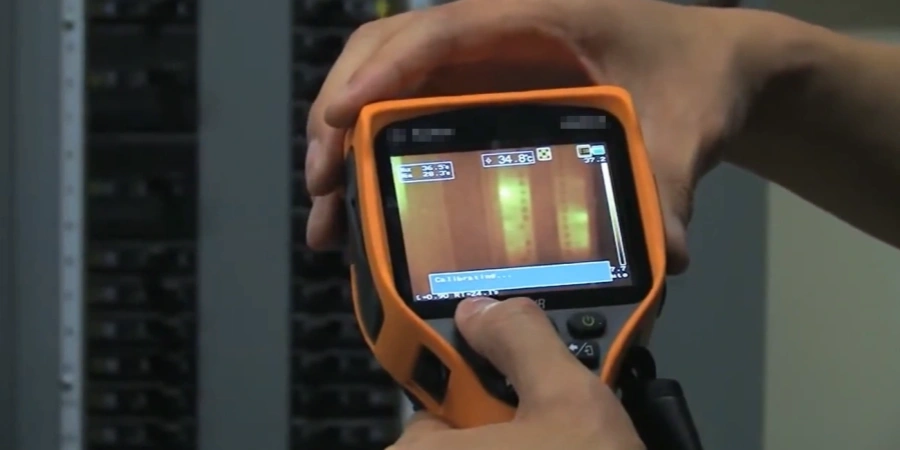
Thermal imaging is an especially powerful tool. A professional electrician can use thermal cameras to detect hot spots caused by loose connections or overloaded circuits long before they trigger trips or fires.
Follow updated electrical codes, and never compromise on the quality of your breakers. Cheap, poorly assembled breakers often have inconsistent trip curves, leading to frequent false alarms. Modern electronic trip units offer adjustable thresholds and improved selectivity, but they require precise manufacturing to function correctly.
This is where manufacturing expertise counts. At Sincede, we control the entire production chain—from internal mold making to final assembly—ensuring that every MCCB meets strict tolerance levels to prevent nuisance tripping.
The 2020 NEC expanded GFCI requirements significantly, which has led to more nuisance tripping issues—especially with 240V appliances like ranges and dryers near water sources. Industry groups have pushed back on some of these requirements because they created more problems than they solved.
Fortunately, the newer IEC TS 63527 standard and IEEE Std 3004.5™-2025 both address methods to limit unnecessary trips through better calibration and improved detection algorithms. If you’re specifying new equipment, look for breakers that meet these updated standards.
Environmental and Operational Controls
Don’t ignore your environment. Keep electrical rooms cool, dry and clean. High humidity increases leakage currents and corrodes connections, while heat derate breaker capacities—a breaker rated for 20A at 25°C might trip at 18A when it’s sitting in a 40°C room. If needed, install ventilation, dehumidification, or climate control. The investment is minimal compared to the cost of repeated nuisance trips.
For facilities with sensitive operations, consider upgrading to electronic trip breakers with adjustable settings. These let you fine-tune trip curves to match your real-world loads. You can set different responses for instantaneous trips versus time-delayed trips. This level of selectivity ensures that only the affected circuit opens during a fault, not your entire building.
Finally, document everything. Keep a log of when trips occur, what was running at the time, and any environmental or load conditions you notice. Overtime, this data becomes gold for troubleshooting.
| Prevention Strategy | Best For | Typical Cost | Effectiveness |
|---|---|---|---|
| Load Distribution/Circuit Separation | All settings | Low (labor only) | High |
| Isolation Transformers/Line Reactors | Industrial, VFD systems | Moderate ($500-$5,000) | Very High |
| Annual Professional Audits | Commercial/Industrial | Moderate ($500-$2,000) | High |
| Electronic Trip Breakers | Critical operations | High ($200-$1,000+ per breaker) | Very High |
| Environmental Controls | Hot/humid locations | Moderate to High | Moderate |
| Breaker Calibration/Replacement | Aging systems | Low to Moderate | High |
Conclusion
Electrical systems are more sensitive than most people realize. Nuisance trips might feel annoying, but they reveal how technology, human habits, and environment intersect. Paying attention to small signals can prevent big problems—and save both money and peace of mind.