

Not every product sold in the European market requires a RoHS certificate. So, what about circuit breakers? Are they subject to these rules, or are there exemptions that make them different from standard electronic devices?
The first time I faced this question at the factory, I felt nervous. During a discussion with a customer, people kept mentioning “RoHS compliance,” and I nodded along, not fully understanding what it meant for our products. It quickly became clear that knowing these rules wasn’t just part of the job—it could determine whether our products could be sold at all.
As I watched engineers carefully review each spec sheet and inspect every component, I realized the weight of responsibility in our work. Step by step, I began seeing the bigger picture, examining every breaker with fresh eyes and thinking more deliberately about design, processes, and compliance. Understanding RoHS wasn’t just a requirement—it became part of how we approached quality and safety every day.
What Is RoHS and Why Does It Exist?
RoHS stands for Restriction of Hazardous Substances. It’s an EU directive that limits the use of ten specific hazardous materials in electrical and electronic equipment (EEE). The substances covered include lead, mercury, cadmium, hexavalent chromium, polybrominated biphenyls (PBB), polybrominated diphenyl ethers (PBDE), and four phthalates that were added in 2019.
Each of these has a maximum concentration threshold. For most materials, the limit is 0.1% by weight of a homogeneous material, while cadmium has a stricter limit of 0.01%.
These limits are not applied to the product as a whole. Instead, they apply to each individual homogeneous material within the product. In practice, this distinction matters a lot.
Why the Directive Exists?
The core reason behind RoHS is straightforward: many of these substances are toxic and can remain in the environment long after a product is discarded.
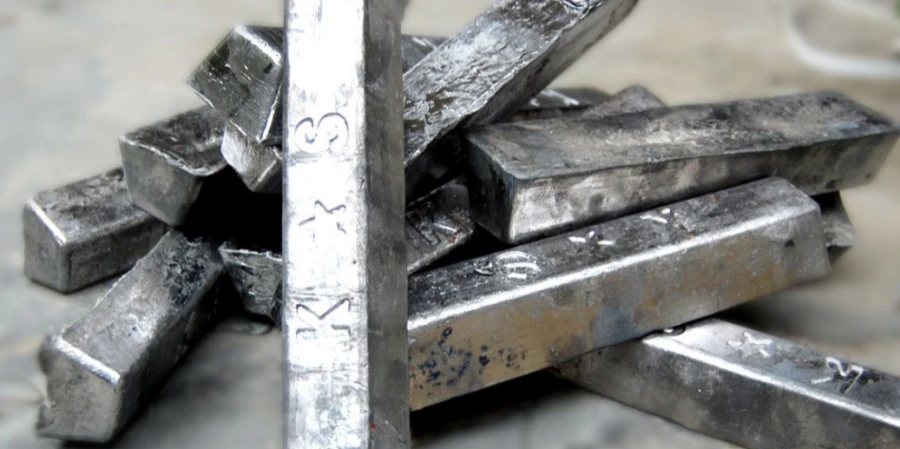
Take lead in solder as an example. When electronic devices end up in landfills, lead can leach into the soil and groundwater. Mercury used in switches and relays also poses serious environmental and health risks during disposal.
RoHS was created by the EU to reduce these risks at the source. Instead of trying to control hazardous substances after a product reaches the end of its life, the directive focuses on preventing them from being used in the first place.
How the Directive Evolved?
RoHS did not appear fully formed. It developed over time through several revisions.
The original directive, RoHS 1 (2002/95/EC), introduced the first set of restrictions. It was later replaced by RoHS II (2011/65/EU), which significantly expanded the scope and introduced the requirement for CE marking.
Later, RoHS 3 (2015/863/EU) added four phthalates to the restricted substances list.
With each update, the directive has become more comprehensive. Requirements have tightened, some exemptions have been narrowed, and informal compliance practices have become harder to manage.
What Counts as EEE?
To understand the scope of RoHS, it helps to know what qualifies as electrical and electronic equipment (EEE).
Under the directive, EEE refers to any equipment that depends on electric currents or electromagnetic fields for at least one intended function. This definition is intentionally broad. It covers consumer electronics, medical devices, industrial equipment, monitoring and control instruments, and many other types of products.
In general, RoHS applies to electrical and electronic equipment designed to operate with voltages up to 1,000V AC or 1,500V DC. This voltage range is part of the legal definition of EEE used in EU regulations.
Equipment operating above these limits is typically treated as part of large electrical infrastructure—such as power transmission or high-voltage systems—rather than standard electronic equipment, and has historically fallen outside the scope of RoHS.
However, with each revision of the directive, the overall trend has been toward broader inclusion.
| RoHS Version | Directive Reference | Key Changes |
|---|---|---|
| RoHS 1 | 2002/95/EC | 6 restricted substances; initial scope |
| RoHS II | 2011/65/EU | CE marking required; expanded categories |
| RoHS 3 | 2015/863/EU | Added 4 phthalates; narrowed exemptions |
Why Circuit Breakers Fall Under RoHS?
A question I’ve heard more than once from newer colleagues is: "Do circuit breakers actually fall under RoHS, or is there an exemption for industrial equipment?". It’s a fair question. Circuit breakers often look and feel more like infrastructure than consumer electronics. Still, the answer is yes, they are covered by RoHS.
Circuit breakers qualify as EEE because they rely on electric current as a core part of their function. Their job is to detect, interrupt, and manage electrical flow. Because of this, they meet the fundamental definition under the directive.
Most circuit breakers fall into RoHS product categories like Category 6 (electrical and electronic tools), Category 9 (monitoring and control instruments), or Category 11 (other EEE not covered by other categories). Manufacturers selling these products in EU member states must therefore comply with RoHS requirements.
What Compliance Actually Looks Like?
In practice, RoHS compliance for circuit breakers means ensuring that every homogeneous material in the product meets the required limits for restricted substances.
This includes components such as the housing, internal contacts, springs, and solder. Each material must either stay below the allowed thresholds or fall under a valid exemption.
Many established manufacturers, such as E-T-A, publicly confirm that their circuit breaker product lines comply with both RoHS II and RoHS 3. Achieving this typically involves collecting material declarations from suppliers, conducting internal testing, and issuing a Declaration of Conformity (DoC) from the manufacturer.
💡 Manufacturer Tip: Where Does the Risk Hide?
In our experience, RoHS issues usually don’t come from the big parts, but from the tiny ones—like a single recycled plastic clip or a low-quality screw coating.
Many suppliers just buy parts and assemble them, so they can’t be 100% sure what’s inside. As a source factory, we test every batch of raw materials before they even enter our warehouses.
Our advice: When choosing a partner, don’t just look at the product certificate; ask if they control the material sourcing. It’s the only way to ensure your 100th order is just as safe as your 1st.
The Risk of Getting It Wrong
Non-compliance with RoHS is not just a minor paperwork issue. Products that violate the directive can be removed from the EU market entirely.
National authorities have the power to order product recalls, issue fines, and block future imports. For manufacturers, the consequences go beyond financial penalties. Non-compliance can affect CE marking, disrupt distributor relationships, and damage a company’s reputation.
In 2024, several consumer electronics companies faced product recalls due to RoHS violations. Cases like these show that enforcement is real and ongoing.
Beyond the EU
It’s also important to remember that RoHS-style regulations are spreading globally.
China has introduced its own version of RoHS, with stricter implementation expected in the coming years, and other markets are gradually aligning their rules with the EU framework.
For manufacturers selling circuit breakers internationally, treating RoHS as a Europe-only requirement can be short-sighted. Designing products to meet compliance standards from the beginning is far easier than trying to retrofit compliance for each new market.
| Risk Category | Consequence |
|---|---|
| Non-compliant product detected | Market exclusion / product ban |
| Failure to maintain DoC | Fines and enforcement action |
| Supply chain violations | Recalls and reputational damage |
| Missing CE marking documentation | Blocked import into EU |
Key RoHS Exemptions for Circuit Breakers
I’ll be honest — when I first heard the word "exemption" in the context of RoHS, I assumed it meant companies could opt out fairly easily. That turned out to be far from the truth.
Exemptions under RoHS are narrow, time-limited, and subject to regular review. They exist only where the EU Commission has determined that replacing a restricted substance is technically or scientifically impractical, or where the environmental impact of switching outweighs the benefit.
For circuit breakers specifically, the most relevant exemptions are found in Annex III of the RoHS directive. Two categories come up most often: cadmium in electrical contacts and lead in glass or metal alloys.
Cadmium Exemptions: 8(b)-II and 8(b)-III
Cadmium is a highly toxic heavy metal, but it also performs extremely well in electrical contacts. It resists arc erosion and remains reliable across a wide temperature range — properties that are critical in circuit protection devices.
Because fully comparable substitutes are not available for every application, the EU has maintained exemptions for cadmium used in electrical contacts for circuit breakers and thermal controls.
Exemption 8(b)-II covers cadmium in electrical contacts used broadly in circuit breakers and thermal controls. Its scope was extended with a revised category structure introduced from 2023 onward.
Exemption 8(b)-III applies to higher-rated circuit breakers, typically those operating at 10A or more at 250V AC. This exemption has been valid through 2023 or 2025, depending on the specific product category.
Importantly, these exemptions are not permanent. They are periodically reviewed and either renewed or allowed to expire depending on whether viable substitute materials have become available.
Lead Exemptions: 6 and 7
Lead is also present in certain component glasses, ceramic materials, and metal alloys used in circuit breakers.
Exemptions 6 and 7 in Annex III cover several uses of lead, including high melting-temperature solders, lead in glass for electronic components, and lead in certain brass and copper alloys.
These exemptions are currently under review. Some sub-clauses — including 6(c) and 7(c)-I — are scheduled to expire in July 2026, which could directly affect manufacturers that still rely on them.
Why Exemptions Are Not a Long-Term Strategy?
One of the most important things to understand about RoHS exemptions is that they are transitional tools, not permanent solutions.
The EU’s long-term goal is to phase them out as safer materials become available. That means If your product design depends on a cadmium exemption that expires in 2025, you should already be preparing for what comes next.
That preparation might involve identifying alternative materials, redesigning components, or submitting a formal renewal application supported by solid technical evidence.
| Exemption | Substance | Application | Status (as of 2026) |
|---|---|---|---|
| 8(b)-II | Cadmium | Electrical contacts in circuit breakers, thermal controls | Extended; revised scope from 2023, varies by category |
| 8(b)-III | Cadmium | High-rated circuit breakers (≥10A at 250V AC) | Valid to 2023/2025 depending on category |
| 6/7 | Lead | Glass, alloys, and ceramic in components | Under revision; sub-clauses expiring July 2026 |
The practical takeaway is simple: an exemption is not a reason to stop looking for alternatives. It’s a temporary grace period.
If your production team is still planning around a cadmium exemption that expired last year, you are already behind. Work with your materials and compliance teams early, verify the current status of exemptions through official sources, and keep thorough documentation.
Conclusion
Compliance may feel like a moving target, but it becomes manageable when built into everyday processes. Manufacturers who stay informed, plan ahead, and rethink temporary workarounds will find RoHS isn’t a hurdle—it’s an opportunity to make safer, more trustworthy products that meet customer expectations and global standards.