
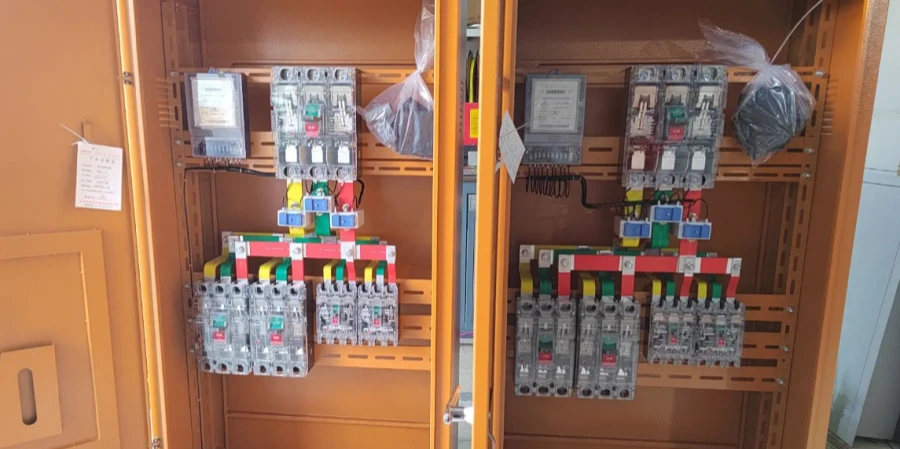
Sunlight, rain, and heat don’t just shape the world around us—they shape the things we build, too. Walk through any outdoor substation and you’ll see the signs—faded covers, cracked housings, metal boxes too hot to touch. Every mark tells a quiet story about time and weather at work.
We often think of electrical gear as strong and unchanging, but nature always finds a way to test that belief. The same sunlight that powers our world slowly weakens plastics. The same warm air that keeps circuits dry by day can invite moisture and corrosion by night. Out there, the elements always have the final word.
That’s especially true for circuit breakers—the small guardians of every power system. When their housings fade or their parts grow brittle, performance quietly shifts long before failure shows. Understanding what the environment does to them is the first step to keeping the power steady and safe. As a breaker factory, we know that durability starts with material science.
UV Radiation and Material Degradation
Ultraviolet (UV) radiation is one of the most common causes of plastic degradation in outdoor electrical equipment. Over time, constant exposure to sunlight breaks down the chemical structure of plastics, leading to discoloration, surface cracking, and loss of strength. What once served as a durable protective housing can become brittle and fail entirely—that’s UV damage in action.
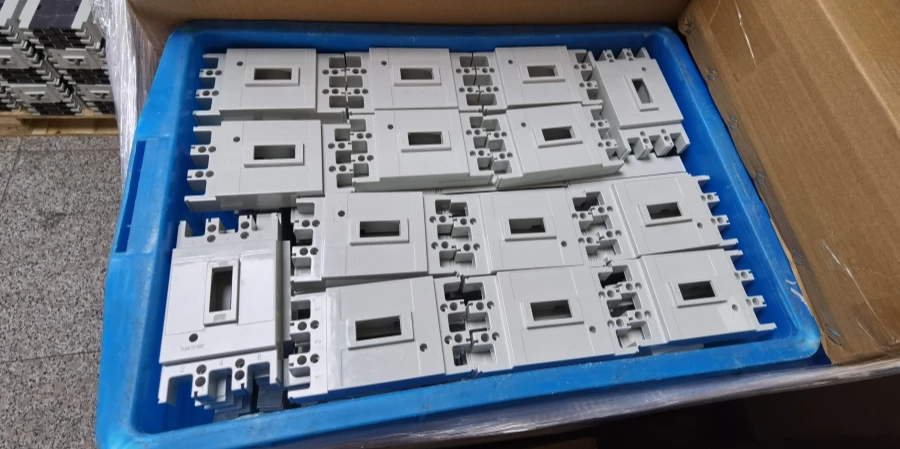
The Science Behind Plastic Breakdown
Ultraviolet light does more than fade the surface—it attacks the plastic from within. UV rays penetrate the material and break apart the molecular chains that hold it together. This on going process, called photochemical degradation, starts the moment sunlight hits the surface.
Think of plastic molecules like long chains of paperclips linked together. UV radiation acts like a pair of tiny scissors, snipping those links one by one. As more links break, the plastic loses flexibility and strength. What was once a durable protective casing becomes brittle and fragile.
The signs show up gradually. First comes color fading—that protective pigment that protect the surface start to break down. Then, the surface begins to chalk, forming a powdery texture. Eventually, you see crazing (those fine surface cracks) that deepens into actual structural cracks. By this point, the housing has lost much of its protective function.
Material Matters More Than You Think
Not all plastics fail at the same rate. Standard ABS (Acrylonitrile Butadiene Styrene) and polycarbonate housings need UV stabilization additives to survive outdoors. Without them, serious degradation within two to three years of direct sun exposure. Unlike these standard materials, Sincede use high-performance DMC (Dough Molding Compound) or reinforced nylon to ensure structural integrity even after years of intense UV exposure.
Standard ABS and polycarbonate housings degrade quickly. That’s why Sincede use high-performance DMC (Dough Molding Compound) or reinforced nylon, which maintain structural integrity even after years of intense UV exposure.
High-quality outdoor-rated materials include UV absorbers and antioxidants mixed into the plastic during manufacturing. These additives sacrifice themselves, absorbing the UV energy before it can damage the base material. But even with these stabilization, protection isn’t permanent—it just buys you more time.
The location matters too. Near the equator, UV intensity runs higher. At higher altitudes, thinner air means less UV filtering. As a result, elevated sites experience faster degradation—roughly equal to several extra years of exposure at sea level. (Related Reading: How Altitude Affect Circuit Breaker’s Performance?)
Beyond the Housing
Here’s what surprises people: UV damage doesn’t stop at the outer casing. Those internal insulators, wire connectors, and cable jackets are usually plastic too. When the housing cracks, sunlight seeps inside, exposing these internal parts. That’s when insulation on live conductors begins to degrade, and wire connections start to weaken.
In some cases, we could find breakers that look fine electrically—no burn marks or worn contacts—but their mechanical parts have become brittle after long exposure to sunlight. As the material weakens, it can crack during normal temperature changes, making it hard for the breaker to keep good contact pressure.
| UV Damage Stage | Visible Signs | Structural Impact | Typical Timeline (Direct Sun) |
|---|---|---|---|
| Early | Slight fading, loss of gloss | Minimal strength loss | 6-12 months |
| Moderate | Noticeable discoloration, surface chalking | 15-25% strength reduction | 1-3 years |
| Advanced | Visible crazing, surface cracks | 40-60% strength loss | 3-5 years |
| Severe | Deep cracks, pieces breaking off | Structural failure risk | 5+ years |
The frustrating truth is that UV damage can’t be reversed. Once those molecular chains break, they’re gone for good. The only solution is replacement. That’s why material selection at the design stage is so critical—preventing damage is always cheaper and easier than repairing it later.
Heat Effects on Circuit Breaker Performance
Walking through outdoor substations on summer afternoons, I’ve learned to never touch a metal enclosure without gloves. Those boxes get hot—not just warm, but genuinely hot enough to burn your hand. And that heat does more than make the box uncomfortable to touch; it basiclly changes how the circuit breakers inside behave.
Why Temperature Causes False Trips?
Circuit breakers use a clever mechanism called a bimetallic strip to detect overload conditions. This strip consists of two different metals bonded together—typically brass and steel, or similar combinations. These metals have different thermal expansion rates. When electrical current flows through the strip, it heats up. The metal with the higher expansion rate grows more than its partner, causing the strip to bend. Bend far enough, and it triggers the trip mechanism to disconnect the circuit. (Related Reading: How Bimetal Strips Work in Circuit Breakers?)
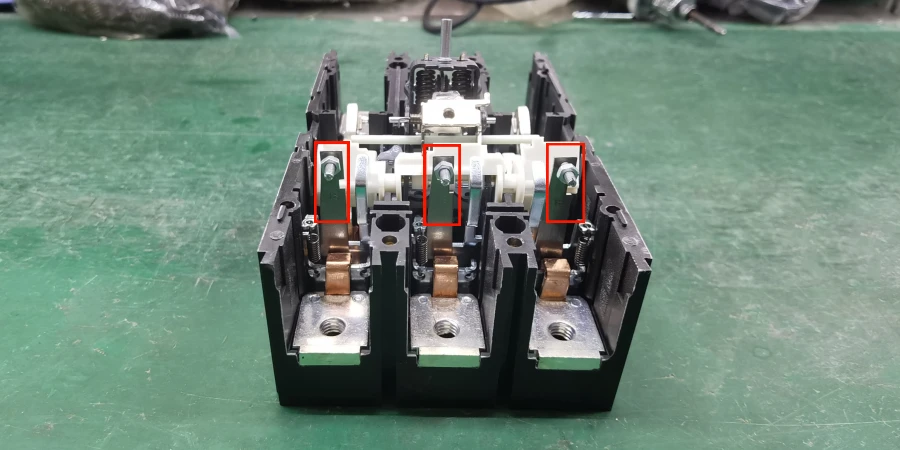
Here’s the problem: the strip responds to total heat, not just heat from electrical current. On a hot day, the strip starts already warm from ambient temperature. It needs less additional heat from electrical current to reach its trip point. A breaker rated for 20 amps might trip at only 14 or 15 amps when sitting in a 130°F enclosure.
The Math Behind Thermal Sensitivity
Industry testing shows predictable patterns. For every 10°C (18°F) above the standard reference temperature of 40°C (104°F), a thermal-magnetic breaker’s trip point can shift by 10-15%. In practical terms, this means that on very hot days, breakers can trip at roughly 75–80% of their rated capacity if the enclosure interior is significantly hotter than the ambient air—especially when solar heat gain elevates the internal temperature of the housing.
Cold weather works in reverse. In freezing temperatures, the bimetallic strip needs more heat to bend, so a breaker may not trip until current exceeds its rating by 20–30%. That’s dangerous—you want breakers to protect against overloads, not ignore them.
Color Makes a Massive Difference
One surprising factor is enclosure color. Color dramatically affects internal temperature. A black-painted metal box in direct sunlight can run 20-25°F hotter inside than an identical white-painted box sitting right next to it.
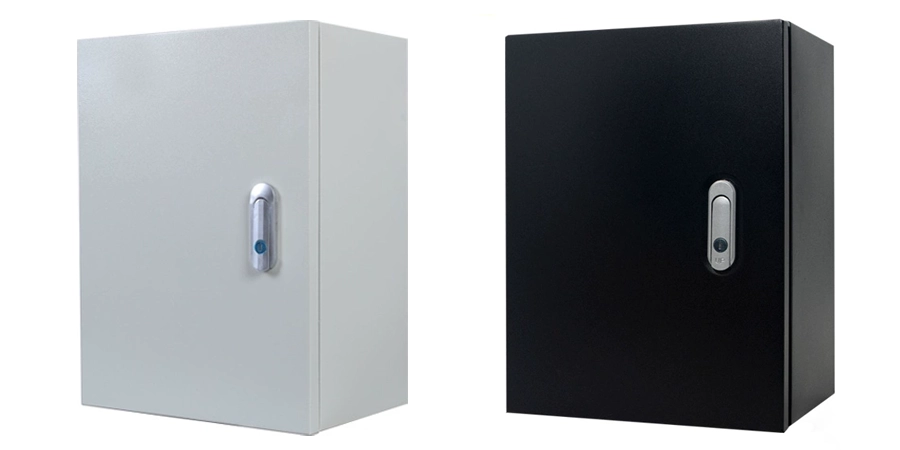
The physics is simple. Black surfaces absorb roughly 90% of solar radiation, while white surfaces absorb only 20-30%. That absorbed energy becomes heat. According to IEEE testing standards, a gray-painted medium-sized enclosure with a solar absorption coefficient of 0.50 experiences a temperature rise of about 14°F (7.7K) from solar radiation alone when exposed to typical summer day.
| Enclosure Color | Solar Absorption | Heat Dissipation Required | Temp vs. White |
|---|---|---|---|
| White | 20-30% | ~650 BTU/hr | Baseline |
| Light Gray | 45-55% | ~838 BTU/hr | +5-7°F |
| Dark Gray | 60-70% | ~1,050 BTU/hr | +10-12°F |
| Black | 85-95% | ~1,308 BTU/hr | +20-25°F |
Environmental Challenges: Moisture and Corrosion
Moisture inside outdoor electrical enclosures is a bigger problem than most people realize. Even in “sealed” boxes, condensation can form when temperature changes cause humid air to cool and turn into water droplets, leading to corrosion and equipment issues.
How Thermal Cycling Creates Moisture?
Solar heating creates a daily temperature cycle that creates big problems on sealed enclosures. During the day, the sun heats the enclosure, warming the air inside and causing it to expand. As that warm air expands, some escapes through small gaps or breathes out through seals. At night, the enclosure cools fast—especially metal boxes, which lose heat quickly. As the air inside contracts, it creates a slight vacuum, allowing cooler outside air to flow in.
Here’s where it gets problematic: that incoming cool air often carries moisture. When it contacts still-warm internal surfaces, or when the enclosure cools below the dew point temperature, water vapor condenses into droplets. Moisture forms on busbars, terminals, and circuit breaker contacts—exactly where you don’t want it.
This cycle repeats daily: heat up, cool down, draw in humid air, condense. In coastal areas or humid climates, internal humidity in “sealed” enclosures can reach 85–95% at certain times of the year. At those levels, condensation is inevitable even with minor temperature drops.
The Corrosion Cascade
Moisture sets off several destructive processes. The most immediate one is contact oxidation. Circuit breaker contacts are typically copper, silver, or copper-silver alloys. These metals conduct electricity excellently—until they oxidize. Copper oxide and silver oxide are much poorer conductors than their base metals.
When moisture sits on electrical contacts, it accelerates oxidation dramatically. Water acts as an electrolyte, enabling electrochemical reactions. A thin oxide layer forms on contact surfaces, which increases electrical resistance at the connection point. Higher resistance means more heat generation. More heat creates more thermal stress, potentially accelerating the oxidation further.
Beyond contacts, moisture attacks other metal components. Bus bars develop surface corrosion. Steel hardware rusts. Aluminum components can pit. Mounting bolts can corrode to the point where they barely support the weight of the breaker they are meant to hold in place.
The Hidden Damage Pattern
What makes condensation tricky is that you often can’t see it happening. By the time you open the enclosure for inspection, the sun may have dried any surface moisture. The damage occurs overnight or during cool morning hours, then disappears before anyone looks. You only discover the problem when equipment fails or when you specifically check for corrosion during detailed maintenance.
Managing Moisture in Real Conditions
Preventing condensation requires a multi-layered approach:
- Control temperature swings – Light-colored enclosures help by reducing peak daytime temperatures, minimizing extreme day-night cycling. Insulated enclosures buffer temperature changes, though they add cost.
- Provide proper ventilation – Breathable hydrophobic vents equalize air pressure without admitting water. These vents allow air molecules through but block droplets. They cost $15–30 per vent and make a big difference.
- Regular inspection – Opening enclosures quarterly in humid climates lets you catch corrosion early. Wipe bus bars and connections with a contact cleaner if you notice discoloration or early oxidation.
| Moisture Control Method | How It Works | Cost Impact | Effectiveness |
|---|---|---|---|
| Light-colored enclosure | Reduces temperature swings | None (color choice) | Moderate |
| Breathable vents | Equalizes pressure without admitting water | Low ($15-30/vent) | High |
| Desiccant packs | Absorbs moisture from internal air | Very Low (requires replacement) | Moderate (short-term) |
| Sealed with pressure relief | Prevents air exchange | Moderate | High (if maintained) |
| Internal heating | Keeps temperature above dew point | High (energy cost) | Very High |
The manufacturers know condensation happens. That’s why quality outdoor-rated breakers use silver or silver-alloy contacts—silver oxide conducts better than copper oxide, so oxidation causes less performance degradation. But even silver contacts fail eventually if moisture intrusion continues unchecked.
Conclusion
Outdoor equipment doesn’t fail overnight—it wears down quietly, piece by piece. Designing with nature in mind isn’t just smart engineering; it’s respect for time. Every enclosure tells a story of sunlight, heat, and moisture—the real challenge is writing one that lasts.