
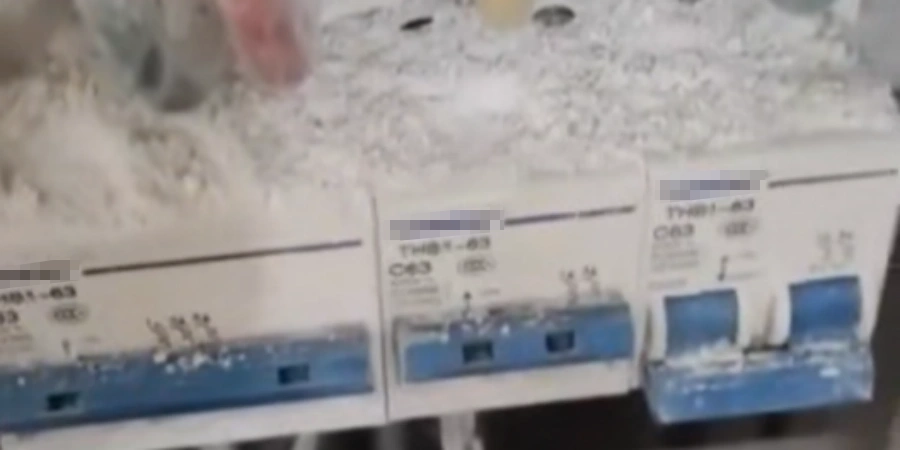
Dust is easy to ignore. It settles quietly, shows up slowly, and rarely looks like a real threat. Most people see it as a cleaning issue—something that collects on shelves and equipment but doesn’t change how anything works. In electrical rooms, it often becomes part of the background, blending in until it’s forgotten.
But behind that harmless appearance is a kind of risk that grows without drawing attention to itself. As dust gathers on circuit breakers, it doesn’t just sit there—it interacts with heat, humidity, and moving parts in ways most people never notice. What begins as a thin layer can gradually change how a breaker behaves, long before anyone realizes something is wrong.
The surprising part is how small the first signs can be. A slight temperature rise, a slow response, a trip that seems unusual—tiny clues that point to a bigger story. Paying attention to these early signals can make the difference between predictable operation and a failure that catches everyone off guard.
Understanding How Dust Damages Circuit Breakers
When I first joined this industry, I thought dust was just an appearance issue—something that made equipment look dirty but didn’t really affect performance. I couldn’t have been more wrong. Dust accumulation on circuit breakers creates multiple failure pathways that quietly undermine both safety and reliability.
In reality, dust accumulation is one of the most overlooked threats to electrical system performance. When dust particles settle on circuit breaker surfaces and work their way into internal components, they form an insulating blanket that traps heat and blocks proper airflow. This seemingly harmless coating can trigger a cascade of problems ranging from nuisance tripping to complete equipment failure.
The Multiple Failure Mechanisms
Dust doesn’t damage circuit breakers in just one way—it creates several issues at the same time.
First, there’s the mechanical blockage. Dust particles build up in the moving parts of circuit breakers, particularly around the trip mechanism and contact assembly. Over time, this buildup makes the breaker slow to respond or unable to operate correctly.
Next is contact contamination. Circuit breaker contacts need clean metal-to-metal surfaces to conduct current properly. When dust settles between these contacts, it increases electrical resistance at that junction point. Higher resistance means more heat generation, which accelerates wear and component degradation. This creates a feedback loop: dust causes heating, heating causes oxidation, and the problem steadily gets worse.
Third, dust contributes to insulation breakdown. Modern circuit breakers rely on precise insulation systems to keep current flowing only where it’s supposed to. When conductive or moisture-rich dust accumulates on insulation surfaces, it can create tracking paths—new routes for electricity to flow where it shouldn’t. This can lead to internal arcing, which generates intense heat and can ultimately destroy the breaker.
The Statistical Reality
According to industry research, dust, dirt, and oil buildup accounts for approximately 2.2% of electrical equipment failures in factory settings. At first glance, 2.2% might not sound like much, but consider this: in a large industrial facility with hundreds of circuit breakers, that percentage translates to several failures per year that could have been prevented. More importantly, this failure rate increases dramatically in high-dust environments like mining operations, food processing plants, chemical manufacturing facilities, and woodworking shops.
The Thermal Impact: How Dust Acts as an Insulator
One of the most critical ways dust damages circuit breakers is through thermal stress, and this is something I wish more people understood clearly. Circuit breakers generate heat during normal operation—it’s unavoidable when you’re passing current through conductors and mechanical components. Under clean conditions, this heat dissipates into the surrounding air through convection and radiation. But when dust builds up on the breaker, it basiclly changes this thermal equation.
Dust acts as an insulating layer. They create a barrier that slows heat dissipation from components under load. Think of it like wrapping your circuit breaker in a blanket—the heat has nowhere to go, so it builds up inside the device. This temperature buildup accelerates component degradation and can lead to premature failure in ways that aren’t immediately obvious.
The Temperature-Lifespan Relationship
Here’s where the numbers really stand out. Research from the U.S. Department of Energy shows that a dust layer just 0.3mm thick can increase circuit breaker temperature rise by 15°C. That’s barely visible dust—not the thick coating you might see in a particularly dirty environment. Just 0.3mm, and you’re already seeing a 15-degree temperature increase.
Now, 15 degrees might not sound alarming, but here’s the critical point: the effect of temperature on equipment lifespan is generally exponential, not linear. A commonly referenced guideline—based on Arrhenius thermal aging model—shows that many heat-sensitive components can age roughly twice as fast for every 10°C rise in operating temperature. This isn’t a strict rule for all circuit breakers, but it does reflect the overall trend.
So that seemingly minor dust layer causing a 15-degree increase? It can significantly accelerate internal wear and shorten the breaker’s effective service life. A breaker expected to last 20 years under clean conditions might see its lifespan meaningfully reduced under persistent dust-caused heating.
Here’s a simple table to put the impact into perspective:
| Dust Layer Thickness | Temperature Rise | Impact on Lifespan | Cumulative Effect |
|---|---|---|---|
| 0.3mm (barely visible) | +15°C | 50% reduction | 10 years instead of 20 |
| 0.6mm (light coating) | +30°C | 75% reduction | 5 years instead of 20 |
| 1.0mm+ (visible buildup) | +50°C or more | 85%+ reduction | 3 years or less |
How the Thermal Damage Mechanism Works?
The mechanism is straightforward but destructive. Dust clogs ventilation paths in and around the circuit breaker. It covers cooling fins or vented surfaces that were specifically designed to maximize heat dissipation. It reduces airflow efficiency around the device. All of this causes internal components to operate beyond their thermal design limits.
This is especially problematic in molded-case circuit breakers (MCCBs) and air circuit breakers (ACBs), which rely heavily on proper convective cooling for safe operation. These breakers were engineered with specific assumptions about heat transfer. When dust disrupts that heat flow, components experience thermal stress they weren’t designed to handle.
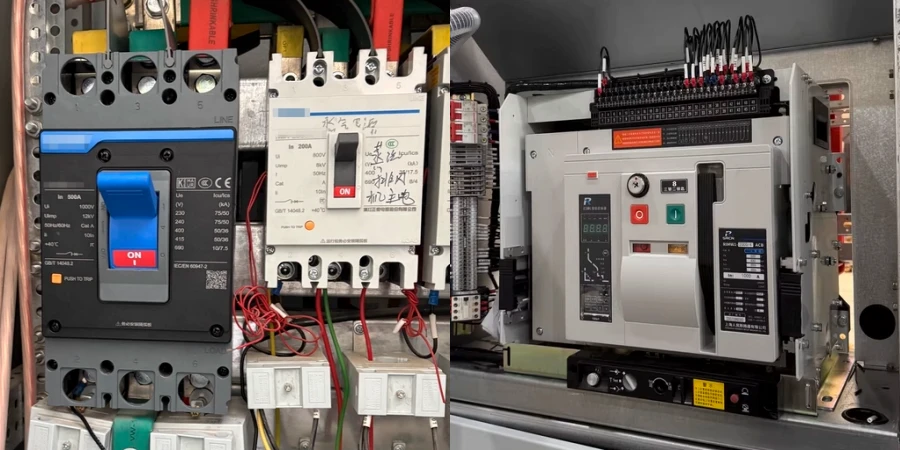
The bimetallic trip elements inside thermal-magnetic circuit breakers are especially vulnerable. These components are calibrated to trip at specific temperatures corresponding to overcurrent conditions. When dust causes general temperature increase throughout the breaker, the bimetallic is already closer to its trip point even under normal load. This leads to nuisance tripping—the breaker trips when it shouldn’t because the ambient temperature inside the device is already elevated from dust insulation.
Repeated overheating also causes material fatigue. Springs lose calibration. Contacts oxidize more quickly. Insulation breaks down faster. Each of these issues compounds over time, pushing the breaker toward early failure.
Thermal Runaway Conditions
In extreme cases, dust-related heating can create thermal runaway conditions. This happens when heat generated by resistance in contaminated contacts increases resistance even further, which produces more heat, which accelerates degradation—and so on.
What makes thermal damage from dust so dangerous is that it’s often invisible until it’s too late. From the outside, the breaker looks fine. It may even seem to operate normally most of the time. But inside, components are degrading at an accelerated rate because the temperature is consistently higher than intended. Then one day, the breaker fails—without much warning—and you’re left dealing with downtime, emergency repairs, and potential safety risks.
Conductive vs. Non-Conductive Dust: Understanding the Risks
Not all dust presents the same level of risk to circuit breakers. The composition and conductivity of dust particles determine the severity and type of potential failures you’ll encounter. While regular household or mineral dust mainly affects thermal performance, conductive dust creates direct electrical hazards that can lead to sudden catastrophic failures.
Understanding this difference helps facility managers choose the right protection strategies for their specific environments. A woodworking shop and a metal fabrication plant may both be dusty, but the risks they face are very different.
Sources and Types of Conductive Dust
Conductive dust comes from several industrial sources. Metallic particles from motors, grinding operations, cutting tools, and machinery are highly conductive. Carbon-based dust from certain manufacturing processes also conducts electricity. Ferrous particles from grinding or cutting are particularly dangerous because they’re both conductive and magnetic—meaning they can be drawn toward electrical equipment.
One source that often surprises people is coastal environments. Salt-laden particles in these areas, combined with high humidity, can become highly conductive. Facilities located near the ocean often experience higher corrosion rates and more frequent electrical issues compared to similar inland facilities. The combination of salt air and industrial dust creates particularly challenging conditions for electrical equipment.
What makes conductive dust particularly dangerous is how it behaves when mixed with moisture. Even poorly conductive dust can become partially conductive in humid conditions above 70% relative humidity. The dust absorbs moisture from the air, creating pathways for electricity to flow where it shouldn’t. This is why coastal facilities and humid industrial environments experience more severe dust-related problems than dry inland locations.
The Electrical Hazards Created by Conductive Dust
Conductive dust triggers several immediate electrical risks.
First is short circuit formation. When conductive dust bridges live terminals and grounded surfaces, it creates low-resistance paths that bypass protective barriers.
Second is arcing events. Electrical arcing between contacts and conductive dust particles generates intense heat—far higher than normal operating temperatures. In areas where flammable dust is present, such as sawdust, grain dust, or chemical powders, this can trigger dust explosions that are far more destructive than typical electrical fires.
Third is tracking and corona discharge. Moisture-laden conductive dust enables tracking, where current burns a gradual path across insulation surfaces. This process is slow and often goes unnoticed until the insulation fails. Corona discharge can also occur when high-voltage fields interact with the dust layer, further eroding contacts and insulation.
Comparison Table: Conductive vs. Non-Conductive Dust
| Characteristic | Non-Conductive Dust | Conductive Dust |
|---|---|---|
| Primary Sources | Wood, cotton, silica, most minerals | Metallic particles, carbon, salt-laden air |
| Main Hazard | Thermal insulation, mechanical blockage | Electrical shorts, arcing, tracking |
| Failure Timeline | Weeks to months (gradual) | Hours to days (can be sudden) |
| Humidity Impact | Becomes conductive above 70% RH | Conductive at all humidity levels |
| Prevention Priority | Thermal management, regular cleaning | Immediate removal, enhanced protection |
| Typical Environments | Woodworking, textile, food processing | Metal fabrication, mining, coastal facilities |
For environments with conductive dust, standard breakers aren’t enough. Industrial facilities often require sealed enclosures or Air Circuit Breakers (ACB) with higher IP ratings and conformal coatings to prevent short circuits and ensure continuous operation.
The Compounding Effect of Humidity
The risk increases significantly in environments where dust and high humidity are present. In such conditions, metallic dust from industrial operations combined with humidity around 80% can create extremely aggressive environments for circuit breakers. Even robust breakers may experience more frequent failures under these circumstances.
The problem wasn’t the breakers—it was the environment itself. In coastal facilities with salt-air, corrosion rates are much higher than in dry inland locations, potentially reducing circuit breaker lifespan by 40-60%. That’s a massive reduction in equipment life, and it directly impacts maintenance budgets and operational reliability.
Conclusion
Dust and circuit breakers show us that failures rarely start with a big event—they usually begin with things we overlook. Paying attention to small details in our equipment and environment gives us control that reactive maintenance never can.
This article is all about understanding the risks and how dust causes damage. How to prevent these problems isn’t covered here, but we’ll explain prevention strategies, cleaning tips, and inspection checks in a separate article.