
Most electricians and homeowners have faced it at some point—a breaker that keeps tripping for no clear reason, especially on the hottest days. It’s easy to blame the wiring or the load, but sometimes the real cause isn’t electrical at all. It’s the weather.
Temperature quietly shapes how every circuit breaker behaves. What feels like a “nuisance trip” may actually be the breaker doing exactly what it’s designed to do—responding to heat, both from current and from the air around it.
Understanding that relationship between temperature and breaker performance can save hours of troubleshooting and a lot of frustration. More importantly, it gives us a deeper respect for the physics built into even the simplest safety devices we rely on every day.
How Temperature Affects Circuit Breaker Trip?
If I had a dollar for every time someone asked me this question over the years, I’d probably have my next vacation paid for: Why does my breaker trip whenever it’s hot outside?
It might sound like a minor annoyance, but it actually points to something fundamental about the way circuit breakers operate.
The Dual Nature of Circuit Breaker Protection
Circuit breakers aren’t just on-off switches. They work using two main principles: thermal and magnetic tripping mechanisms.
-
The magnetic part reacts instantly to short circuits—those sudden, high-current surges that need an immediate shutdown.
-
The thermal part, on the other hand, responds to sustained overcurrent—and that’s where temperature comes into play, and it’s what we’re focusing on here.
The thermal mechanism works on a simple principle: electrical current produces heat. When the internal temperature of the breaker reaches a set threshold, it trips to protect the circuit. Straightforward enough, right? But here’s what it gets interesting: ambient temperature directly influences how quickly the breaker reaches that trip point.
Think of it like this: if you’re trying to boil water on a stove, it boils faster if the water starts warm versus ice cold. Circuit breakers work the same way. When the air around your breaker box is hot, the internal components start at a higher baseline temperature. That means they need less additional heat from electrical current to hit the trip point.
Why Baseline Temperature Changes Everything?
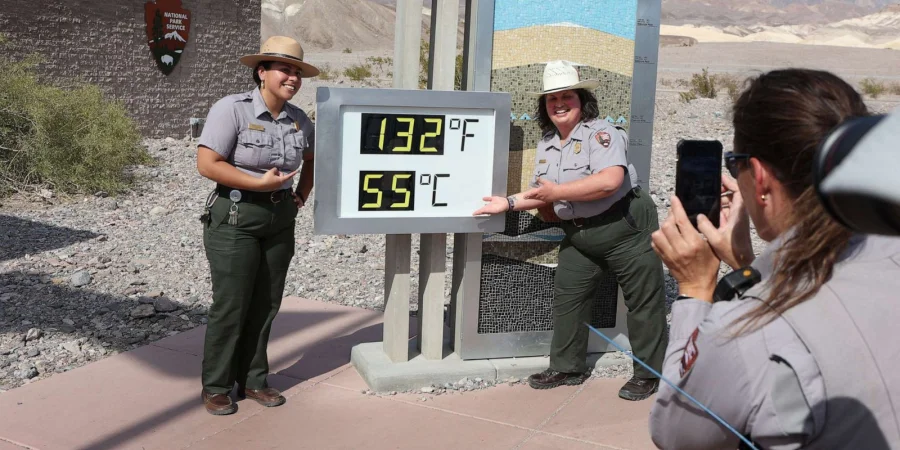
In many hot regions—think Arizona in midsummer—it’s common to see electrical panels that trip again and again in the afternoon, even when everything is wired and sized correctly. Nothing’s wrong with the installation. The real issue is the heat inside that sun-baked metal box, which can climb to around 50°C. (Related Reading: Why Is Arizona So Hot?)
When the ambient temperature increases, every component inside the breaker starts warmer. The contacts, the bimetallic strips, the housing—everything. This elevated baseline means the breaker becomes more sensitive. It will trip at lower current levels than it would under normal conditions because it’s already partway to its thermal limit before any serious load even flows through it.
The reverse happens in cold environments. Components stay cooler, allowing them to carry slightly higher current before tripping. That’s why breaker problems are rare in winter—but in summer, service calls often surge.
Standard Temperature Ratings You Should Know
Many people don’t realize that circuit breakers have reference temperatures built into their ratings. These are not arbitrary—they’re standardized testing conditions used to determine a breaker’s nameplate performance.
Here’s a quick reference:
| Breaker Type | Standard Reference Temperature | Standard |
|---|---|---|
| Domestic/Residential | 30°C (86°F) | IEC 60898 series |
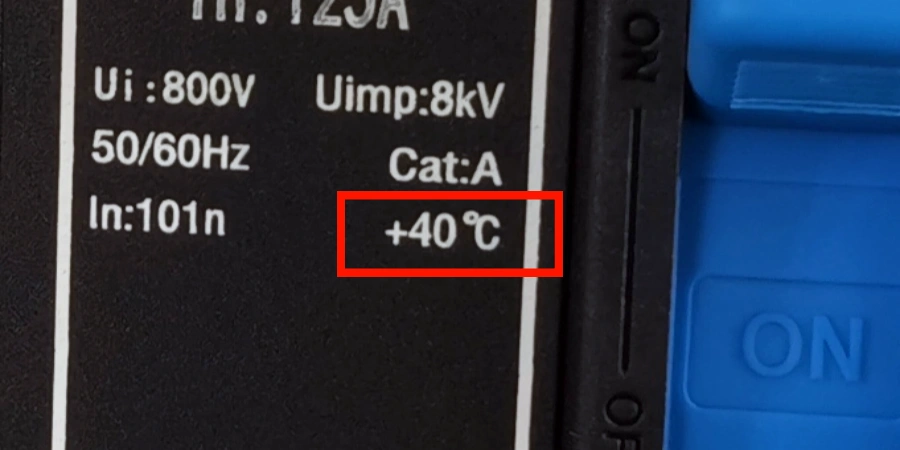
| Industrial/Commercial | 40°C (104°F) | IEC 60947 series |
When a manufacturer rates a breaker at 20 amps, that mean it can carry 20 amps continuously at that reference temperature. Once your actual ambient temperature differs from that reference, the breaker’s real-world performance changes. A 20-amp residential breaker rated at 30°C won’t actually handle 20 amps if it’s working in a 50°C environment. This isn’t a defect or poor quality—it’s just physics.
This sensitivity makes quality manufacturing non-negotiable. For industrial applications where temperatures fluctuate, you need circuit breakers built to rigorous standards to ensure the rating on the label matches performance in the field.
Understanding Thermal Sensitivity: The Bimetallic Strip
I’ll be honest—when I first started in this industry, I thought circuit breakers were just fancy switches with some electronics inside. It wasn’t until I worked in a breaker factory and saw the components up close that I understood the elegant simplicity of thermal protection.
How Two Metals Create a Temperature Sensor
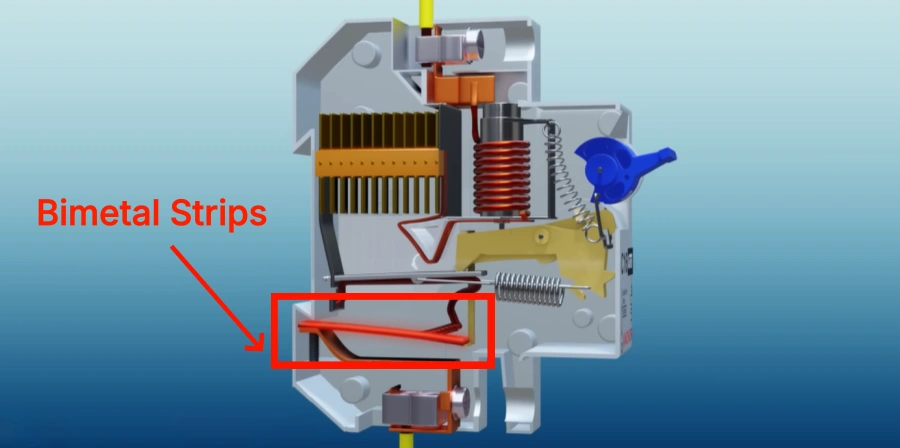
The bimetallic strip is a brilliant piece of engineering. Imagine two thin metal strips—usually steel and copper, or brass and steel—bonded together permanently. These metals expand at different rates when heated, a property known as thermal expansion.
As current flows through the circuit breaker, it produces heat. That heat warms the bimetallic strip. Because one metal expands faster than the other, the strip bends or curves. It’s a bit like watching a metal measuring tape curl in the sun—only in this case, the movement is controlled, consistent, and incredibly precise.
When the strip bends far enough, it activates the breaker’s operating mechanism, opening the circuit and stopping the flow of electricity. The process happens automatically—no electronics, no sensors, and no external power required.(Related Reading: How Bimetal Strips Work in Circuit Breakers?)
The 10°C Rule That Changes Everything
Here’s a number that surprised me when I first learned it: a 10°C rise in ambient temperature can reduce the trip current by about 8%.
Let’s put that into perspective.
Say you have a 20-amp breaker operating in a room at 30°C—pretty comfortable conditions. Now imagine that same breaker on a hot summer day when the temperature inside your electrical panel reaches 40°C. That 10-degree increase means your breaker will now trip at roughly 18.4 amps instead of 20 amps.
That might not sound like much, but consider a typical home with air conditioning running, someone using the oven, and a few other appliances operating. You might be pulling 19 amps—well within your breaker’s rating under normal conditions. But on that hot day? Your breaker sees that 19-amp load as an overload and trips.
Real-World Sensitivity in Action
This case happens countless times on-site. Two identical circuit breakers—same model, same rating, same building. One is in a climate-controlled electrical room. The other is in a poorly ventilated utility closet. Come summer, the second one trips repeatedly, while the first keeps running without issue.
The bimetallic strip doesn’t care about your wiring layout or load calculations—it responds purely to temperature. When the ambient temperature is high, the strip starts closer to its bending limit. So when current flows through it, even normal levels can push it over the edge and trigger a trip much sooner.
That’s why two circuits carrying the exact same load can behave completely differently depending on location. A 15-amp breaker in a cool basement might run perfectly all year, while the same setup in a hot attic could trip constantly in July.
Same circuit, same load, different temperature environment.
Can Low Temperatures Prevent Breakers from Tripping?
Now that we’ve talked about how heat affects circuit breakers, it’s natural for many people to wonder about the opposite: what happens when temperatures drop?
It’s a fair question—especially for outdoor panels, remote installations, or unheated utility rooms exposed to harsh winter conditions.
How Cold Affect Trip Sensitivity
In cold weather, the same thermal principles apply—but in reverse. The bimetallic strips inside your breaker start at lower baseline temperatures, which means they need more heat generated to reach the trip point. In other words, the breaker becomes slightly less sensitive to current. It allows a bit more current to flow before tripping.
At first, that might sound risky. If a breaker trips less easily, could it fail to protect against overloads? Could dangerous overcurrent conditions go unchecked?
Here’s the reassuring part: modern circuit breakers are specifically designed and tested to work reliably in cold conditions. While manufacturers publish derating curves down to -10°C or -14°F, this represents the limit of standard data—not the actual minimum operating temperature.
The Real Issue: Mechanical Behavior in the Cold
The real challenge in freezing conditions isn’t the thermal trip—it’s the mechanical performance of breaker operation. Circuit breakers rely on moving parts and lubricants to function smoothly. In extreme cold, two things can happen:
-
Lubricants can thicken, making internal movement slower.
-
Metal components can contract, which might slightly alter clearances or stiffness.
In theory, either could affect performance. But in practice, testing shows otherwise.
The Minnesota Department of Labor performed extensive cold-weather testing that put these concerns to rest. They tested circuit breakers at -50°C (-58°F)—far colder than most installations will ever experience—and applied overcurrent conditions.
Even with breaker handles caked in ice, every tested breaker tripped successfully. The overcurrent protection worked exactly as designed, despite conditions that would shut down most mechanical equipment.
Industry Standards and Modern Solutions
According to IEEE standards (including the IEEE Blue Book and IEEE 3004.5), molded-case circuit breakers typically operate reliably down to -5°C (23°F) without requiring manufacturer consultation. For electronic trip circuit breakers, NEMA AB 3 Standard recommends consulting the manufacturer if ambient temperature drops below -20°C (-4°F).
Many modern manufacturers have also made major improvements in recent years. Modern breakers use specialized lubricants that maintain proper viscosity down to -40°C, and models intended for cold climates go through qualification testing at those extreme temperatures to ensure dependable operation.
What About the Electrical Circuits Themselves?
One point worth mentioning: while breakers themselves handle the cold well, the rest of the electrical system faces its own challenges. Extreme cold can:
-
Reduce cable insulation flexibility, making wires more prone to cracking.
-
Slightly change electrical resistance, affecting performance over long runs.
Cold weather also brings moisture concerns. When temperatures fluctuate, condensation can form inside panels. That moisture can cause tracking or ground faults, leading to what might look like nuisance tripping. In reality, those trips are legitimate protective actions responding to moisture—not cold-induced failures.
Conclusion
Temperature doesn’t just change how we feel—it changes how electricity behaves. When you think about it, every circuit breaker is a tiny reminder that nature and engineering are always connected, quietly working together to keep our homes and equipment safe.
Reliability starts with choosing the right equipment. Whether you are dealing with extreme heat or freezing cold, partnering with a manufacturer who understands these environmental variables ensures your system stays protected.