
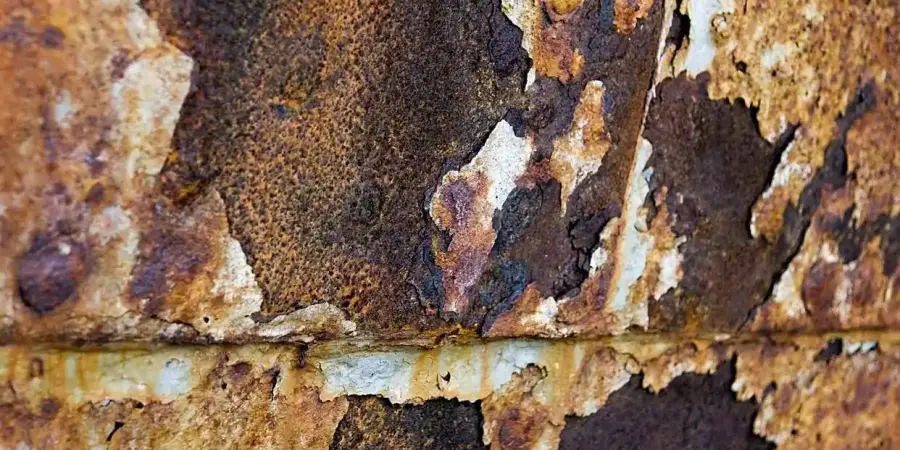
Metal may seem strong and unchanging, but even the toughest materials can quietly wear down over time. In electrical systems, invisible gases floating in the air can slowly attack metals and other components, creating problems long before anyone notices. These aren’t obvious hazards—they work silently, at levels far too low for our senses.
Circuit breakers are especially vulnerable. They carry electricity, make or break connections, and rely on precise mechanical movements. Even a small layer of corrosion can interfere with performance, causing heat, resistance, or failure. The damage is gradual, cumulative, and often hidden, but it can have big consequences if ignored.
It’s a reminder that what we can’t see can still have a big impact. As a source factory with 26 years of experience, we’ve seen how invisible corrosion can silently destroy entire switchgears from the inside out.
Types of Corrosive Gases That Attack Circuit Breakers
The truth is, circuit breakers don’t just fail because they’re old. Often, it’s the invisible stuff in the air that’s slowly eating away at the metal inside. These contaminants are known as corrosive gases, and they’re doing damage at levels you can’t even smell or see. What makes them particularly dangerous is that they can destroy electrical components at concentrations measured in parts per billion—levels that won’t bother you or me at all, but are absolutely destructive to electronics.
The Big Four Troublemakers
Let’s start with the main culprits you’re most likely to encounter. Hydrogen sulfide (H2S) sits at the top of the list as one of the most destructive gases for electrical equipment. You’ll find this one coming from pulping operations and wastewater treatment plants—anywhere organic material breaks down without oxygen. It has that distinctive rotten egg smell, but here’s the scary part: it can do serious damage even when you can’t smell it anymore.
Next is Sulfur dioxide (SO2) is another heavy hitter, especially around power plants and anywhere fossil fuels are burned. Then there’s ammonia (NH3), which shows up in agricultural operations, animal farming facilities, and some industrial refrigeration systems. Don’t let its household cleaner reputation fool you—in higher concentrations, it’s brutal on electrical contacts.
Chlorine compounds round out the main group. This includes both chlorine gas (Cl2) and hydrogen chloride (HCl), commonly found in bleaching operations, cooling towers, and coastal environments where salt spray breaks down into chlorine compounds. In coastal environments, salt-laden air alone can reduce circuit breaker lifespan by a quarter or more.
The Supporting Cast
Beyond the main four, there are other gases that cause problems under the right condiitons. Nitrogen oxides show up wherever there’s high-temperature combustion—think industrial furnaces or certain manufacturing processes. Hydrogen fluoride is particularly aggressive and often comes from burnt cable insulation. If you’ve ever been near an electrical fire and noticed that sharp, nose-burning smell, hydrogen fluoride was likely part of it.
What’s interesting is how these gases are grouped by their chemical behavior. Acidic gases—H2S, SO2, nitrogen oxides, chlorine, and hydrogen fluoride—all work similarly by attacking metal components and forming corrosion products. Caustic gases like ammonia work differently, using a more oxidative attack. Then you have oxidizing gases like ozone, which actually target insulation materials and polymers more than the metals themselves.
Where You’ll Find Them
Knowing where these gases come from makes it easier to spot potential problems before they become expensive failures. Here’s a quick reference:
| Corrosive Gas | Common Sources | Primary Target |
|---|---|---|
| Hydrogen Sulfide (H2S) | Wastewater treatment, pulp mills, oil/gas operations | Copper contacts |
| Sulfur Dioxide (SO2) | Power plants, coal burning, petroleum refining | All metal components |
| Ammonia (NH3) | Agriculture, refrigeration, chemical plants | Copper and brass |
| Chlorine Compounds (Cl2, HCl) | Bleaching operations, coastal areas, cooling towers | Steel and aluminum |
| Nitrogen Oxides (NOx) | Combustion processes, manufacturing | Metal surfaces |
| Hydrogen Fluoride (HF) | Cable fires, certain chemical processes | All metals and insulators |
The Parts Per Billion Problem
Here’s what really gets me: these gases do their worst work at concentrations you’d never notice. We’re talking parts per billion in some cases. I’ve been in facilities where the air quality seemed perfectly fine to breathe, but the electrical panels were showing signs of corrosion after just a couple years. The equipment is essentially a canary in the coal mine—it tells you there’s a problem long before your nose does.
The challenge for facilities is that different gases often appear together. A wastewater treatment plant doesn’t just have hydrogen sulfide—it might also have ammonia, some chlorine compounds from treatment chemicals, and moisture from the process. When these gases combine with humidity, they create a perfect storm for accelerated corrosion. Each gas on its own is bad enough, but together they can reduce breaker lifespan by half or more.
How Corrosion Develops in Electrical Components?
I remember talking to an engineer who described corrosion as "rust’s meaner cousin." That line stuck with me. It’s not quite right but also not entirely wrong. Rust is a form of corrosion, but corrosion in circuit breakers is a more complex and destructive process than the orange flakes you see on an old fence post.
What’s really going on is something called electrochemical corrosion. In simple terms, it’s like a chemical battery running in reverse—one that destroys your equipment instead of powering it. Metal atoms in your circuit breaker contacts and conductors lose electrons and turn into positively charged ions. Those ions dissolve into any moisture or contaminant film sitting on the metal surface. The reaction keeps going until you either remove the corrosive environment or replace the damaged component.
Why Copper and Aluminum Take the Hit
Circuit breakers rely heavily on copper and aluminum because both metals conduct electricity well. Copper especially is prized for its low resistance and reliability. But those same properties also make them vulnerable to certain types of corrosion.
When hydrogen sulfide gas comes into contact with copper, it triggers a reaction called copper sulfidation. This process isn’t slow or subtle. Research data shows that H2S can damage copper at rates between 255 and 382 milligrams per square meter per year, depending on the season. Surprisingly, winter conditions produce the highest corrosion rates at 382 mg/m² annually. Summer follows closely at 265 mg/m², with spring not far behind at 255 mg/m².
These numbers might seem abstract until you realize we’re talking about progressive metal loss from critical electrical contacts. A contact surface that needs to maintain extremely low resistance to function properly is slowly being eaten away, month after month. The variability between seasons tells you something important too—environmental factors like temperature and humidity have a major impact on how fast the damage happens. To combat this, manufacturers like Sincede use high-purity T2 copper with thick silver plating to create a robust barrier against this chemical attack.
The Corrosion Product Problem
What makes this process particularly problematic is what leaves behind. When copper reacts with hydrogen sulfide, it forms copper sulfide (CuS)—a dark, stable compound that’s incredibly difficult to remove. Unlike surface rust that you might chip or scrub off, copper sulfide bonds firmly to the underlying metal. It’s chemically stable, meaning it doesn’t easily break down or wash away.
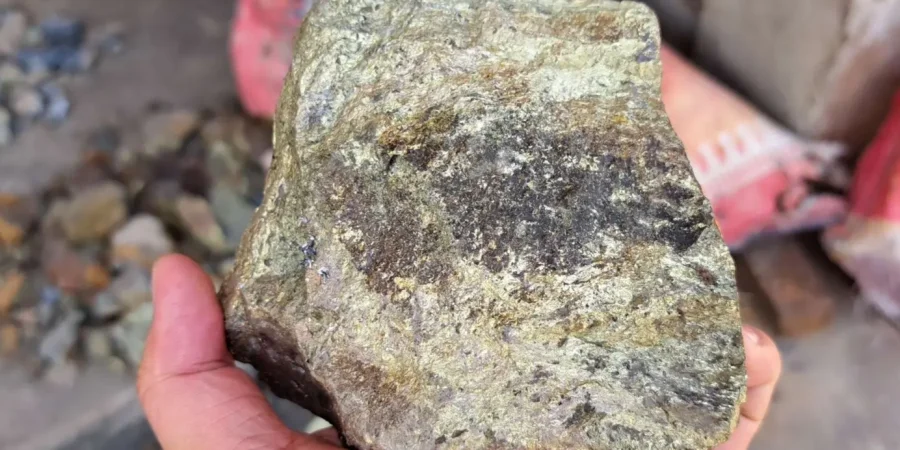
Over time, these corrosion products build up in layers. Eventually, the layer gets thick enough that pieces start flaking off, exposing fresh copper underneath. And guess what happens to that fresh copper? The cycle starts all over again. Instead of slowing down, the process accelerates over time, making it increasingly destructive.
The Moisture Factor
Corrosion needs three things to happen: a metal surface, a corrosive agent (like H2S or SO2), and moisture. Remove any one of these three, and the process slows dramatically or stops altogether. What many people don’t realize, though, is that visible moisture isn’t required.
Even at relatively low humidity levels, microscopic films of moisture can form on metal surfaces. Add in any ionic contamination from chlorine compounds or other contaminants, and sulfide corrosion can proceed even in what seems like a dry environment. The ionic compounds essentially help conduct the electrochemical reaction, acting like an electrolyte in a battery.
This is why coastal facilities are hit so hard. Salt spray deposits sodium chloride—common table salt—on everything. This compound actively pulls moisture from the air and holds it on metal surfaces. Now you’ve got moisture and ionic contamination together, and if there’s any sulfur compound or other corrosive gas in the air, you’ve got all three ingredients for rapid corrosion.
The Acceleration Effect
What concerns me is how different contaminants work together to speed up damage. Small amounts of inorganic chlorine compounds or nitrogen oxides don’t just add to the problem—they multiply it. The presence of these compounds can accelerate sulfide corrosion rates significantly beyond what hydrogen sulfide alone would cause.
Think of it like this: hydrogen sulfide is the main attacker, but chlorine compounds act like they’re holding the door open for it. They lower the barriers that normally slow corrosion, allowing the reaction to proceed more easily. This’s why facilities with multiple corrosive gases present—like a chemical plant near a coast or a wastewater facility using chlorine treatment—often experience much shorter equipment lifespans than you’d expect from a single contaminant.
Different Metals, Different Reactions
Not all metals corrode the same way or at the same rate. Copper sulfidation from H2S happens quickly and creates those stable, hard-to-remove compounds. Aluminum tends to form aluminum oxide when it corrodes, which actually provides some self-protection if it stays intact. Steel rusts through iron oxide formation—the classic red rust we all recognize.
The problem in circuit breakers is that you often have different metals in contact with each other. An aluminum busbar might connect to a copper lug, for example. When moisture and contaminants are present, this creates something called galvanic corrosion—essentially a tiny battery forms between the two different metals, and the more reactive metal (usually aluminum) corrodes faster.
Temperature’s Role
Temperature affects corrosion in ways that surprised me early in my career. Higher temperatures generally speed up chemical reactions—that’s basic chemistry. But temperature fluctuations might actually be worse than consistently high temperatures because of the condensation they cause.
When warm, humid air contacts a cooler metal surface, water condenses out of the air onto that surface. Now you’ve got the moisture needed for corrosion to proceed, and it happened in an environment where we might not expect moisture problems. This is why panels in spaces without climate control—warehouses, outdoor enclosures, or facilities with day-night temperature swings—often show more corrosion than similar panels in consistently warm environments.
Temperature also affects the reaction itself. For every 10°C increase in temperature, reaction rates roughly double—a relationship that holds true for corrosion just like other chemical processes. So a panel operating at 40°C will degrade much faster than one at 30°C, all else being equal.
| Environmental Factor | Impact on Corrosion Rate | Why It Matters |
|---|---|---|
| Humidity >50% | Dramatically accelerates | Provides moisture for electrochemical reactions |
| Temperature fluctuations | Creates condensation | Produces moisture films on metal surfaces |
| Multiple gas types | Synergistic acceleration | Gases work together to worsen damage |
| Ionic contamination | Enables reaction at lower humidity | Acts as electrolyte for corrosion process |
| Higher temperatures | Doubles rate per 10°C increase | Speeds all chemical reactions |
Which Circuit Breaker Parts Are Most Vulnerable?
Not all parts of a circuit breaker corrode at the same rate. Some components are more vulnerable due to their function, the materials they’re made of, or their exposure to environmental contaminants. Knowing which parts fail first helps prioritize inspections and prevent unexpected outages.
Contacts and Contact Surfaces: The Primary Target
Internal electrical contacts take the brunt of corrosion. These are the parts that physically touch to complete the circuit when the breaker is closed. They need to maintain extremely low resistance to work properly. Even a thin layer of corrosion dramatically increases resistance.
When corrosion builds up on contact surfaces, several bad things happen at once. The increased resistance causes heat generation. This heat accelerates chemical reactions, causing even faster corrosion. The heat can also cause arcing when the breaker operates, and arcing further damages the contact surface. It’s a vicious cycle that feeds on itself.
Industry data shows that contact corrosion accounts for 30-40% of all equipment failures in process control rooms and equipment rooms. That’s not a small percentage—contact corrosion is often the leading cause of electrical system failures in environments with corrosive gases present.
The problem gets worse because contacts aren’t usually easy to inspect without disassembling the breaker. By the time you notice operational issues—frequent tripping, hot spots, burning smells—the corrosion is often quite severe. I’ve seen contacts so corroded that they’d welded themselves in the closed position, making the breaker impossible to trip even manually.
Busbars, Connectors, and Terminal Points
After contacts, the next most vulnerable areas are connection points—Busbars, terminal lugs, and connector bars. These areas are prone to something called crevice corrosion, which occurs in confined spaces where corrosive substances can penetrate but don’t easily wash away.
Picture a terminal lug bolted to a busbar. There’s a tiny gap between the two surfaces where they meet. Corrosive gases and moisture can work their way into this gap, and once there, they’re trapped. The normal air circulation that might dry out moisture or disperse contaminants on exposed surfaces doesn’t happen in these tight spaces. Corrosion proceeds faster in these crevices than on open surfaces.
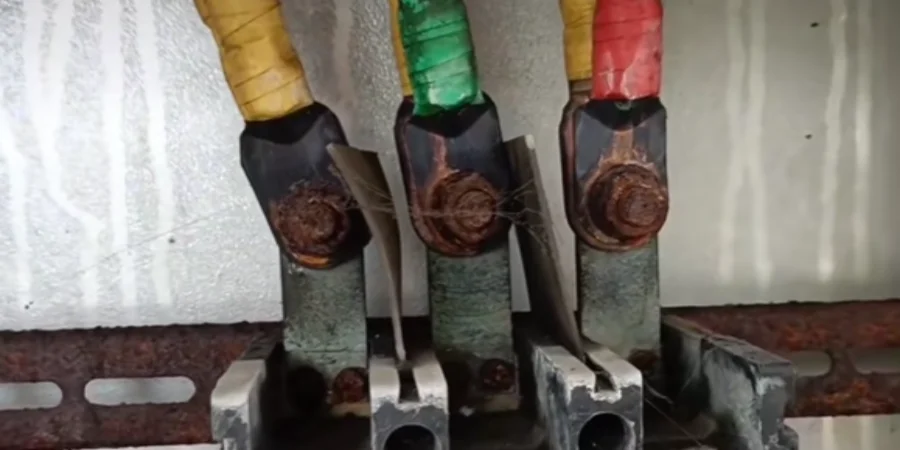
Dissimilar metal connections—especially aluminum-to-copper joints—are another concern. These are common in electrical systems because aluminum wire is often used for larger conductors (it’s lighter and cheaper), while copper terminals provide better conductivity and durability. But when you put these two metals in contact with moisture and contaminants present, you create galvanic cell as we mentioned before. The aluminum becomes the anode and corrodes preferentially, often showing severe pitting right at the interface.
Corroded connections also increates resistance, creating hot spots. I’ve used thermal cameras on panels and seen connection points that were 30-40°F hotter than they should be, all due to corrosion-induced resistance. Those hot spots don’t just indicate existing problems—they accelerate future corrosion.
The Mechanical Assembly: The Hidden Weakness
Mechanical failures make up about 26% of circuit breaker failure events, and corrosion plays a major role.
Circuit breakers are electromechanical devices, with springs, latches, bearings, pivots, and linkages that open and close the contacts. These components need to move smoothly and precisely for the breaker to function correctly. When corrosion attacks these mechanical parts, several problems develop.
Springs can corrode and weaken, reducing the force they apply. This might cause incomplete contact closure or insufficient opening speed. Bearings and pivot points can rust or corrode, creating friction that slows mechanism operation.
Calibration drift is another issue with corroded mechanisms. Breakers are precisely calibrated at the factory to trip at specific current levels. As corrosion affects the mechanical components, this calibration can change. A breaker rated to trip at 100 amps might start tripping at 85 amps (causing nuisance trips) or not trip until 120 amps (failing to provide adequate protection).
Electronic Trip Units and Control Circuits
Modern circuit breakers often include electronic trip units—solid-state circuits that monitor current and trigger the breaker. These electronic components are supposed to be sealed and protected, but corrosive gases can still affect them, particularly at wire terminations and connection points.
Water damage and corrosion can degrade the electronic components directly. Moisture can cause short circuits between traces on circuit boards. Corrosion can attack solder joints and component leads.
The control circuits that provide the interface between the trip unit and the mechanical mechanism are also vulnerable. These low-voltage, low-current circuits are particularly sensitive to increased resistance from corrosion. A high-current power circuit can handle a small increase in resistance—like a few milliohms—without failing, but a control circuit can stop working even if the resistance rises just a little.
Insulation and Housing Materials
Metal components aren’t the only concern, insulation materials can also degrade in corrosive environments. Certain gases—particularly acidic gases like hydrogen fluoride—attack insulation and polymers. Oxidizing gases like ozone damage rubber and plastic components.
Degraded insulation lowers the dielectric strength of the breaker, meaning it can’t withstand the voltages it was designed for. This can lead to internal flashovers or arcing between components that should be isolated. The housing materials, while less critical than internal insulation, can also deteriorate. Cracked or worn-out housings let moisture and contaminants get inside more easily, which accelerates internal corrosion.
Water-damaged breakers show degraded dielectric insulation capabilities, compromised contact conditions, and impaired electronic trip units. Once water gets inside a breaker—whether from external flooding or from condensation in a humid environment—multiple failure modes can develop simultaneously.
| Component Type | Primary Failure Mode | Typical Failure Rate | Warning Signs |
|---|---|---|---|
| Electrical Contacts | Resistance increase, heat generation | 30-40% | Hot spots, arcing, frequent trips |
| Connection Points | Crevice/galvanic corrosion | 15-25% | Discoloration, loose connections, heat |
| Mechanical Assembly | Binding, weakening, calibration drift | 26% | Slow operation, inconsistent trips |
| Electronic Components | Circuit degradation, shorts | 10-15% | Erratic operation, complete failure |
| Insulation Materials | Dielectric breakdown | 5-10% | Tracking marks, arcing evidence |
Conclusion
Understanding how invisible gases silently damage circuit breakers reminds us that maintenance isn’t just about visible wear. Often, the biggest threats are hidden—challenging us to rethink how we protect and monitor the systems we depend on every day.