
Did you know that a circuit breaker’s performance isn’t just affected by temperature? Altitude plays a role too. As you go higher, the air gets thinner and the pressure drops, and these invisible changes can quietly affect how your equipment works.
Many people assume that as long as the current and voltage stay within the rated limits, the breaker will be fine. But even under the same load, high-altitude conditions can make it behave differently. You might see breakers trip earlier than expected or run hotter than they should.
Understanding these effects isn’t complicated, but ignoring them can lead to unexpected safety and operational problems. The “thin air” up high isn’t just a physical fact—it’s something engineers need to take seriously when designing and installing electrical systems.
The Altitude Threshold: When Performance Changes Begin
You might be wondering when altitude actually starts to affect equipment. Let me tell you—it’s not as simple as flipping a switch at a specific elevation.
Most circuit breakers work reliably up to around 2,000 meters (about 6,560 feet) above sea level. Below this point, manufacturers design their equipment for standard atmospheric conditions, so you generally don’t need to make any adjustments. It’s business as usual.
But here’s where it gets interesting. Even though 2,000 meters is the commonly cited threshold, measurable changes in performance actually start showing up around 1,000 meters (3,300 feet). At this altitude, the air is already thin enough that engineers can detect differences, particularly in how well the breaker handles voltage insulation. Think of it this way: the equipment still works, but it’s already operating with less margin than it had at sea level.
Understanding the Critical Zones
The effect of altitude on circuit breaker performance isn’t a sudden drop—it’s a gradual slope that gets steeper as you go higher. Between 1,000 and 2,000 meters, you’re in what I call the "monitoring zone." The equipment works normally, but if you’re dealing with sensitive applications or operating close to breakers’ rated limits, you should start paying attention to manufacturer specifications.
Once you cross 2,000 meters, you’ve entered the point where derating becomes necessary. This is where standards organizations and manufacturers draw the line and say, "Okay, now we need to adjust things." Above this point, the thinner air means you must reduce either the rated current or voltage capacity of your circuit breakers.
And if you’re above 2,500 meters, derating isn’t just recommended—it’s essential for safe operation.
Why These Numbers Matter?
Here’s a practical breakdown of what these altitude zones mean for your installations:
| Altitude Range | Performance Impact | Action Required |
|---|---|---|
| 0 – 1,000 m | Negligible changes | No adjustments needed |
| 1,000 – 2,000 m | Measurable effects on insulation | Monitor specs; consider engineering review |
| 2,000 – 2,500 m | Noticeable performance reduction | Derating calculations required |
| Above 2,500 m | Significant performance degradation | Mandatory derating; possible need for specialized equipment |
These thresholds exist for a reason. They’re based on decades of field experience and testing data from installations around the world. When IEC standards specify these limits, they’re not being arbitrary—they’re protecting you from real failures that have happened in similar conditions.
The bottom line? If you’re installing equipment above 1,000 meters, start asking questions. If you’re above 2,000 meters, start making calculations. And if you’re above 2,500 meters, make absolutely sure you’re using the right equipment with the right ratings, or you’re going to have problems.
The Physics Behind Altitude Effects
Let’s break down what’s actually happening up there in the thin air, because understanding the physics makes everything else click into place.
The core issue is surprisingly simple: as you climb higher, there’s less air. But the consequences of that simple fact ripple through every aspect of how circuit breakers function. Air isn’t just empty space—it actively participates in your electrical system, acting as both an insulator and a cooling medium.
At sea level, atmospheric pressure sits at about 101.3 kilopascals. But for every 1,000 meters you climb, you lose roughly 12% of that pressure. By the time you reach 3,000 meters, the air pressure drops to about 70% of sea-level pressure. That means 30% fewer air molecules in any given space, and those missing molecules cause two major problems for circuit breakers.
Air as an Insulator
First, let’s talk about insulation. Air molecules act as a barrier between electrical conductors, preventing current from jumping where it shouldn’t. At normal atmospheric pressure, air has what engineers call "dielectric strength"—essentially, it resists electrical breakdown. But as air density drops, so does this resistance.
There’s a principle called Paschen’s law that governs this behavior. Without getting too deep into the equations, it basically says that at lower atmospheric pressures, electricity can arc across air gaps at lower voltages than it could at sea level. In other words, the air becomes a worse insulator as you climb higher.
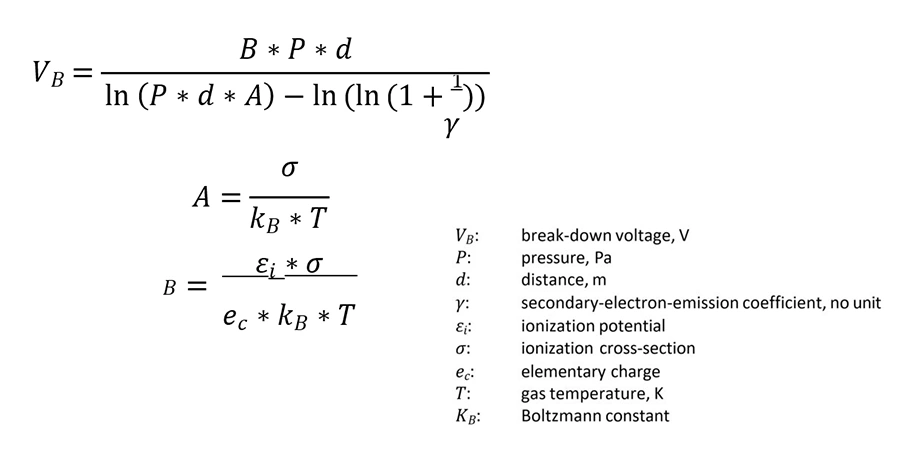
Think of it this way: at sea level, air molecules are packed tightly enough that an electron trying to jump from one conductor to another has to fight through a dense crowd. At high altitude, those molecules are spread out, giving electrons a much easier path to arc. The voltage required to start an arc drops, shrinking your safety margin.
Lab tests demonstrate this clearly. A circuit breaker that handles 1,000 volts at sea level might start showing corona discharge at just 800 volts when tested at pressures simulating 3,000 meters. That’s a 20% drop in insulation capability, and it’s purely due to thinner air.
Air as a Cooling Medium
The second challenge is cooling. Circuit breakers generate heat during normal operation. At sea level, the surrounding air does a pretty good job of carrying that heat away through convection. Warm air near the components rises, cooler air flows in, and you get natural circulation that helps keep components within safe temperatures.
But at higher altitude, there’s less air to do that cooling work. The same breaker that stays at a comfortable temperature at sea level can run 10-15℃ hotter at 3,000 meters, even under the same electrical loads.
This isn’t just a comfort issue—it affects the breaker’s thermal protection mechanisms. Many circuit breakers use thermal elements like bimetal strips to detect overloads. Reduced cooling means these elements respond less accurately, potentially allowing unsafe conditions to persist longer. (Related Reading: How Bimetal Strips Work in Circuit Breakers?)
The Combined Effect
The real concern is how these two factors—reduced insulation and lower cooling efficiency—compound each other. Not only is the air a weaker insulator, but the components are also running hotter, further reducing their ability to handle electrical stress.
| Altitude | Relative Air Density | Approx. Insulation Reduction | Cooling Efficiency |
|---|---|---|---|
| Sea level | 100% | 0% | 100% |
| 1,000 m | ~89% | ~5% | ~90% |
| 2,000 m | ~80% | ~10% | ~80% |
| 3,000 m | ~70% | ~20% | ~70% |
| 4,000 m | ~62% | ~28% | ~62% |
The physics here isn’t linear—it’s exponential. Each 1,000-meter increase has a progressively larger impact. Going from sea level to 1,000 meters? You might never notice a problem. But going from 3,000 to 4,000 meters? That’s where things can go wrong quickly if you haven’t accounted for it properly.
Given these risks, selecting a manufacturer that understands strict production standards is crucial. You need equipment built with precision to withstand environmental challenges.
Safety and Operational Consequences
Let’s be straight: operating circuit breakers at high altitude without proper considerations can lead to consequences that range from annoying to genuinely dangerous.
Altitude-related issues aren’t theoretical—they happen in real installations and fall into three broad categories: immediate safety hazards, operational disruptions, and long-term performance degradation.
The Safety Hazards You Can’t Ignore
Let’s start with the scary stuff, because this is where people can actually get hurt. When breakers aren’t properly rated for altitude, the most serious risk is arc flash incidents. An arc flash is essentially an explosive release of energy caused by an electrical arc through air. Temperatures can reach 35,000°F—hot enough to vaporize metal and cause severe burns from several feet away.

At altitude, reduced insulation and compromised arc extinction both increase arc flash risk. Insulation that fails at normal operating voltage creates unexpected arcing. Breakers that can’t interrupt faults quickly let arc flash conditions persist longer than they should. The combination is really dangerous.
Beyond arc flash, you’ve got the risk of equipment fires. Remember those elevated operating temperatures from reduced cooling? In extreme cases, particularly during sustained overload conditions, temperatures can rise high enough to ignite nearby materials or cause thermal runaway in the breaker itself.
Then there’s the risk of failed protection. Circuit breakers are supposed to protect your system from faults. When they can’t interrupt reliably due to altitude effects, that protection disappears. Faults that should be cleared in milliseconds might persist for seconds, allowing damage to propagate through your system and creating hazards that shouldn’t exist.
Operational Disruptions That Cost Money
Even when altitude problems don’t cause immediate safety issues, they create operational headaches that impact your bottom line. Nuisance tripping is probably the most common complaint I hear from high-altitude installations.
Nuisance tripping happens when breakers open under normal operating conditions, usually because thermal elements are responding to elevated ambient temperatures rather than actual overloads. Your production line is running normally, pulling exactly the current it should be, and suddenly everything shuts down because a breaker tripped. You check, find no fault, reset the breaker, and everything works fine—until it happens again next week. (What Is Nuisance Tripping?)
This is incredibly frustrating for operations teams. Each nuisance trip means downtime, investigation time, and lost productivity. In manufacturing or data center environments, a single unnecessary trip can cost thousands of dollars in lost production or computing time. And because the problem is environmental rather than a clear equipment fault, it can be hard to diagnose if no one thinks to consider altitude effects.
On the flip side, you can get the opposite problem: breakers that don’t trip when they should. If thermal elements are already operating at elevated temperatures due to poor cooling, they might not respond quickly enough during genuine overload conditions. The breaker that should protect your motor from burnout might not open until the motor has already been damaged.
Contact welding is another issue that comes up more frequently at altitude. When breakers struggle to extinguish arcs during normal switching operations (not even fault conditions, just regular opening under load), the prolonged arcing can cause contacts to weld together. When that happens, the breaker can’t open at all—it’s essentially stuck closed. That’s not just an operational problem; it’s a safety problem that requires immediate shutdown and replacement.
Long-Term Performance Degradation
Then there are the slow killers—the problems that don’t show up at once but shorten equipment life and increase maintenance costs over time. Accelerated contact wear tops this list. Every time a circuit breaker interrupts current, the contacts experience some wear from the electrical arc. At altitude, where arcs are harder to extinguish and persist longer, every operation causes more wear than it would at sea level.
The practical result is that breakers need maintenance more frequently and reach end-of-life sooner. A breaker rated for 10,000 operations at sea level might only be good for 7,000-8,000 operations at 3,000 meters.
Insulation degradation is another gradual problem. Even if you’re not getting complete flashovers, operating with reduced insulation margins means the materials experience more electrical stress. Corona and partial discharge, which might be absent at sea level, can occur regularly at altitude. These phenomena slowly degrade insulation materials, creating a ticking time bomb where equipment that seems fine today fails suddenly in five years.
And let’s not forget that failure rates also increase. High-altitude installations consistently show more frequent failures than sea-level counterparts, leading to higher maintenance and earlier replacement—raising the total cost of ownership.
| Consequence Type | Specific Issues | Typical Cost Impact |
|---|---|---|
| Safety Hazards | Arc flash risk, equipment fires, failed protection | Potential injury, liability, emergency repairs |
| Operational Issues | Nuisance trips, failure to trip, contact welding | Downtime costs, investigation time, lost production |
| Long-term Degradation | Accelerated wear, insulation aging, higher failure rates | Increased maintenance, earlier replacement, higher TCO |
Altitude effects are measurable physical phenomena that influence insulation, cooling, and arc performance. Considering them early in the design phase ensures reliable operation and reduces long-term maintenance costs.
Conclusion
Altitude doesn’t change how electricity behaves—it changes how our equipment must respond to it. The difference between reliability and failure often lies in the details we overlook. Thinking about air, pressure, and physics reminds us that even invisible factors deserve our engineering attention.
If your project is located in a high-altitude region, don’t leave safety to chance. Choosing a manufacturer with deep industry experience ensures your equipment is ready for the challenge.