

Some people wonder if our customers really need to do on-site testing when using our ACBs. If the factory tests are already perfect, is it really necessary? The truth is, even though each breaker is carefully calibrated and tested in the factory, things can behave very differently once they’re installed.
Over the years, we’ve shipped equipment to steel mills, factories, and office buildings. Everything checks out perfectly on the bench, but real-world conditions are different. Heat, dust, small wiring differences, or even minor bumps during handling can make a unit act in unexpected ways.
That’s why on-site testing is so important. It shows how the equipment performs in real conditions and helps us understand how installation, environment, and operation affect performance. Only then can we be confident the system will run safely and reliably.
What On-Site Testing Means for ACBs?
When I first joined the company, I assumed our rigorous factory testing covered everything. We had advanced equipment, controlled environments, and procedures that followed international standards down to the letter. But after some honest conversations with customers, I realize we were only telling half the story.
On-site testing, often called Site Acceptance Testing (SAT), happens at the customer’s actual location after the ACB is installed in its final position. Unlike our factory routine tests, which verify that a breaker design and individual unit meet IEC or IEEE performance requirements, site testing checks something entirely different: whether the installed breaker, its wiring, its settings, and the environment it sits in actually work together as intended.
What Actually Gets Checked?
A typical on-site testing program includes three main layers of verification.
The first is visual inspection. This is about looking for physical damage that might have occurred during shipping, signs of corrosion or contamination, loose connections, proper contact alignment, and whether moving parts and racking mechanisms operate smoothly.
The second layer is electrical testing. Insulation resistance testing, performed with a megohmmeter, check phase-to-phase and phase-to-ground resistance to confirm the insulation is healthy. Contact resistance measurements, using a low-resistance ohmmeter, ensure the main contacts aren’t creating excessive losses. These simple tests often reveal problems that develop during installation or transport—issues our factory environment never appear.
The third layer is functional verification. This includes secondary injection testing for electronic trip units, and sometimes primary injection testing where high current flows through the entire breaker to verify actual trip curves and timing. Functional tests also confirm that shunt trips, undervoltage releases, interlocks, and signaling circuits operate correctly—and that the trip settings match the intended values.
The Reality Gap Between Factory and Field
Here’s what I’ve learned these years: factory tests prove a breaker works under ideal conditions, but they can’t reproduce the customer’s specific CT ratios, their particular wiring practices, temperature variations, or how their protection scheme coordinates with upstream and downstream devices. Site acceptance testing fills that gap by confirming the breaker performs correctly within the real system it’s meant to protect.
One customer once contacted us because their ACBs were not tripping properly. Our factory records showed perfect results. Site testing later revealed that the CTs had been cross-wired during installation.
In another case, the breakers performed perfectly in our controlled test environment, but after installation in a steel mill with ambient temperatures reaching 45°C and heavy iron dust contamination, technicians recorded higher-than-expected contact resistance.
These were not manufacturing defects—they were installation and environmental realities that only became visible under actual operating conditions.
💡 Manufacturer Tip: Temperature and Derating
Modern ACB electronic trip units are temperature-compensated. However, the breaker’s rated current is typically defined at 40°C ambient temperature (IEC reference condition).
In environments above 40°C, current derating may be required to prevent excessive internal temperature rise. This is not a trip inaccuracy, but a reduction in allowable continuous current capacity.
Sourcing Advice: For high-temperature sites, request the manufacturer’s Temperature Derating Table to ensure proper sizing and long-term reliability.
| Test Type | What It Checks | Typical Method |
|---|---|---|
| Visual Inspection | Physical condition, mounting, connections | Physical examination, mechanical operation |
| Insulation Resistance | Insulation health between phases and ground | Megohmmeter testing |
| Contact Resistance | Main contact integrity and wear | Low-resistance ohmmeter |
| Functional Testing | Trip units, auxiliaries, interlocks | Secondary injection, operational checks |
| Primary Injection | Complete current path and protection | High-current test through entire breaker |
The technicians performing these tests are looking for things our production line never sees: terminations torqued to the wrong specification, contact misalignment from rough handling, mechanical binding in racking systems, contamination from the construction environment, or protection settings that someone changed during commissioning without updating documentation. These problems may not appear in factory test reports—but they become very real when the breaker need to clear a fault.
Why Factory Testing Isn’t Enough?
Honestly, it was hard for me to accept at first. We invest heavily in our test equipment and procedures. Every breaker that leaves our factory has passed type tests and routine tests according to international standards. How could that possibly not be enough?
The answer became clear after I started visiting customer sites. Factory routine tests prove that an ACB design and each individual unit meet performance requirements under controlled lab conditions. They verify dielectric strength, mechanical endurance, and breaking capacity using standardized procedures. But they don’t cover what happens after the breaker is bolted into a switchboard, connected to real field wiring, exposed to actual environmental conditions, and integrated with the customer’s protection system.
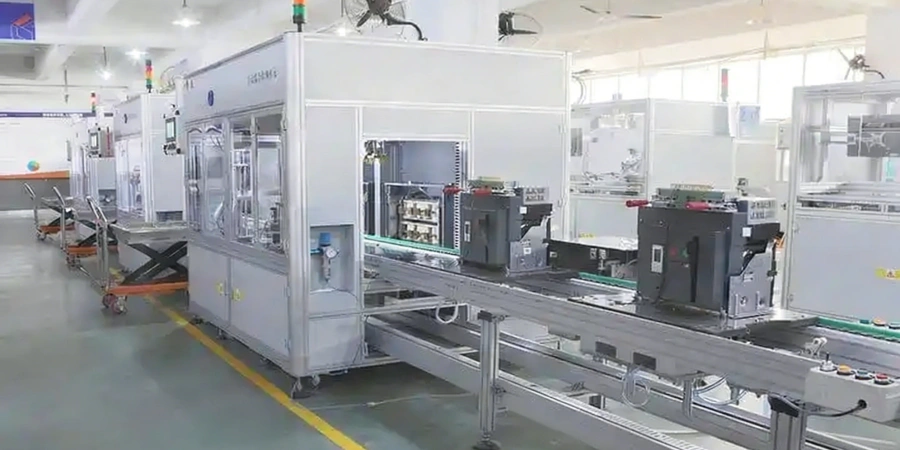
The Installation Reality
One study I came across analyzed cable accessory failures and found that 57% were related to installation rather than design or production issues (research on cable testing). While that specific data is about cables, the principle applies equally to circuit breakers. We can control everything in our factory, but we can’t control what happens during shipping, storage, installation, and commissioning.
I’ve personally seen breakers damaged during transport that still looked fine on the outside. I’ve watched installation teams ignore torque specifications because "they’ve always done it this way." I’ve watched electricians wire CTs backward, set protection parameters incorrectly, or make undocumented field modifications that completely change how the breaker performs. None of these issues show up in our workshop reports because they simply don’t exist when the breaker leaves our factory.
What Develops Over Time?
Even when installation goes perfectly, conditions don’t stay the same. Regular testing and maintenance becomes necessary because new problems develop during operation that factory tests can’t predict.
Contacts wear from normal switching operations. Connections loosen from thermal cycling. Insulation degrades from contamination or moisture. Mechanical parts accumulate dust or corrosion depending on the environment.
Our production quality manager once said: "We guarantee the breaker works perfectly when it leaves the factory. But to keep it working well over time, proper installation, commissioning, and maintenance are key."
Field experience supports that view. Overheating, worn contacts, and loose connections are common issues that only show up through periodic on-site inspection and testing.
The Protection System Integration Challenge
There’s another limitation factory testing cannot overcome: system integration.
In the factory, we test trip units using standard CTs. But the customer may use different CT ratios. We verify protection functions individually, but we cannot simulate how the breaker coordinates with upstream breakers, downstream fuses, and parallel protection devices in the customer’s real system.
Protection testing on site confirms that overload, short-circuit, and ground fault functions trip correctly when connected to the site’s actual CTs, wiring, and control circuits. This integration testing reveals mismatches between design intent and installed reality—issues that are impossible to detect when testing an isolated breaker on a factory bench.
| Factory Testing | On-Site Testing |
|---|---|
| Controlled environment (temperature, humidity, cleanliness) | Actual installation environment (dust, temperature extremes, vibration) |
| Standard test connections and CTs | Customer’s specific wiring, CT ratios, and interfaces |
| Individual breaker performance | System integration and coordination |
| New equipment condition | As-installed and in-service condition |
| Detects manufacturing defects | Detects installation errors, transport damage, and environmental issues |
During one memorable factory visit, a chief engineer from a large industrial customer asked me directly: “Your tests show the breaker works. But can they tell me it will work fine in my steel mill—next to a furnace—where temperatures reach 50°C and conductive dust covers everything every week?”
I had to admit they couldn’t. That’s exactly why on-site testing under real conditions matters so much.
The most important lesson I’ve learned is this: factory testing and site testing are not competing approaches—they support each other. Factory testing proves the product works as designed. Site testing proves it works as installed. Both are necessary. Excellent manufacturing cannot compensate for poor installation, and perfect installation cannot fix a defective product.
Understanding that distinction has made me far more effective in supporting customers through commissioning and maintenance.
What Standards and Guidelines Say About Field Testing?
Early in my career, I thought standards and guidelines were just bureaucratic paperwork that engineers had to satisfy. Spending time with our compliance team changed that mind. These documents capture decades of lessons learned from equipment failures, safety incidents, and reliability problems across the industry. They don’t require on-site testing just to create extra work—they require it because skipping it has repeatedly caused serious issues.
ANSI/NETA ATS is probably the most widely referenced standard in North America for acceptance testing. It specifically defines field tests and inspections to assess whether electrical power equipment is suitable for initial energization and final acceptance. The standard doesn’t just suggest these tests—it provides detailed procedures, acceptance criteria, and test methods that field technicians should follow.
What the Standards Actually Require?
Specifications for refurbishing and reinstalling ACBs commonly require that units "be tested as integrated assemblies" after reinstallation, with on-site tests witnessed by the supervising engineer. This reinforces a key principle: any significant change in installation or configuration should trigger field verification.
NFPA-oriented guidance takes this further by noting that testing is generally required after changes to electrical systems and is highly recommended for critical breakers. The message is clear—if you modify the system, you need to verify it still works. Even without modifications, critical equipment needs periodic verification because the consequences of failure are too severe to rely solely on initial factory testing.
Engineering practice documents consistently describe Site Acceptance Testing as a standard step at the customer’s location. The goal is to verify that supplied equipment is fit for purpose and meets specifications before being placed into service. This isn’t an optional extra that anxious customers add to projects—it’s considered baseline best practice for electrical system commissioning.
The Regulatory and Liability Context
What really drives compliance is the regulatory and liability environment. safety regulations and standards aren’t just technical documents, they’re the foundation for insurance and legal accountability. Non-compliance can lead to fines, legal liabilities, and operational shutdowns. When an electrical failure causes injuries or property damage, investigators will examine whether equipment was tested and maintained according to applicable standards.
| Standard/Guideline | Key Requirement | Application |
|---|---|---|
| ANSI/NETA ATS | Defines field acceptance tests and inspections | Initial energization and final acceptance of electrical equipment |
| IEC/IEEE Standards | Factory routine tests plus installation verification | Type testing and routine testing requirements |
| NFPA Guidelines | Testing after system changes and for critical equipment | Safety and protection system validation |
| Project Specifications | Testing as integrated assemblies with engineer witnessing | Refurbishment, reinstallation, and commissioning |
The Manufacturer’s View on Standards
From the manufacturing side, these standards shape product design and documentation. We don’t just build ACBs to meet performance specs—we design them knowing customers need to test and maintain them in the field. Our instruction manuals include recommended test procedures because standards expect manufacturers to provide this guidance.
When we develop new products, part of the validation process involves checking that customers can reasonably perform the required field tests. If a breaker design makes contact resistance measurement difficult or complicates primary injection testing, it’s considered a usability problem that needs fixing. Standards create a framework where manufacturers and users share responsibilities—we provide testable equipment with clear procedures, and customers perform the actual verification.
Standards benefit manufacturers too. When a customer properly tests equipment and finds a problem, it’s much easier to determine whether we shipped a defective product or whether something happened during installation or operation. Clear standards reduce ambiguity and help everyone focus on root causes rather than finger-pointing.
The bottom line: standards and guidelines consistently expect on-site testing because decades of industry experience have proven that factory testing alone, no matter how thorough, cannot guarantee that installed equipment will perform correctly under actual operating conditions. This isn’t theoretical—it’s based on real failures, real incidents, and real lessons learned across the electrical industry.
Conclusion
Testing equipment where it’s actually installed isn’t about paperwork—it’s about making sure it truly works in the real world. Field checks uncover surprises factory tests can’t predict, keeping people safe and systems reliable. Good engineering always combines careful design with hands-on verification.