
In our last blog, we talked about IEC 60898-1, the standard for home and light commercial circuit breakers. Even seemingly simple breakers have more going on than meets the eye, all to keep systems and people safe.
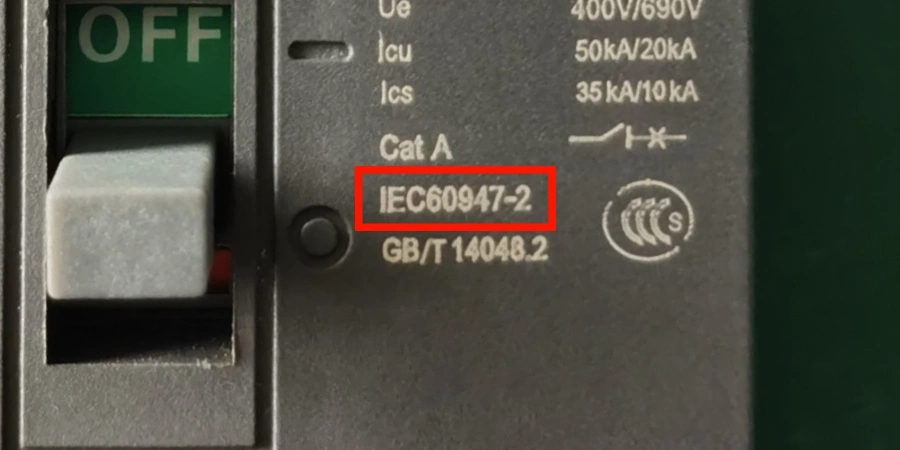
Now, we’re looking at another standard you often see on breakers—IEC 60947-2. When we prepare orders for our clients, we carefully check each breaker to make sure it can handle tough industrial conditions. These devices aren’t like home breakers—they face higher currents, more stress, and stricter requirements.
Breakers may look ordinary, but they carry a lot of responsibility. Understanding IEC 60947-2 helps you see how these devices protect machines, people, and systems in the real world, and we make sure of this every time we test components.
What IEC 60947-2 Actually Covers?
IEC 60947-2 is the international standard that defines performance, safety, and testing requirements for low-voltage circuit breakers. It applies to devices used in systems up to 1,000 V AC or 1,500 V DC — the kind you find in industrial plants, commercial buildings, data centers, and hospitals.
When a breaker is marked as compliant with this standard, it means it has passed a defined set of tests. These tests check things like overcurrent protection, temperature rise, mechanical durability, and the ability to interrupt fault currents safely without making the situation worse.
Who Is This Standard Actually Written For?
It’s important to understand who this standard is meant for. IEC 60947-2 is not written for the average homeowner. Instead, it targets breakers that are installed and operated by instructed or skilled persons — electricians, engineers, and trained maintenance staff who understand the risks and technical details involved.
That distinction matters, especially when you compare this standard with its residential counterpart.
Part of a Bigger Family
IEC 60947-2 does not stand alone. It is part of the broader IEC 60947 series, which covers low-voltage switchgear and controlgear. This larger set of standards includes contactors, motor starters, disconnectors, and other equipment used in power distribution and motor control systems.
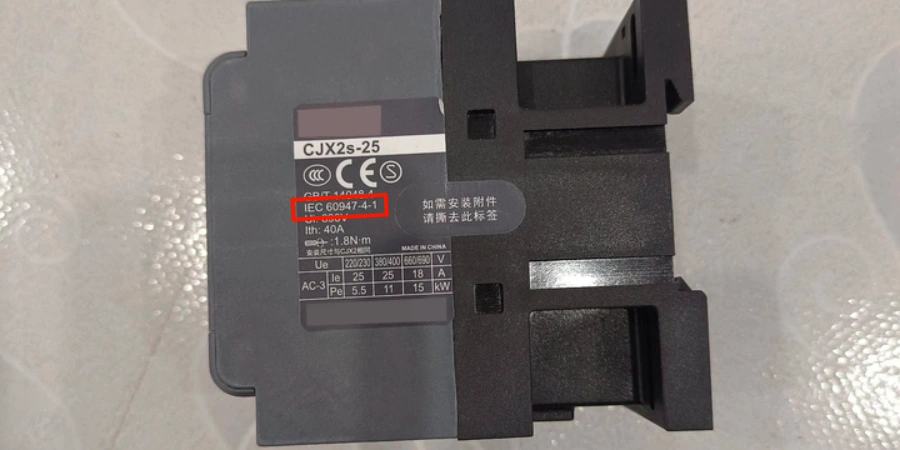
You can think of IEC 60947-2 as the chapter in that larger rulebook that deals specifically with circuit breakers.
Seeing where it fits helps explain why its requirements are so strict. These breakers don’t just protect a single household circuit. They protect entire distribution systems, where a fault could shut down critical operations — or worse, cause fire or serious injury.
Where These Breakers Are (and Aren’t) Used?
Anyone who has worked in a large building knows how fast a power problem can cause trouble — equipment stops, systems shut down, and work comes to a halt.
The answer to whether a breaker can handle these situations usually depends on one thing — whether the product meets IEC 60947-2 requirements for that operating environment.
Breakers built into IEC 60947-2 breakers are used wherever there’s a serious, continuous power demand — and where the cost of an unexpected outage, or worse, an uncontrolled fault is high.
Common applications include:
-
Manufacturing plants, where motor loads and heavy machinery draw large currents around the clock
-
Data centers, where uptime is measured in fractions of a percent and even a brief outage can be catastrophic
-
Hospitals, where circuit protection directly ties to patient safety
-
Commercial buildings and utilities, where multi-floor distribution systems carry high fault-level risks
In these settings, breakers may handle rated currents ranging from just a few of amperes all the way up to around 6,300 A or more, at system voltages up to 1,000 V AC. That’s a completely different class of equipment compared to the breaker panel in your house.
Where It Doesn’t Apply?
Standard residential MCBs are typically designed to IEC 60898-1, which is built around domestic and similar light-commercial installations. That standard assumes ordinary users — not trained professionals — and it covers much narrower voltage and current ranges.
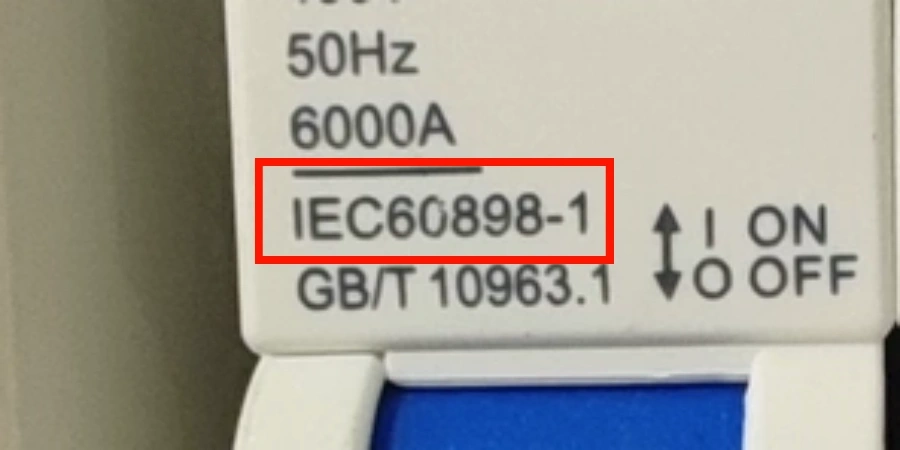
Here’s the key point: using a domestic IEC 60898-1 MCB in a harsh industrial environment is not just a bad idea — it’s considered incorrect practice.
IEC 60947-2 devices are built and tested for tougher conditions. They are designed to handle higher pollution levels, wider environmental variations, and significantly greater fault currents. A breaker that passes residential testing simply hasn’t been proven to withstand what it would face inside an industrial switchboard.
Key Ratings and What They Mean
Early in my time at the factory, I looked at an MCCB panel and saw all kinds of markings and abbreviations — Ue, Ie, Icu, Ics — each followed by numbers, and I had no clear idea what any of them meant in real life.
If you’ve felt that way too, you’re not alone. Here’s a practical way to understand the ratings that matter most under IEC 60947-2.
Rated Operational Voltage (Ue) and Current (Ie)
Let’s start with the basics.
Ue is the maximum system voltage at which the breaker is designed to operate — typically up to 1,000 V AC for IEC 60947-2 devices.
Ie is the maximum current the breaker can carry continuously in normal service without exceeding its temperature limits.
When sizing a breaker, these are the first two numbers you should check. If they don’t match your system voltage and load current, nothing else matters.
Icu — Ultimate Breaking Capacity
Icu is one of the most important ratings, especially if you’re involved in protection coordination.
It represents the highest short-circuit current the breaker can interrupt under the specified test conditions. The key phrase there is "under test conditions" — after clearing a fault at Icu, the breaker may not be fully reusable without inspection or replacement.
Think of Icu as the ceiling. Your installation’s maximum prospective short-circuit current at the point of installation must not exceed this value. If it does, the breaker simply isn’t rated for the job.
One detail that often gets missed: Icu is always tied to a specific voltage. Many breakers list multiple Icu values on the datasheet — for example, one at 415 V and another at 690 V. Always use the value that matches your system voltage. Choosing based on the wrong voltage is an easy mistake when reviewing specifications quickly.
Ics — Service Breaking Capacity
Ics brings things closer to everyday operation.
It’s the level of fault current the breaker can interrupt and still remain fit for continued service — without needing replacement or major inspection.
Under IEC 60947-2, Ics is expressed as a percentage of Icu. The standard defines four common levels: 25%, 50%, 75%, or 100%.
| Ics as % of Icu | What It Means in Practice |
|---|---|
| 25% | Breaker survives lower fault currents; may need replacement after higher faults |
| 50% | Common in standard MCCBs for general industrial use |
| 75% | Higher robustness for more demanding systems |
| 100% | Strong choice for critical facilities like hospitals or data centers |
Here’s a simple example.
If a breaker has Icu = 50 kA and Ics = 50%, its service breaking capacity is 25 kA. It can still clear a fault above 25 kA — up to 50 kA — but after doing so, you should expect to replace or at least thoroughly inspect it.
That difference matters in facilities where downtime is expensive or unacceptable. (Related Reading: Icu and Ics on Circuit Breakers: What You Need to Know)
Utilization Category and Trip Units
Beyond the current and voltage ratings, IEC 60947-2 also covers the breaker’s utilization category and trip unit type.
The trip unit controls how the breaker reacts to faults:
-
Thermal-magnetic trip units use a bimetal strip for overload detection (slower response, proportional to current heat) and a magnetic element for short-circuit detection (fast, near-instantaneous).
-
Electronic trip units offer more precise and adjustable settings — useful when you need tighter coordination with upstream and downstream protection. (Related Reading: Thermal-Magnetic vs Electronic MCCB, Which One Do You Need?)
Choosing the right trip unit isn’t an afterthought — it’s part of selecting the right breaker. Two breakers may share the same Icu and Ie ratings but behave very differently under real fault conditions because of how their trip units are designed.
Conclusion
The real value of IEC 60947-2 is giving engineers and electricians a reliable framework to protect equipment, people, and operations. Knowing how breakers are rated and tested turns uncertainty into certainty, helping teams make choices that keep systems running smoothly even under stress.