
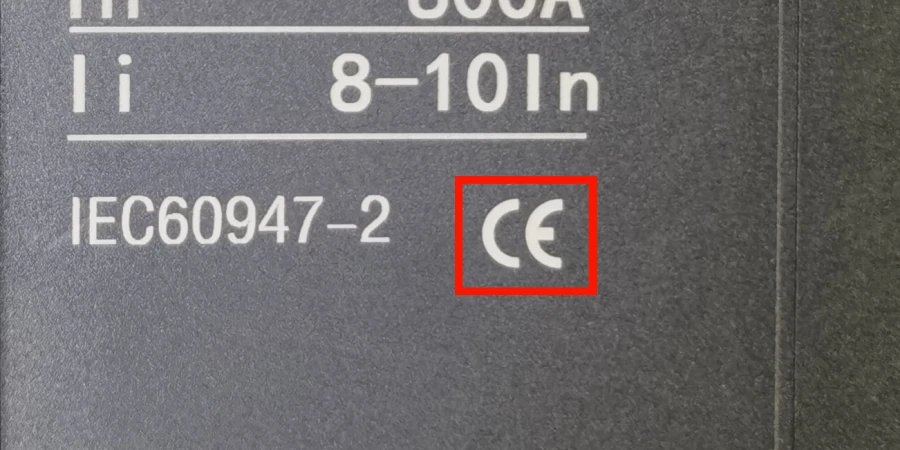
The first time a customer asked if our circuit breakers had CE certification, I didn’t really understand what it meant to them. I thought it was just a simple label, but I quickly realized the rules and standards behind it are much more complicated than I expected.
As I learned more, I found out that each product might need to meet several directives and complete different tests and paperwork. In our day-to-day work, we came to understand that every requirement matters—missing even a small detail can affect whether a product can be sold in the EU.
Over time, I’ve seen that CE certification isn’t just about reassuring customers. It’s a real quality check. It makes our products more reliable and helps protect everyone in the supply chain—from design to installation to the people who use them—making exports much smoother.
Which EU Directives Apply?
The first time I got a customer inquiry about CE marking, I thought it was simple — one directive, one checkbox. I quickly realized that most circuit breakers actually have to meet multiple directives at the same time. Missing even one can delay a product launch or cause problems with market inspections.
The Three Core Directives
For most low-voltage circuit breakers sold in the EU or EEA market, three directives will apply as a baseline:
-
Low Voltage Directive (LVD) 2014/35/EU: This is the primary directive for electrical safety. It covers equipment designed to operate within the defined low-voltage range and requires manufacturers to meet essential health and safety requirements — like protection against electric shock, heat, and mechanical hazards. When people think of "CE marking for circuit breakers," LVD is usually the first thing that comes to mind.
-
Electromagnetic Compatibility (EMC) Directive 2014/30/EU: Circuit breakers switch currents on and off, which can generate electromagnetic disturbances affecting nearby equipment. The EMC Directive requires that the breaker doesn’t emit excessive interference and is resistant to external electromagnetic disturbances. In practice, both of these requirements must be shown by testing the product according to the relevant EU standards.
-
RoHS Directive 2011/65/EU: The Restriction of Hazardous Substances Directive limits the use of materials like lead, mercury, cadmium, and certain flame retardants in electrical and electronic equipment. This applies to circuit breakers just as it does to consumer electronics. RoHS compliance is often handled through material declarations and supply chain checks rather than physical product testing, but it still needs to be formally documented.
A Fourth Directive for Smart Breakers
The market is changing as more breakers include wireless or network connectivity. A smart breaker with a built-in Wi-Fi or Zigbee module doesn’t just fall under LVD, EMC, and RoHS — it also falls under the Radio Equipment Directive (RED) 2014/53/EU.
From 1 August 2025, RED has introduced mandatory cybersecurity requirements for internet-connected radio equipment in the EU. Manufacturers of smart breakers will need to show that their products protect user data, resist unauthorized access, and include fraud prevention safeguards — all as conditions of CE marking.
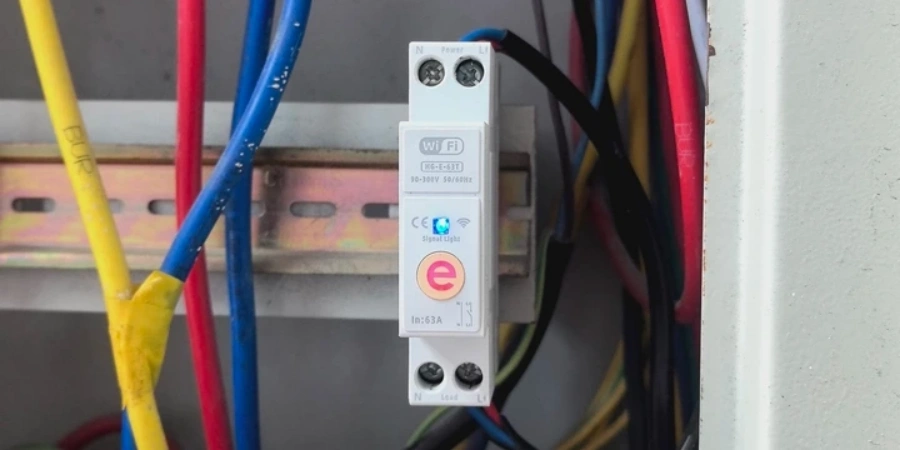
This is a big shift. Traditionally, CE marking for breakers focused on electrical safety and electromagnetic behavior. For connected products, cybersecurity is now part of that equation.
How the Directives Work Together?
| Directive | What It Covers | Applies To |
|---|---|---|
| LVD 2014/35/EU | Electrical safety | All in-scope breakers |
| EMC 2014/30/EU | Electromagnetic emissions & immunity | All in-scope breakers |
| RoHS 2011/65/EU | Restriction of hazardous substances | All in-scope breakers |
| RED 2014/53/EU | Radio communication + cybersecurity (from Aug 2025) | Smart / connected breakers only |
Each directive has its own essential requirements and conformity assessment procedures. A manufacturer like us needs to address all applicable ones before affixing the CE mark. Missing even one can make your Declaration of Conformity incomplete — a problem if market authorities come knocking.
Who Is Responsible for CE Marking?
This is a question I’ve seen cause confusion more than once — especially when products move across borders or change hands within a supply chain. You might assume that as long as someone, somewhere along the line has CE marked the breaker, you’re covered. But that’s not quite how it works.
The Manufacturer Carries the Primary Obligation
The legal responsibility for CE marking starts with the manufacturer. Under EU law, the manufacturer is defined as any party that designs, produces, or has a product designed or produced, and then places it on the market under their own name or trademark. This includes companies that outsource production entirely — if your name is on the box, you are the manufacturer in the eyes of the law.
The manufacturer must carry out the full conformity assessment, compile the technical documentation, draw up the EU Declaration of Conformity(DoC), and affix the CE mark. Nobody else can do this on your behalf unless they are formally designated as your authorized representative in the EU.
What Importers Need to Know
When a circuit breaker is made outside the EU — in China, the US, or elsewhere — and an EU-based company brings it into the market, that company becomes the importer. Importers carry real legal responsibility. They must verify that the manufacturer has completed the correct conformity assessment, that the product bears the CE mark, and that a valid Declaration of Conformity exists.
Importers must keep a copy of the Doc and make it available to market surveillance authorities if asked. They also need to ensure the product is labeled with the manufacturer’s name and address — or their own contact details if the manufacturer is outside the EU.
In practice, many importers ask for the technical file summary and DoC before placing a first order, and periodically after that. It’s a practical due diligence step that protects everyone in the supply chain.
Distributors and the Rebranding Trap
Distributors — companies that supply products without modifying them — have lighter but still real obligations. They must check that products bear the CE mark and carry the required documentation before making them available. What they cannot do is ignore missing markings and pass the product on anyway.
Here’s where things get interesting: if a distributor rebrands or substantially modifies a product, EU law treats them as the manufacturer. That means the full burden of conformity assessment falls on them. We saw this during an internal discussion about white-labeling a breaker range for a partner brand. The moment you put your name on it and it’s considered a substantially new product, you’re responsible for the CE marking process from scratch.
| Role | Key Responsibility |
|---|---|
| Manufacturer | Conduct conformity assessment, compile technical file, issue DoC, affix CE mark |
| Importer | Verify compliance, keep DoC, ensure correct labeling |
| Distributor | Check CE mark and documentation before supply |
| Distributor (rebranded) | Treated as manufacturer — full compliance responsibility applies |
Key Standards Behind the CE Mark
CE marking itself is not a standard — it’s the result of meeting a set of essential requirements defined in EU directives. The practical question is: how do you prove you’ve met those requirements? The answer, for circuit breakers, almost always comes down to a handful of harmonized EN/IEC standards.
What Harmonized Standards Actually Do?
When a manufacturer tests a product using harmonized standards, they get what’s called a "presumption of conformity." That means EU authorities automatically assume the product meets the essential safety requirements — you don’t have to prove it in other ways. This makes the compliance process much simpler and creates a clear, auditable path for CE marking.
Legally, you don’t have to use harmonized standards — you could show compliance in another way. But in practice, almost all manufacturers include us use them because they are widely accepted and provide a straightforward way to show a product is safe. Think of them as the industry’s agreed-upon rules for safety: follow them, and your product is considered safe.
The Four Standards You’ll Encounter Most
-
EN/IEC 60898 — MCBs for Household and Similar Installations: This series covers miniature circuit breakers designed for overcurrent protection in domestic and light commercial settings. If you’re dealing with the kind of breaker that snaps onto a DIN rail in a home consumer unit, this is the standard to follow. It defines requirements for rated currents, breaking capacity, tripping characteristics, and more. (Related Reading: A Simple Look at IEC 60898-1)
-
EN/IEC 60947 — Low-Voltage Switchgear and Controlgear: This is a broader, multi-part standard covering industrial-grade circuit breakers and other switchgear. It applies to MCCBs and ACBs used in industrial panels and distribution systems. Requirements here are more demanding than those for household MCBs, reflecting the higher stakes in industrial environments. (Related Reading: A Simple Look at IEC 60947-2)
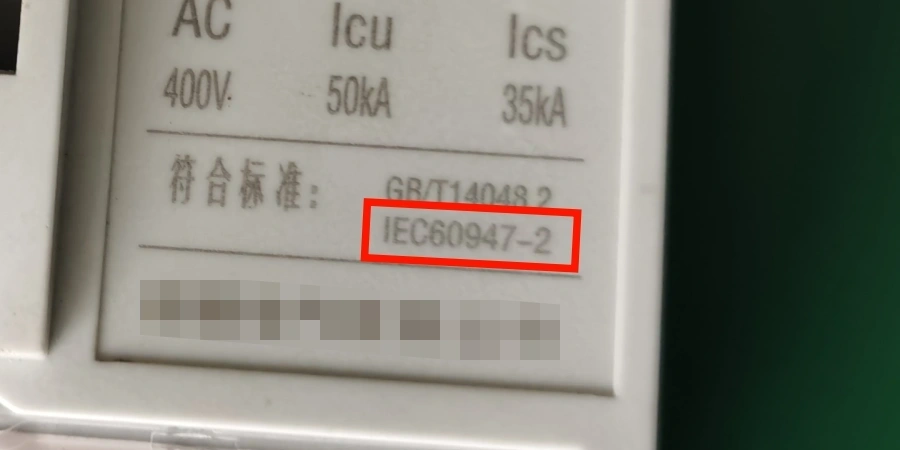
IEC60947-2 on MCCB -
EN/IEC 61009 — RCBOs: Residual Current Breakers with Overcurrent Protection combine the functions of an RCD and an MCB in one unit. The 61009 series sets out the specific requirements for these devices, including earth leakage tripping thresholds and response times alongside overcurrent protection requirements.
-
EN/IEC 60934 — Circuit Breakers for Equipment: This standard covers circuit breakers intended for use within electrical equipment — for example, built into a machine or appliance rather than installed in a distribution board. These are sometimes called "equipment protection circuit breakers" and have their own specific requirements. As this standard guidance notes, they differ in scope from the installation-focused standards above.
Matching the Right Standard to the Right Product
Applying the wrong standard to a product is a real risk. For example, testing an industrial MCCB only to EN/IEC 60898 criteria would not properly assess it for its actual use environment. During product development, matching the standard to the application is one of the first technical decisions made — and it shapes the entire testing program.
What Happens Without CE Marking?
I’ll be honest — early in my career, I assumed the consequences of missing CE marking were mostly administrative. A warning letter, maybe some paperwork to sort out. As I gained more experience in the field, I gradually realized just how serious non-compliance can be.
Market Surveillance and Enforcement
The EU operates a network of market surveillance authorities in each member state. Their job is to check that products placed on the EU market actually meet the requirements. For electrical equipment, that can mean spot checks, product testing, and requests for documentation — including the full technical file and Declaration of Conformity.
If a product is found non-compliant, authorities have several enforcement tools:
-
Immediate actions: The product may be withdrawn from sale or recalled from end users. For a distributor with a warehouse full of non-compliant breakers, this’s a costly situation.
-
Fines and penalties: vary by member state — While EU directives set the framework, individual countries determine the specific amounts. In some cases, fines for placing non-compliant electrical equipment on the market can reach tens of thousands of euros per violation.
-
Bans on sale: Authorities can prohibit a product at the national level, and in serious cases, escalate the issue across the EU through the RAPEX rapid alert system, making the product visible to all EU market surveillance authorities at the same time.
The Liability Dimension
Beyond regulatory penalties, there’s a more serious concern: liability in the event of an accident. If a non-CE-marked circuit breaker fails and causes a fire or electric shock, the absence of proper conformity documentation can weaken the manufacturer’s or importer’s legal position considerably.
CE marking — backed by a proper technical file and DoC — serves as evidence that reasonable safety steps were taken. Without it, that defence disappears. For companies supplying into commercial or industrial installations, where the downstream consequences of a breaker failure can be severe, this is far from a risk just on the paper.
The Knock-On Effect for Buyers
It’s not just manufacturers and importers who face consequences. Electrical contractors or panel builders who install non-compliant breakers in a system may also be exposed to liability if something goes wrong. This is why verifying CE compliance before purchase — not simply assuming it — is genuinely important. It’s not just a box-ticking exercise; it’s a key safety and legal safeguard.
Conclusion
CE marking is more than paperwork—it’s about responsibility. Ensuring your circuit breakers meet all relevant standards protects everyone along the supply chain. By understanding your role and staying on top of compliance, you can avoid surprises, maintain trust, and confidently bring products to the EU market.