
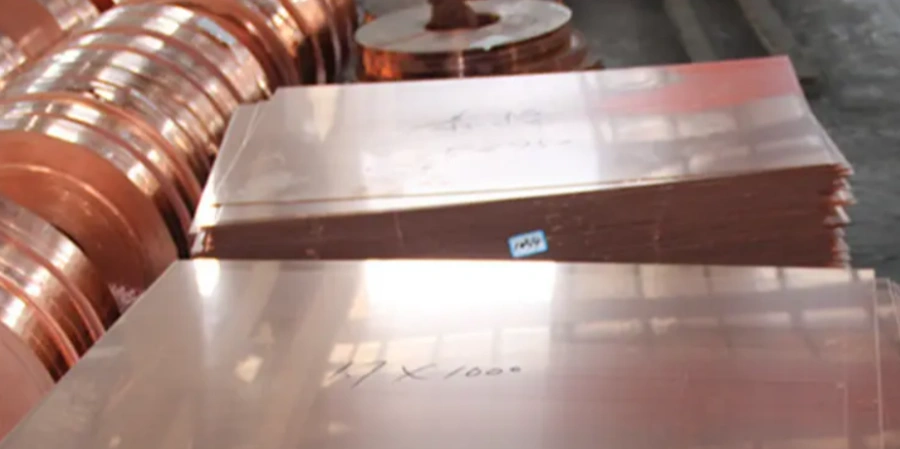
When you import copper-related products from China—like circuit breakers, transformer strips, or specialized connectors—you’ll often hear suppliers mention grades such as “T1,” “T2,” or “T3” when talking about the raw materials. At first, these might just look like codes, but each one tells you something important about the copper’s purity and performance.
Copper isn’t all the same. Different grades behave differently in conductivity, strength, and how easy they are to work with. Even small differences can affect how a product performs or how much it costs. Knowing the grades helps engineers, designers, and buyers make better choices and avoid problems later.
So whether you’re designing parts, making products, or checking materials, understanding them is useful. It gives you confidence in choosing the right copper and reduces the risk of mistakes.
What Are T1, T2, and T3 Copper Grades?
T1, T2, and T3 are grades of industrial pure copper defined under Chinese national standards, most notably GB/T 2059, which covers copper and copper alloy strips. Similar standards also apply to cathodes and rods.
The grading system is straightforward at first glance: the lower the number, the higher the purity. But once you start working with these materials day to day, you realize the differences go well beyond a percentage point on a datasheet.
The Purity Hierarchy
Each grade has a minimum copper content threshold — and these thresholds are what define the grade under Chinese standards:
| Grade | Minimum Copper Content (Cu + Ag) | Maximum Total Impurities |
|---|---|---|
| T1 | > 99.95% | < 0.05% |
| T2 | > 99.90% | < 0.10% |
| T3 | > 99.70% | < 0.30% |
That gap between T1 and T3 — about 0.25% in copper content — might look not much on paper. But impurities in copper are not passive fillers. Elements like bismuth, antimony, lead, and oxygen can disrupt the crystal lattice structure of copper, and even tiny amounts can reduce electrical conductivity and affect how the metal behaves under stress or heat.
Why the Grading System Exists?
China is the world’s largest producer and consumer of refined copper, so having a clear, standardized grading system matters enormously — not just for domestic use, but for international trade and quality control.
The GB/T standard gives manufacturers, buyers, and engineers a shared language. When a spec sheet says "T2 copper strip," everyone in the supply chain knows exactly what they’re getting: a minimum 99.90% purity product with predictable mechanical and electrical behavior.
This is also why you’ll find copper grade classifications differ across countries — for example, the US uses ASTM standards, Europe uses EN, and Japan uses JIS. When working with cross-border suppliers or reading international datasheets, it’s worth checking which standard applies. T2 copper from China roughly corresponds to Cu-ETP (electrolytic tough pitch copper) in Western systems, but they’re not always a direct 1:1 match.
What the "T" Actually Stands For?
In Chinese, the prefix T simply means copper. The numbering that follows reflects purity ranking within industrial pure copper. It’s a clean, practical system — but it’s worth remembering that T1, T2, and T3 apply specifically to industrial pure copper. Higher-specialty alloys and oxygen-free copper grades use entirely different naming conventions. For anyone working with electrical equipment design or production, keeping that distinction clear helps avoid a lot of ordering mistakes.
Key Differences Explained
The differences between T1, T2, and T3 copper aren’t just about purity on paper. They ripple into real, measurable performance gaps that affect how a product behaves over its lifetime. Understanding those gaps is what separates a high-quality product from one that just barely meets spec.
Electrical Conductivity
Copper’s main draw in electrical applications is its conductivity, and purity is the single biggest factor controlling it. Impurities in the copper scatter electrons as they move through the material, increasing resistance. The higher the purity, the lower the resistance, and the better the conductivity.
T1 copper, with near-perfect purity, delivers the highest electrical conductivity of the three grades. T2 is close — close enough that for most standard wiring and cable applications, the difference is negligible. T3 shows a more noticeable drop, which is why it’s rarely specified for applicaations that demands efficient current transfer.
In practical terms: if you’re designing a high-frequency transformer or precision signal cable, that conductivity gap matters. For a standard power cable carrying relatively low frequencies, T2 usually does the job without compromise.
Mechanical Properties
Beyond conductivity, the grades also differ in hardness, tensile strength, and elongation. Here’s where things get a bit more nuanced. According to GB/T 2059-2017, for annealed (O60) strip thicker than 0.15mm, all three grades share the same baseline mechanical requirements:
| Grade | Tensile Strength (MPa, min) | Elongation (%, min) | Vickers Hardness (HV, max) |
|---|---|---|---|
| T1, T2, T3 | ≥ 195 | ≥ 30% | ≤ 70 |
At first glance, the grades seem mechanically identical — and in the annealed condition, they largely are. The real differences appear in hardened tempers.
Temper Conditions and What They Mean in Practice
Copper strip doesn’t just come in single condition. Depending on how it’s processed — whether it’s been cold-worked, partially annealed, or fully hardened — the same T2 copper can behave very differently.
In a fully hardened temper (e.g., H04), tensile strength can reach up to 395 MPa, but elongation drops significantly. This trade-off between strength and flexibility is something you feel on the production line when you’re trying to form or stamp parts from hardened strip — it resists deformation, which is sometimes exactly what you want, and sometimes a real headache.
The key takeaway is this: grade and temper are two separate variables. A T1 strip in the O60 (annealed) condition may actually be softer and more ductile than a T3 strip in the H04 (hardened) condition. When you are specifying copper for production, always check both.
A Quick Side-by-Side Summary
| Property | T1 Copper | T2 Copper | T3 Copper |
|---|---|---|---|
| Copper Content (min) | > 99.95% | > 99.90% | > 99.70% |
| Electrical Conductivity | Best (highest) | High | Lower |
| Hardness (HB) | Highest | Medium | Lowest |
| Tensile Strength | Highest density/elongation | Balanced | Lower |
| Relative Price | Premium | Standard | Cheapest |
The main message here is that T1 and T2 are closer in performance than many people assume, while T3 sacrifices conductivity and some mechanical properties for a noticeably lower price point. Which grade is "right" depends entirely on what you’re building — and how much margin you have for performance vs. cost.
Industrial Applications by Grade
On our circuit breaker production line, most of the times we use T2 copper, and sometimes we use T3 copper, depending on what the customer needs and their budget.
The way each grade maps to industrial use cases isn’t random. It follows directly from the performance characteristics we discussed earlier. Higher purity means better conductivity but also higher cost, so the market has naturally sorted itself: T1 for the most demanding electrical applications, T2 for the broad middle of industrial use, and T3 for applications where cost control matters more than peak performance.
T1
T1 copper doesn’t show up everywhere — it’s used for applications that genuinely require it. These are situations where even a small increase in electrical resistance can affect system performance. High-frequency electronics, precision signal transmission, and certain specialized components fall into this category. You’ll often see T1 used in semiconductor manufacturing equipment, medical devices, and some aerospace electrical systems.
In the electrical manufacturing world specifically, T1 tends to appear in applications like:
-
Fine-gauge wiring for precision instruments and sensors
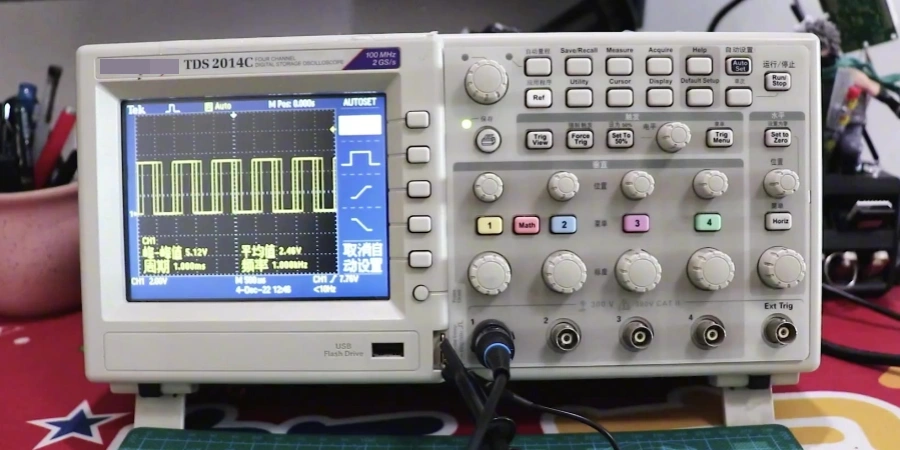
Precise instrument(oscilloscope) -
High-performance transformer windings where efficiency losses must be minimized
-
Specialty connectors in telecom and data center infrastructure
In these cases, the higher price of T1 is justified. The cost of lower-purity copper — through energy loss, extra heat generation, or signal degradation — would outweigh the savings on raw material.
T2
T2 is, without question, the most widely used grade in industrial electrical manufacturing. Its conductivity is high enough for the vast majority of applications, its mechanical properties are solid, and its price sits at a practical middle point. When people in the industry talk about "standard copper," they’re almost always referring to T2-grade material.
Common T2 applications include:
-
Power cables and electrical wiring — the backbone of any electrical installation
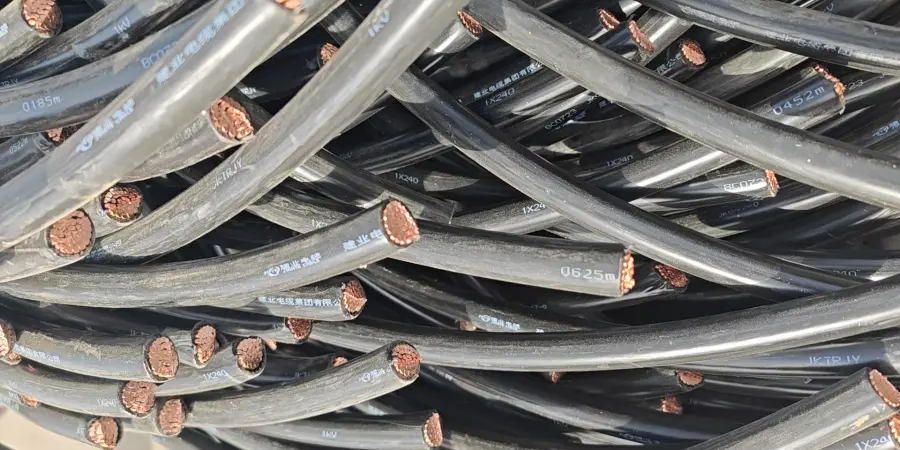
Power cables -
Transformer strips and windings — where consistent conductivity across large volumes matters
-
Heat exchangers — where both thermal conductivity and corrosion resistance are important
-
Telecom and electronics components — connectors, bus bars, PCB traces
In our own factory‘s warehouse, T2 copper accounts for the majority of copper materials we use. It’s reliable, widely available, and well-supported by supplier infrastructure across China.
T3
Some people think T3 copper is “low-end,” but I don’t see it that way. In my view, all materials are good—it depends on how you use them.
T3 isn’t necessarily a compromise — it’s a practical choice for applications where top-tier purity simply isn’t needed. Mechanical parts that require copper’s general properties (corrosion resistance, workability, resonable thermal conductivity) but don’t carry significant electrical loads are good candidates.
Construction hardware, decorative fittings, some HVAC components, and lower-spec mechanical brackets often use T3. The lower purity doesn’t meaningfully hurt performance in these situations, while the cost savings can be significant at scale — especially given that how expensive copper is overall.

One important point: confusing T3 with T2 in an electrical case isn’t always obvious at first. The parts look identical, the color is the same, and early performance may appear normal. Problems tend to show up over time — slightly higher operating temperatures, increased energy losses, or faster oxidation in certain environments. This is why material traceability and supplier documentation matter, even for something as simple as a copper component.
Conclusion
Copper may seem simple at first glance, but its grades carry hidden impacts on performance and cost. Paying attention to purity, temper, and application requirements can save headaches down the line. A little knowledge goes a long way, turning what could be a guess into a confident, informed choice for any electrical or industrial project.