
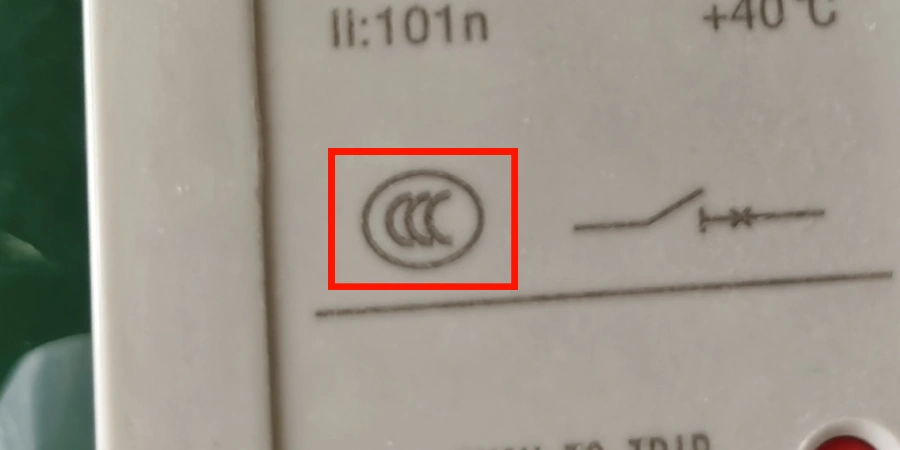
When you buy circuit breakers in China, you often see a certificate called 3C. Many people don’t really know what it means or when it’s needed. You might think it’s just a label for the Chinese market and wonder if it matters for your orders.
For us, the 3C mark is part of our duties. It’s built into how we make, test, and ship our products, and it helps us make sure everything meets safety standards. Over the years, it has become a routine part of running the factory smoothly.
For customers, though, 3C isn’t always so clear. On the surface it’s just three letters in a circle, but for anyone buying or using the products, there’s more behind it—some details and decisions that can be important to understand.
What is 3C (CCC) Certification?
I still remember the first time I saw our production line stop because a batch of breakers couldn’t ship without their 3C certificates being updated. It was a new GB standard revision, and even though we’d been making that model for years, we had to wait for the certification body to complete their additional testing. That’s when I really started paying attention to what 3C certification actually involves—it’s not just a rubber stamp.
China Compulsory Certification, or CCC, is the Chinese government’s mandatory system for safety and quality. You can think of it as China’s version of CE marking in Europe or UL in North America. The key difference is that 3C controls what can be manufactured, imported, sold, or used commercially within China.

The system is managed by the Certification and Accreditation Administration of China (CNCA) under the State Administration for Market Regulation (SAMR), and it covers a wide range of product categories that the government considers safety-critical.
Why Circuit Breakers Need Special Attention?
Circuit breakers fall directly under the CCC Catalogue, in categories like "circuit switches and electrical devices for protection and connection" and "low-voltage electrical apparatus." This is no coincidence—these devices protect electrical circuits from damage caused by overload or short circuits, so their failure can lead to fires, equipment damage, or worse. Because of this risk, the Chinese government requires third-party verification.
What makes 3C different from an internal quality check is the scope of what it covers. Certification is not just about testing one sample in a lab. The process includes:
-
Type testing (checking safety performance, electromagnetic compatibility, environmental durability)
-
Design review against mandatory Chinese GB and GB-T standards
-
Ongoing factory inspections
That last part often surprises manufacturers. After initial certification, inspectors continue to visit the factory to make sure production quality matches what was originally approved.
I’ve walked through our factory during these CCC surveillance audits, and they’re detailed. Auditors check production equipment, review quality control records, pick random samples for spot testing, and verify that the products rolling off the line match the certified design. If they find problems, your certificate can be suspended or revoked.
Despite the inconvenience, this ongoing oversight can actually be a strong quality signal. It shows that an external body is regularly checking that standards are being maintained.
The Mark Itself and What It Represents
The 3C mark is the circular logo with "CCC" in the center. Sometimes it includes a code identifying the certification body that issued it. When you see this mark on a circuit breaker, it means the product meets China’s mandatory safety requirements and the manufacturing facility has been inspected and approved.
Without this mark, products in covered categories legally cannot be sold or used for business activities within China—it’s that black and white.
But here’s where it gets interesting for international buyers: the 3C mark is basically about the Chinese domestic market. It’s China’s way of ensuring that products sold to Chinese consumers and businesses meet minimum safety standards.
Just because a Chinese factory makes a product doesn’t automatically mean that product needs 3C certification. The requirement only applies when that product is intended for sale or use within China.
When is 3C Certification Required?
The legal requirement for 3C certification is actually specific, even if it doesn’t feel that way when you’re trying to apply it to a real situation.
According to Chinese regulations, if a product appears in the official CCC Catalogue and is going to be manufactured, imported, sold, or used in business service places in China, it must obtain CCC certification and display the 3C mark before any of those activities legally take place.
The CCC Catalogue and Product Codes
Everything starts with the CCC Catalogue. This official document lists the product categories covered by the system. In many cases, it also includes HS codes (Harmonized System codes used for customs classification) to clearly define what’s included.
For circuit breakers, you’ll find entries like
"Circuit-breakers – 8535210000 – Automatic circuit breaker up to 72.5 kV."
If your product matches one of these listed codes and meets the technical description, the default assumption is that 3C certification is required—unless a specific exemption applies.
Over the years, Our team always double-check the Catalogue when developing new products or entering new markets. The Chinese government updates it periodically, and the trend has been toward expanding coverage, not reducing it. That means a product that doesn’t require 3C today could require it in the near future.
The Export-Only Exemption
Here’s where things get more nuanced, and where most confusion happens.
Chinese regulations do provide an exemption for "export-only" products. If a circuit breaker is manufactured in China strictly under contract for a foreign buyer and will never enter the Chinese market—meaning it goes directly from the factory to export—it can be exempt from the 3C requirement, even if it falls within a CCC-listed category.
On the surface, that sounds simple. But there’s an important catch.
The exemption only applies as long as the product truly stays outside China. If an export order is canceled and the goods remain in China, or if those products are later reimported into the domestic market, they cannot legally be sold without first obtaining 3C certification.
The regulations are clear: products listed in the CCC Catalogue cannot be imported, sold or used in business service places without certification. Enforcement has also become stricter in recent years. I read about cases where non-3C power banks were completely banned from sale in China under new rules, and similar actions have affected other electrical products. This is not a theoretical risk—it has real business consequences.
Understanding Your Specific Situation
So when do you actually need 3C?
Despite the dense regulatory language, the decision path is fairly simple:
| Scenario | 3C Required? | Why |
|---|---|---|
| Selling circuit breakers in China | Yes | Mandatory for CCC Catalogue products in Chinese market |
| Manufacturing in China for export only | No* | Exempt if truly never enters Chinese market |
| Importing into China (even temporarily) | Yes | Importation is explicitly covered by the requirement |
| Export product later sold in China | Yes | Loses export exemption once entering domestic market |
The "No" for export-only comes with an important condition: you must be absolutely certain the product won’t somehow end up back in China, and you should still verify your specific product code and situation with the current Catalogue.
For importers buying from Chinese manufacturers, the practical question is usually:
"Is this same product being sold in China?"
If the answer is yes, the supplier should already have 3C certification. If they say it’s purely an export model, you’re in a gray area. 3C may not be legally required for your transaction, but whether the manufacturer holds certification can still tell you something about their compliance standards, quality system, and long-term market strategy.
Does 3C Matter for US/EU Importers?
When I first started in the industry, we got an inquiry from a US customer. Right away, they asked whether we had the required certification—only after confirming that would we even discuss pricing. That conversation taught me an important lesson: what matters depends entirely on the market.
From a legal compliance standpoint outside China, 3C carries zero regulatory weight. Let me be clear, because I’ve seen suppliers misunderstnaad this: if you’re importing circuit breakers to use in the United States, local authorities do not recognize or care about the Chinese 3C mark.
The US electrical code system cares about UL listing (or other Nationally Recognized Testing Laboratory approvals), compliance with NEC (National Electrical Code) requirements, and relevant ANSI standards.
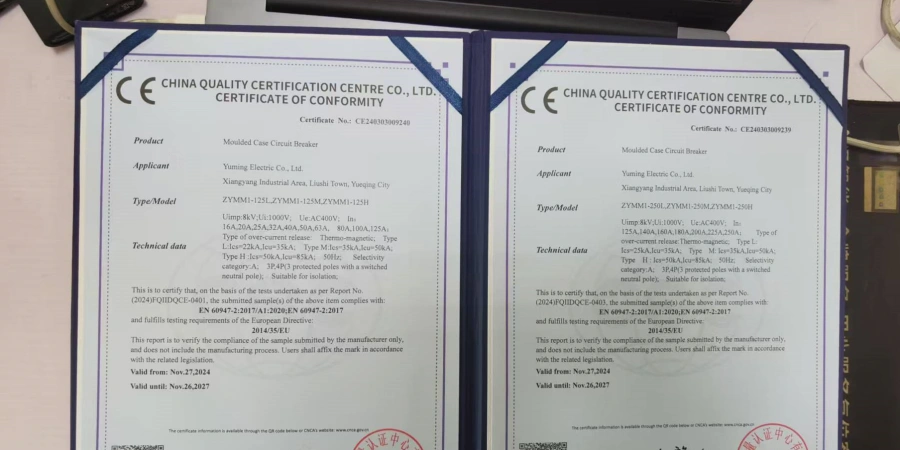
Similarly, if you’re placing products on the European market, regulators require CE marking and conformity to harmonized EN and IEC standards—The Chinese 3C mark simply is not part of that framework.
What Your Market Actually Requires?
This isn’t just theory—it affects real projects.
In the US, insurance companies require UL-listed equipment before they’ll provide coverage. Building inspectors can reject installations that use non-compliant products. Electrical contractors risk fines or license issues if they install equipments that does’t meet code.
None of them will accept 3C certification as a substitute, no matter how strict the Chinese testing process might be.
As for that american inquiry, we decided to walk away because the cost and time required to get UL certification outweighed the potential profit. The client didn’t care that we had passed Chinese GB standards testing or that our factory had been audited by CQC—they needed the UL mark.
So Why Even Look at 3C for Export Products?
Here’s a more balanced view, based on my experience working inside a factory.
While 3C doesn’t help with legal compliance outside China, it can still tell you something about the supplier.
If a Chinese manufacturer has invested in 3C certification for a product line, it usually means:
-
The product has undergone third-party type testing in accredited laboratories
-
The design has been reviewed against mandatory GB standards
-
The factory is subject to ongoing inspections and surveillance audits
-
The company is structured to serve the Chinese domestic market
This doesn’t make 3C a replacement for UL or CE. But it can serve as one indicator of how seriously a manufacturer treats compliance and quality systems.
I’ve seen buyers choose between two factories offering similar prices. One had 3C certification and formal test reports. The other dismissed certification as “just paperwork for China” and had no third-party testing at all.
3C wasn’t the only deciding factor, but it did signal that the first factory operated with more structured quality controls.
The Practical Approach for Importers
Experienced importers usually take a practical approach:
-
Treat 3C as a quality indicator—not a requirement for US/EU marakets
-
Prioritize the certifications your own market actually demands
If you’re buying for the US, insist on UL listing or recognition. Ask for the official UL file number and test documentation.
If you’re selling in Europe, verify CE marking and request the Declaration of Conformity plus supporting test data to IEC and EN standards.
If you’re supplying to other markets, research what’s actually required there—some countries accept IEC reports, others have their own national certification schemes.
3C should be part of your overall supplier evaluation—but it shouldn’t drive your decision.
What really matters is whether the manufacturer can demonstrate compliance with your market’s standards through proper certification and documentation.
A Chinese supplier with 3C but no CE won’t help you sell in the Europe. But a supplier with both 3C and CE shows they’ve invested in serving multiple markets properly. And in my experience, that’s the kind of partner worth building a long-term relationship with.
Conclusion
Understanding certifications like 3C is less about following rules and more about knowing what signals quality and compliance. Even if it doesn’t apply in your market, paying attention to these marks can help you choose suppliers who take safety and standards seriously.