
We learned in the early blog how EMI affects circuit breakers’ performance, especially when electronic components are built inside modern breakers. Electrical noise can make a healthy circuit look faulty, leading to trips that seem random and hard to explain.
In real factories, these problems do not show up in a neat or predictable way. A machine may run smoothly for months, then suddenly start shutting down. A breaker trips, gets reset, and then trips again for no clear reason. Nothing seems broken, yet the system feels unstable.
Electrical systems today are more complex than ever. Power, control signals, and data all share the same spaces, cables, and metal enclosures. Small changes in the environment can have large effects, making it harder to tell whether a problem is mechanical, electrical, or something in between.
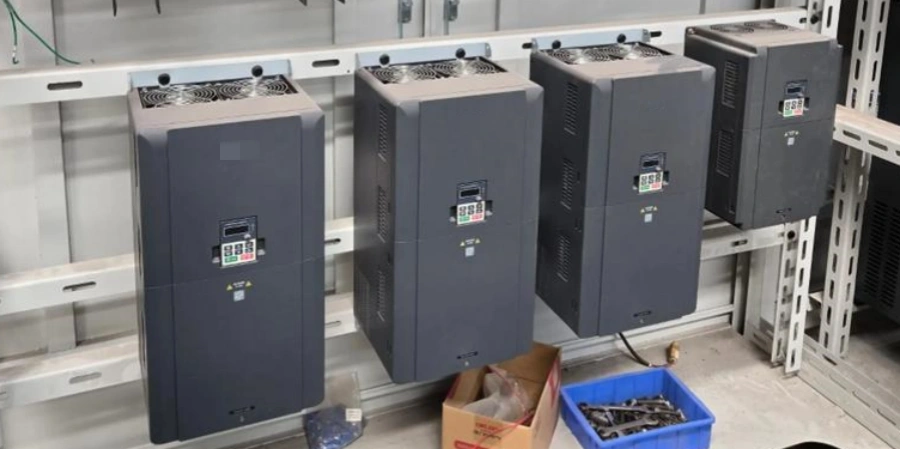
Variable Frequency Drives (VFDs)
VFDs are everywhere in modern factories. They control motor speed and save energy, but they are also the main source of electrical interference (EMI) complaints.
VFDs work by switching electricity very quickly—thousands of times per second (8–20 kHz). This fast switching creates two kinds of noise: through the cables (conducted noise) and through the air (radiated noise). The interference doesn’t stay near the VFD—it spreads through the whole electrical system, including the ground wiring.
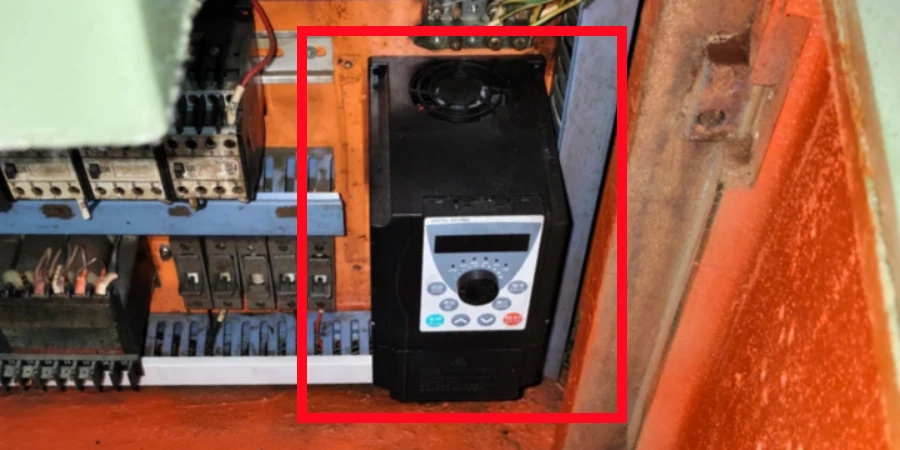
Why VFDs Cause Circuit Breaker Problems?
The biggest problem is high-frequency ground current. Normally, the ground wire carries very little current—it’s mainly for safety. But VFDs can produce several times more current than their rated output.
For example, a 10-amp VFD can produce very large high-frequency current spikes in the motor cables and ground system. These are not steady currents like motor load — they are fast pulses created by the rapid switching inside the drive and the capacitance of the cables. Even though they last only microseconds, these spikes can be strong enough to confuse sensitive electronic breakers.
VFD Installation Tips
Most VFD EMI problems come from poor installation. Key points:
-
Use shielded, VFD-rated cables, and connect the shield at both ends;
-
Keep power and control cables separate, and keep ground paths short and low-impedance;
-
If the VFD is near sensitive equipment, add an EMI filter at the drive input to block noise before it spreads.
These steps are simple and inexpensive but can greatly reduce interference and unnecessary breaker trips.
Switched-Mode Power Supplies (SMPS)
Power supplies usually go unnoticed—you plug them in and they work. But switched-mode power supplies (SMPS) are quiet yet strong sources of EMI. Even small SMPS units can generate enough high-frequency noise to confuse electronic circuit breakers when installed poorly.
SMPS replaced older linear supplies because they’re smaller, lighter, and more efficient. They convert AC to DC by rapidly switching power on and off at high frequencies—typically 40–200 kHz. These fast switches create sharp voltage edges, which are a major EMI source.
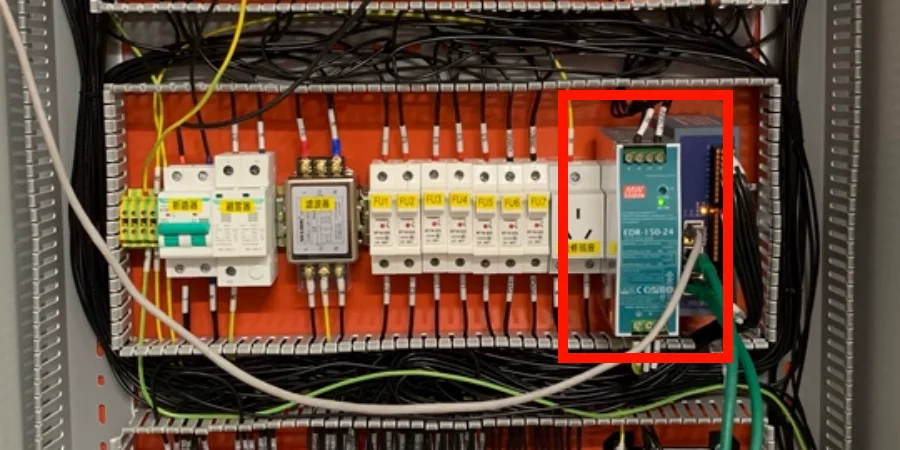
How SMPS Noise Spreads?
SMPS noise comes in two main types:
-
Differential-mode noise flows between the power wires, like extra static riding along normal electricity.
-
Common-mode noise flows between power and ground, and can leak into nearby circuits, like stray radio waves.
Both types can trick electronic breakers or safety relays into thinking there’s a fault, causing random trips. The noise can travel far, moving through shared panels and wiring. In one case, noise from industrial computer power supplies on a different circuit caused repeated trips on a conveyor control panel across the room.
Comparing Power Supply Types
Modern SMPS often include EMI filters, but they only work if the ground connection is solid and short. Multiple SMPS units together can create additive EMI. In these cases, adding line filters at key points prevents ongoing interference.
Relay Switching and Commutation
Relays are everywhere in industrial control systems, but people often underestimate the EMI they generate. In control cabinets with many relays switching on and off, the combined activity can make the environment surprisingly noisy, which can interfere with sensitive devices like circuit breakers.
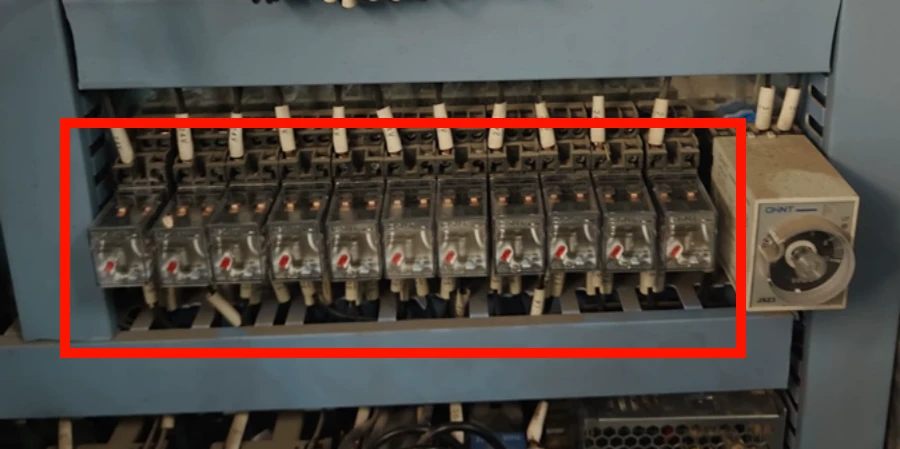
How Relay Arcing Works
The main source of EMI is arcing. When a relay opens or closes under load, a tiny spark forms between the contacts. One spark may not be a problem, but many relays switching repeatedly create a lot of noise.
Think of a relay like a valve. Water stops immediately when the valve closes, but electricity behaves differently. When relay contacts separate, the current can “jump” across the gap, forming an arc. Inductive loads like motors, solenoids, and coils store energy, which is released as a high-voltage spike when the relay opens. These spikes can travel through wires, metal enclosures, and shared grounds, sometimes affecting equipment meters away.
Relay Protection
Relay EMI is usually easy to control. For DC relays with inductive loads, a flyback diode safely absorbs stored energy, reducing spikes and noise. For AC circuits, RC snubber networks smooth out sudden electrical changes.
Even though these protections are cheap and effective, they are often skipped, causing nuisance breaker trips and harder troubleshooting. Properly protected relay circuits run quieter and much more reliably.
Arc Welding Equipment
Arc welding is a very strong source of EMI. If lights flicker or equipment acts up near welding, that’s the interference in action. Welding stations can cause inconsistent breaker readings because the process generates high levels of electrical noise that spread through the system.
The EMI comes from the welding arc itself—a plasma channel carrying thousands of amps with rapidly changing voltage. As metal melts and transfers, the arc constantly forms and reforms, producing noise across a wide frequency range. High currents create strong magnetic fields, and rapid voltage changes radiate intense electric fields, making welding one of the noisiest industrial processes.
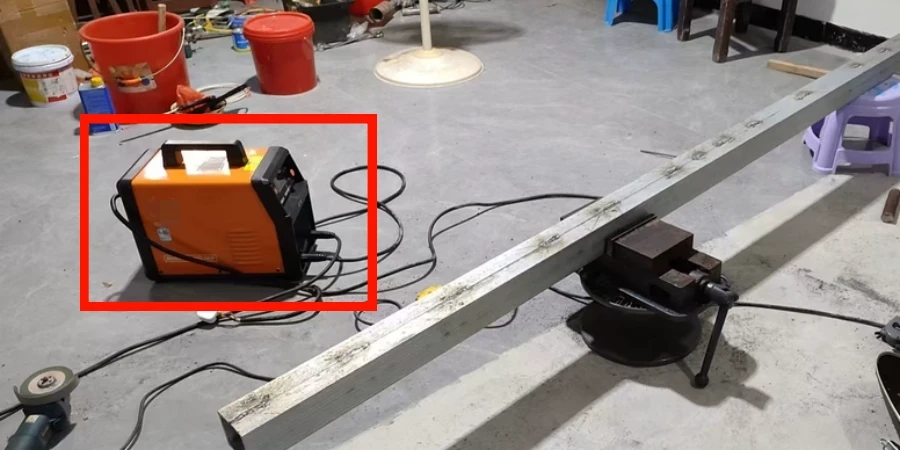
Why Welding Causes Ground Fault Trips?
Welding transients can confuse sensitive electronics like GFCIs and arc-fault breakers. GFCIs sense imbalances between hot and neutral; high-frequency welding currents can mimic a ground fault, causing repeated trips. Arc-fault breakers may misinterpret intentional welding arcs as faults. Unmanaged welding cables act like antennas, spreading noise throughout the building. Return currents through steel structures can even trip breakers over 100 feet away.
Welding EMI Mitigation Strategies
Effective EMI control starts with simple steps: managing cable layout, separating circuits, and using filtering. Keep welding cables short and bundled, run welding circuits on dedicated breakers, and add EMI filters at power inputs.
Besides, using modern welding equipment with built-in EMI suppression further reduces interference, helping prevent breaker trips and minimizing troubleshooting. Taken together, these measures provide a straightforward, long-term solution for keeping both welding operations and the surrounding electrical system running smoothly.
Harmonic Distortion from Non-Linear Loads
Harmonic distortion is a slow but serious problem in modern factories. Adding equipment like VFDs, computers, LED lights, and battery chargers over time can cause breaker trips and equipment failures that weren’t there before. The problem comes from distorted electricity, called harmonics, which reduces overall power quality.
Traditional equipment like motors, heaters, and incandescent lights draw smooth, even current—like calm waves. Modern non-linear loads only pull current in short bursts, like jagged spikes riding on top of the wave. Over time, these pulses distort the electricity for everything connected to the system.
Understanding Total Harmonic Distortion
These pulses create harmonics at multiples of the main frequency. In a 60 Hz system, this includes 180 Hz (3rd), 300 Hz (5th), 420 Hz (7th), and so on. Total harmonic distortion (THD) above 5–8% can start causing problems, and above 15–20% it can seriously affect equipment reliability.
Harmonics don’t just stay at the source — they spread through the system and mainly cause extra heating in wires, transformers, and breakers. Harmonics are a power-quality problem, not high-frequency EMI, but when they become severe they can still lead to nuisance trips because equipment runs hotter and currents become distorted.
💡 Manufacturer Tip: Avoiding False Trips
While circuit breakers cannot remove harmonics, low-quality breakers often trip falsely because they overheat under harmonic stress.
In our production, we’ve optimized the thermal dissipation of our Industrial MCCBs. They are designed to withstand the extra heat generated by non-linear loads, ensuring your production stays running when standard breakers would give up.
Fixing Harmonic Problems
How you fix it depends on how bad it is. Moderate THD can be reduced with line reactors on VFDs or other non-linear loads. Severe cases may need active or passive harmonic filters. Moving non-linear loads to dedicated transformers also helps. Always measure harmonics with a power quality analyzer first—guessing can waste time and money.
Long Cables Acting like Antennas
Cable routing may seem boring, but it can quietly cause serious equipment problems. When control cables are run alongside power lines, machines that normally work can begin to fail. The reason is simple: long, unshielded cables can pick up EMI like antennas.
Any wire can collect noise, and longer wires collect more. Even spare or ground wires can carry interference into sensitive devices. This is known as passive EMI coupling and it is one of the most common wiring mistakes in industrial systems.
How Cables Pick Up Interference?
High-frequency equipment like VFDs, welders, and radios gives off electromagnetic energy. When cables run nearby, this energy creates small voltages in the wires. The longer and closer the run, the stronger the effect. When cables run side by side, they can also pass noise through capacitance. This can lead to false trips, alarms, or random control problems. Once this noise gets into a control cable, it does not just go away — it keeps traveling down the wire into the equipment.
How to Use Shielded Cable Correctly?
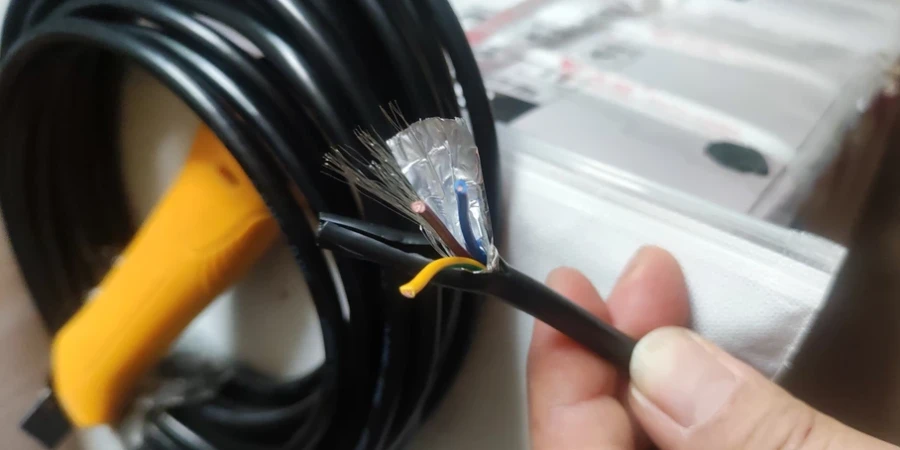
That is why spacing alone is not always enough in noisy environments. Shielded cable is often needed to stop the noise from reaching the device. Shielded cable only works when it is grounded correctly at both ends. The shield must make solid contact with a metal connector or enclosure.
A small drain wire by itself is not enough. For breaker coils and electronic relays, shielded twisted-pair cable is a good choice. The twisting reduces noise pickup, and the shield blocks outside interference. It costs more, but it prevents much bigger problems later.
Radio Frequency Transmitters and External RF Sources
External RF interference is a type of EMI you can’t control. Even if your equipment is well protected, signals from cell towers, Wi-Fi, broadcast stations, or other transmitters can still reach you. Usually this isn’t an issue, but long cables acting like antennas, poor shielding, or sensitive devices can let RF cause intermittent faults that are hard to trace.
Sometimes, circuit breakers or sensitive devices can trip or behave oddly in the afternoons or at specific times. Wiring and power quality may appear normal, yet the cause can be high-power RF signals from nearby transmitters. These signals can enter the facility through unshielded cable entries. Once the source is identified, the solution is usually straightforward—but tracking it down can be tricky.
Common External RF Sources
Radio transmitters can travel long distances, and cell towers (700 MHz–GHz) or Wi-Fi (2.4/5 GHz) can penetrate walls. Normally, building shields block most signals, but long or unshielded cables can act like antennas and carry RF inside. Even small changes, like moving a Wi-Fi access point a few feet, can reduce interference.
Defending Against External RF
Since external RF is everywhere, the first step is understanding how it can enter your equipment. Once you know the entry points, you can protect devices effectively.
Seal cable entries with conductive gaskets or shielded connectors, use shielded cables for any external runs, and add ferrite cores on cables near sensitive equipment. For critical devices, EMI filters can block 60–80 dB of RF, preventing interference from reaching electronics.
Static Electricity and Electrostatic Discharge
Static electricity is often overlooked as a source of EMI because it’s invisible and happens intermittently. In industrial settings, electrostatic discharge (ESD) can damage circuit breaker electronics immediately, or create latent defects that appear weeks or months later. Because the cause isn’t obvious, these failures can be hard to diagnose.
ESD occurs when charge built up on surfaces suddenly flows through a conductive path. Voltages can reach thousands of volts, creating broadband electromagnetic noise from kilohertz to gigahertz. Nearby circuits can pick up this noise, causing breaker electronics to act unpredictably and making the problem seem random.
How Static Builds in Industrial Settings?
Static electricity forms mainly through contact and separation of materials, a process called triboelectric charging. Common situations include conveyor belts moving, handling plastic films or powders, and even walking on non-conductive floors.
Dry air (humidity below 30%) lets charge build to higher voltages, increasing the chance of discharge, while moist air naturally bleeds off static. When the accumulated charge suddenly releases, it can create a high-voltage spark that interferes with or damages sensitive equipment.
Protecting Against ESD
Because static can appear at any time, preventive measures are essential. Using conductive or anti-static materials and keeping humidity above 40% reduces charge buildup. Ground equipment, use anti-static mats, and have personnel wear grounding straps to safely release charge. Proper equipment bonding creates an equipotential plane that prevents voltage differences that drive discharges.
Even simple steps can prevent costly damage. A fried breaker control board can cost hundreds or thousands of dollars to replace and cause downtime, so basic ESD protection is a worthwhile investment. For more guidance, see ESD-protected areas.
DC Motors with Brush Commutation
In older factory equipment like conveyors, hoists, and machine tools, brushed DC motors are still common. They provide good torque but generate constant electrical noise (EMI) that can affect nearby breakers and electronics.
The source is the brushes: as they slide on the rotating commutator, tiny sparks form continuously, creating interference across a wide frequency range. Heavier loads or worn brushes make the problem worse.

What Brush Arcs Do?
Each spark produces a short burst of EMI, from the motor’s rotation frequency up to the MHz range. Although brief, these bursts happen continuously, stressing nearby circuits and accelerating component wear.
PWM-driven or heavily loaded motors can generate very strong interference, affecting both conducted and radiated signals. If left unaddressed, this constant EMI can enter cables and control systems, causing breaker trips or equipment faults.
Brushed DC Motor EMI Levels
| Motor Condition | EMI Level | Frequency Range | Possible Problems |
|---|---|---|---|
| New, light load | Moderate | 10 kHz – 1 MHz | Minor interference |
| Full load | High | 10 kHz – 10 MHz | Conducted and radiated noise |
| Worn brushes | Very high | 10 kHz – 30 MHz | Strong interference |
| PWM-driven motor | Extremely high | 100 kHz – 30+ MHz | Motor and drive switching noise |
How to Reduce Motor EMI?
To reduce interference, you can:
-
Keep motors in good condition by replacing brushes and cleaning the commutator.
-
Route and shield cables properly, keeping motor wires away from sensitive circuits and crossing at right angles rather than running parallel.
-
Install DC motor line filters near the motor to block high-frequency noise.
-
For new systems, consider brushless DC motors or AC motors with VFDs, which reduce sparking, lower EMI, and last longer.
Poor Grounding and Inadequate Shielding
After looking at many sources of EMI, the real problem often comes down to bad grounding and poor shielding in the facility itself. Even systems with good design—filters, shielded cables, and quality parts—can fail completely if the installation is sloppy. Without a solid ground and proper shielding, nothing works as it should.
A ‘dirty ground’ means noise from motors, drives, and power supplies is flowing through the grounding system. In the real world, ground is not a perfect zero-voltage point — it is a return path, and when high-frequency currents flow through it, small voltage differences appear that can upset sensitive electronics.
How Ground Noise Happens?
Ground is not perfect. It has resistance and inductance, so when high-frequency current flows, small voltage differences appear between points. That means different parts of the building no longer share the same ground. It is possible to see more than 10 volts of noise between two points only 50 feet apart when bonding is poor. Proper equipotential bonding keeps all ground points at the same potential.
Shielded cables only help if the shield is connected correctly. A loose or partly cut shield does nothing. The shield must make 360° contact with a metal gland tied to the enclosure so noise can flow safely to ground.
Grounding Design and Best Practices
Use wide, short, flat ground connections. Braided straps or bus bars work better than round wires at high frequencies. Large facilities usually need a multipoint ground system to keep everything at the same voltage. Grounding and shielding also need maintenance.
For breaker circuits, use shielded twisted-pair cable, connect the shield at both ends, keep cables away from noise sources, and make sure enclosures provide continuous shielding. Fixing weak grounding and shielding is often the easiest way to solve EMI problems.
Conclusion
Random breaker trips are some of the most frustrating problems in a factory. They waste time, stop production, and lead to parts being replaced that were never bad in the first place. In many cases, the real cause is not visible damage but electrical noise moving where it should not.
Once you start looking at noise, wiring, and grounding, these problems become much easier to understand. What once felt random often turns into something that can be measured, fixed, and prevented from coming back.