
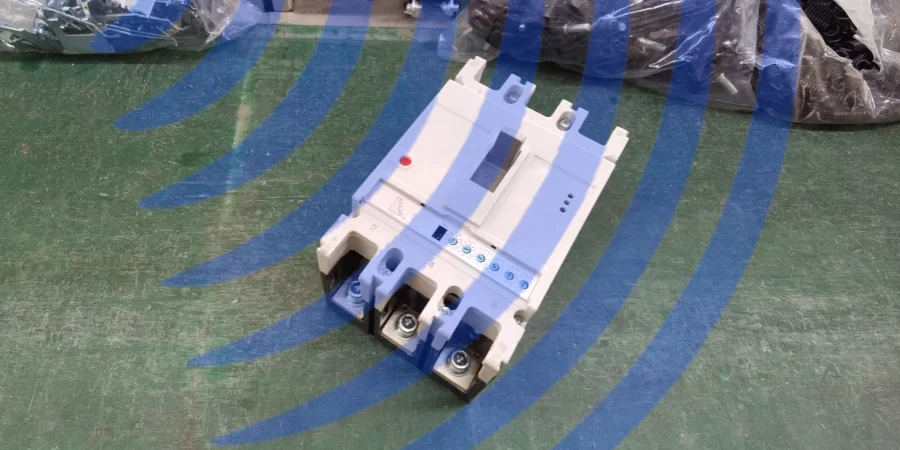
You might not believe that something invisible could cause your circuit breaker to trip—but electromagnetic interference is exactly that kind of troublemaker. Tiny spikes, stray signals, or even everyday devices can confuse modern breakers, making them act as if there’s a fault when nothing is wrong.
In our design labs, we face this challenge every day. Building breakers isn’t just about handling overloads; it’s about anticipating the invisible electrical noise that surrounds every system. Each sensor and microprocessor is tested to see how it reacts to EMI, so our breakers can protect reliably without false trips.
It’s a reminder that even the most essential safety devices live in a world full of invisible signals. Understanding how interference affects breakers helps engineers, technicians, and facilities stay aware and prepared for the unexpected.
Understanding EMI and RFI in Electrical Systems
Let me break this down in plain terms. Electromagnetic interference (EMI) is essentially unwanted electrical noise that sneaks into your circuits and messes with their normal operation. Think of it like trying to have a conversation in a crowded restaurant—the background noise makes it hard to hear clearly. In electrical systems, this "noise" comes in the form of electromagnetic signals that interfere with the signals your equipment is trying to process.
Radio Frequency Interference (RFI) is actually a subset of EMI, but it specifically refers to interference happening in the radio frequency spectrum. While EMI is the umbrella term covering all types of electromagnetic disturbances, RFI focuses on those radio-wave frequencies. In practice, though, the distinction doesn’t matter as much as you might expect, because both create the same fundamental problem: they introduce unwanted signals that your circuit breakers can mistake for real electrical faults.
Where Does All This Interference Come From?
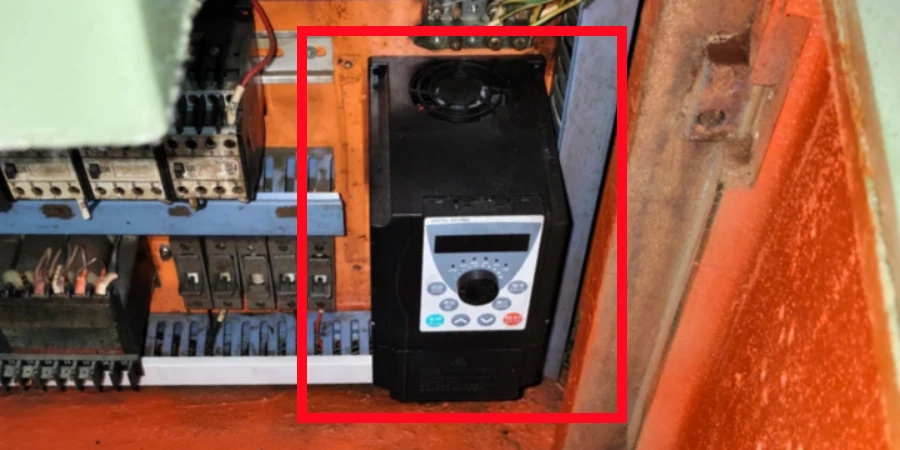
During our product planning meetings, we constantly discuss EMI sources because they’re everywhere in modern facilities. Human-made sources dominate the list. Variable frequency drives (VFDs) sit at the top—these motor speed controllers generate significant electromagnetic noise through their switching operations. Welding machines create intense electromagnetic pulses. Even your facility’s cellular network and Wi-Fi add to the electromagnetic pollution.
Natural sources exist too, though they’re far less predictable. Lightning strikes generate massive electromagnetic pulses that can travel through power lines and air. Solar flares, while rare, can create electromagnetic disturbances strong enough to affect ground-based electrical systems. These events remind us that EMI isn’t just an industrial problem—it’s part of the physical environment itself.
The bigger challenge over the past decade has been the sheer growth of electronic devices. Every new IoT sensor, 5G tower, and smart device adds another potential interference source. Each one is a potential EMI contributor, and together they create an increasingly noisy electromagnetic environment that our circuit breakers must operate within.
Three Pathways for EMI to Attack
EMI reaches circuit breakers through three main paths. Understanding these pathways helped me finally see why protection is never simple as it sounds.
-
Radiated EMI: Travels through the air as electromagnetic waves—imagine radio signals bouncing around your facility and coupling into sensitive circuits. Circuit breakers near powerful radio transmitters or welding equipment often experience more problems.
-
Conducted EMI: Travels along your power lines, riding on top of the electrical current that’s supposed to be there. When a VFD switches on and off thousands of times per second, it injects high-frequency noise directly onto the power conductors. This noise can reach your circuit breaker’s sensing electronics and cause false readings.
-
High-frequency transients: Rapid voltage or current spikes that happen during switching events. When large motors start, contactors open, or lightning strikes nearby, these transients create brief but intense electromagnetic disturbances. Circuit breakers designed to detect overcurrent conditions can interpret these transients as genuine faults, even though they last only microseconds.
| EMI Source | Frequency Range | Primary Pathway | Typical Impact |
|---|---|---|---|
| VFDs | 50-400 kHz | Conducted | Harmonic distortion, continuous nuisance tripping |
| Welding Equipment | kHz-MHz (broadband) | Conducted + Radiated | Voltage spikes, intermittent trips during welding |
| Mobile Transmitters | VHF-UHF (MHz) | Radiated | Random trips near transmitters, control circuit interference |
| Lightning | DC-GHz spectrum | Conducted + Radiated | Surge damage, multiple simultaneous trips |
The combination effect is what makes EMI particularly troublesome. A facility might have acceptable levels of each individual interference source, but when they all operate at once—a VFD starting while someone welds nearby and a forklift’s radio transmits—the cumulative effect pushes circuit breakers past their tolerance thresholds.
Why Breakers Are Vulnerable to Electromagnetic Disturbances?
Every additional electronic sensor or control function inside a circuit breaker brings both advantages and trade-offs. More electronics allow breakers to be smarter, more precise, and more responsive—but they also introduce new paths for electromagnetic interference to enter the system. This balance between capability and vulnerability is a defining challenge in modern circuit breaker design.
Circuit breakers are no longer purely mechanical devices. Today’s designs rely on electronic trip units, microprocessors, communication interfaces, and highly sensitive current sensors. These technologies enable advanced protection and monitoring, but they also make breakers more susceptible to electromagnetic disturbances—issues that traditional thermal-magnetic breakers rarely faced.

The Double-Edged Sword of Sensitivity
Here’s the paradox we face: the very characteristics that make circuit breakers effective at detecting real faults also make them vulnerable to false triggers. A Ground Fault Circuit Interrupter (GFCI) needs to detect imbalances as small as 5 milliamps between hot and neutral conductors. This extreme sensitivity protects people from electric shock, but it also means that even tiny EMI-induced currents can push the breaker past its trip threshold.
Electronic sensing mechanisms in modern breakers use small signal voltages to measure current flow. These sensing circuits typically operate at voltage levels far below the main power voltage—sometimes just a few volts. When electromagnetic interference couples into these low-voltage sensing circuits, even a fraction of a volt can represent a significant percentage of the signal level.
Not all breakers are equally vulnerable. Basic thermal-magnetic breakers, which rely on bimetallic strips and magnetic coils, are naturally resistant to EMI because they respond only to sustained, high-current conditions. Electronic trip breakers, with microprocessors and configurable settings, offer far more functionality but are also more susceptible to interference. Air circuit breakers (ACBs)—like the high-capacity models Sincede manufacture—with electronic protection typically fall somewhere in between—they’re complex, but often include better shielding and filtering than smaller electronic models.
Why Electronic Components Can’t Just Ignore EMI?
Here comes another question: why we can’t simply design circuit breakers that ignore all EMI?
Well, it’s like your ear can’t selectively hear only your friend’s voice and completely filter out background noise—your brain does that processing afterward. Similarly, circuit breaker sensing circuits receive all electrical signals, and the processing circuitry must distinguish between legitimate and interference signals.
At a fundamental level, complete immunity isn’t possible. When an electromagnetic field passes through a conductor—such as the internal wiring of a circuit breaker—it induces a voltage. This is basic physics, described by Faraday’s law. That induced voltage is real, and to the sensing circuitry, it looks no different from a legitimate signal until additional filtering or processing takes place.
Circuit breaker designers use several techniques to improve immunity: shielded enclosures, filtered inputs, differential sensing that cancels common-mode interference, and signal processing algorithms that reject transient spikes. But these protections have limits. A strong enough electromagnetic field can overwhelm even good filtering, especially in compact designs with cost and space constraints.
| Circuit Breaker Type | EMI Vulnerability Level | Primary Weakness | Typical Application |
|---|---|---|---|
| Basic Thermal-Magnetic | Low | Limited functionality | Residential, light commercial |
| Electronic Trip (Standard) | Medium-High | Unshielded sensing circuits | Commercial buildings, small industrial |
| Electronic Trip (Industrial Grade) | Medium | Cost-reduced filtering | General industrial applications |
| Air Circuit Breaker with Electronic Protection | Low-Medium | Complex control circuitry | Large industrial facilities, substations |
| GFCI/RCCB (5 mA sensitivity) | Very High | Extreme sensitivity requirement | Personnel protection applications |
Manufacturing realities add another layer of complexity. In production, we constantly balance protection performance against cost and physical size. Adding stronger EMI filtering increases both material cost and enclosure size. For residential environments, where EMI levels are usually low, heavy filtering isn’t practical. In industrial settings—where VFDs and welding equipment create harsh electromagnetic conditions—that extra protection becomes essential.
The Control Circuit Vulnerability
One detail that surprised me early on is that circuit breakers have two distinct electrical systems: the main power path that carries the load current, and the control circuits that sense current and trigger tripping. The control circuits operate at much lower power levels and use more sensitive components, making them the weakest point when it comes to EMI.
Inside the breaker, these circuits often rely on relatively long wire runs—connections between current sensors and trip units, between processors and actuators, and between communication ports and control boards. Each of these wires acts like a small antenna, capable of picking up radiated EMI. The longer the wire and the higher the interference frequency, the stronger the coupling becomes.
Aging insulation can make things worse. As insulation degrades, its dielectric properties change, allowing capacitive coupling between conductors that should remain isolated. High-frequency EMI can then jump between circuits. We’ve had customers share cases where simply replacing old control cables eliminated nuisance tripping, without any other system changes.
Finally, EMI isn’t a one-way problem. Circuit breakers don’t just suffer from interference—they can create it. When a breaker interrupts high fault current, the resulting arc generates intense electromagnetic radiation. That radiation can affect nearby breakers or control systems, triggering additional trips. In some cases, this leads to cascading failures that are hard to diagnose, because the first trip was legitimate while the rest were caused by EMI.
How EMI/RFI Causes Circuit Breakers to Fail?
EMI doesn’t mechanically damage circuit breakers, but it can significantly disrupt their reliable operation. Understanding these impacts is critical for preventing downtime and reducing production losses in industrial facilities.
Nuisance Trips and Cumulative Effects
Even when individual EMI sources are minor, their combined effect can trigger nuisance trips. Multiple devices operating simultaneously—such as VFDs, wireless sensors, LED lighting, and switching power supplies—can collectively push breakers close to their trip thresholds, causing intermittent but repeated power interruptions. These nuisance trips are particularly frustrating because traditional troubleshooting often finds no apparent fault.
The Cost of Unexpected Downtime
Unexpected breaker trips can have substantial financial consequences. In critical industries like oil and gas, pharmaceuticals, and food processing, unplanned downtime can cost tens of thousands to hundreds of thousands of dollars per hour. Beyond lost production, emergency responses incur premium labor costs, and abrupt power loss stresses equipment, potentially leading to premature failures of auxiliary systems.
VFDs and Harmonic Distortion
Variable Frequency Drives (VFDs) are common in industrial facilities for controlling motor speed. However, they don’t draw electricity in a smooth, steady way. Instead, they pull current in quick, intermittent pulses. You can think of it like water flowing in bursts instead of a steady stream.
These current pulses create fluctuations in the power system, which can sometimes interfere with sensitive circuit breakers. Even when a breaker is functioning properly, it may interpret these fluctuations as a real fault and trip. Traditional thermal-magnetic breakers may react to the extra heating caused by the pulsing current, while modern electronic breakers, which are more sensitive, may respond to the rapid changes in current.
In short, VFDs make the electrical environment “noisier,” and this interference can sometimes cause breakers to trip unexpectedly—even when there is no actual fault in the circuit.
💡 Manufacturer Tip: Testing Against VFD Noise
Standard tests are no longer sufficient for modern electronic breakers. At Sincede, we simulate high-harmonic VFD conditions in our on-site lab. We optimize the filtering circuits in our MCCBs and ACBs. This ensures the breakers can distinguish normal VFD operation from actual electrical faults, preventing costly downtime for your clients.
Long-Term Effects on Breaker Electronics
Beyond immediate trips, prolonged exposure to EMI can degrade the performance of breaker electronics. High-frequency interference stresses sensitive semiconductors, accelerates aging of capacitors and resistors, and reduces the reliability of sensing circuits. Aging cable insulation allows more EMI to couple into control circuits, lowering the signal-to-noise ratio.
Over time, this degradation makes breakers less capable of distinguishing between legitimate signals and noise, increasing the likelihood of both nuisance trips and missed faults. Protective relays and PLCs in larger systems are also vulnerable, further compromising system reliability.
Conclusion
Electromagnetic interference is no longer an exception in electrical systems—it is part of the modern operating environment. As circuit breakers become increasingly electronic, they must make protection decisions in the presence of constant electromagnetic noise.
The real risk of EMI lies not in isolated events, but in the cumulative effect of multiple interference sources gradually pushing systems beyond their noise tolerance. In modern power systems, reliability is therefore defined not only by ratings and trip curves, but by how consistently quality circuit breakers make correct decisions in electrically noisy conditions.