
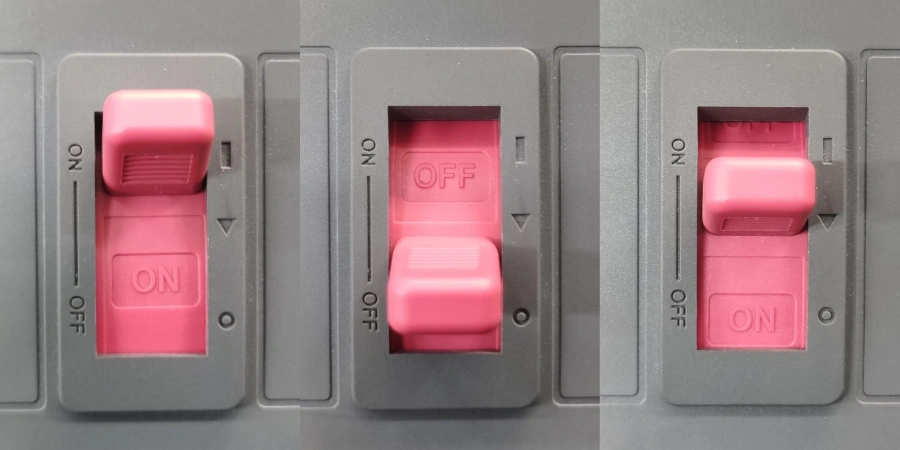
A typical breaker in your home can be in one of three positions. Each position gives a hint about what’s happening with the electricity behind the walls, and noticing it can help you understand your home’s system better.
You don’t need to be an electrician to understand these little switches—they’re always reacting to changes in your circuits. Watching their positions can help you know when to be careful and when it’s safe to leave things alone.
Becoming aware of these positions is a small step toward taking control of your home’s electricity. Paying attention doesn’t require technical skills—just curiosity and care can make everyday maintenance safer and smarter.
Why Breaker States Matter?
"What’s the difference between a breaker that’s off and one that’s tripped?"
It sounds simple, but the moment you try to explain it, you realize most people flip a switch without thinking about what’s happening inside that small plastic box in their panel.
Let me paint a picture. A circuit breaker is essentially an automatic switch that protects your electrical circuits from damage. Think of it as a vigilant guard standing between your power source and everything plugged into your walls. Its one job is to monitor the current flowing through and cut power when things get dangerous.
The way it does this is surprisingly clever. Inside that compact housing is a mechanism constantly checking how much electricity moves through. When current exceeds safe levels—whether from too many appliances running at once, a short circuit, or a ground fault—the breaker automatically opens and stops the flow. This happens in milliseconds, often before you even notice something’s wrong.
Now, why does the breaker’s state matter so much? Because each state tells you something. When you look at your panel and see breakers in different positions, you’re actually reading a log of what’s happened in your system. An "on" breaker means everything’s normal—the circuit is energized and working as expected. An "off" breaker tells you someone manually shut it down, probably for maintenance or to work on something safely. But a "tripped" breaker is different. That’s the system saying, "Hey, I detected something dangerous and protected you from it."
Some people treat these states as if they’re all the same. They’re NOT. Manually turning off a breaker and having it trip automatically are completely different events. One is an intentional control; the other is an emergency response. Understanding that difference changes how you reset breakers and how you diagnose problems.
The Three Main States: On, Off, and Tripped
Let me break this down in a way that makes sense. Every low-voltage circuit breaker you can find in homes and small commercial buildings operates in one of three states. Each state represents a specific condition, and once you recognize the signs, reading them becomes second nature.
On State
When a breaker is in the "on" position, its internal contacts are closed. Current flows freely from the source through the breaker and down to connected loads—lights, outlets, appliances, equipment or whatever. The handle typically points upward or toward an "ON" label, depending on the region and manufacturer.
In this state, the breaker is constantly monitoring current. That bimetallic strip inside is warming up slightly as current passes through, and the electromagnetic coil is sensing the current level. Everything’s within normal limits, so the mechanism stays latched. The circuit is energized, and assuming the wiring and loads are in good shape, everything downstream is powered.
This is the state we want for any active circuit. It means the breaker hasn’t detected anything wrong, nobody has manually shut it down, and the protection system is standing ready. When you scan a panel and see a row of breakers all aligned in the on position, that’s typically a good sign—your electrical system is running well.

Off State
The off state is simple—but you need to distinguish it from a trip. When someone manually switches a breaker to off, they’re choosing to open the contacts and de-energizing the circuit. The handle moves firmly to the opposite side—usually down or toward an "OFF" label—and clicks solidly into place.
Why would you do this? Maintenance is the most common reason. If you’re changing a light fixture, replacing an outlet, or working on any equipment connected to that circuit, you shut the breaker off first to create a safe, de-energized workspace. Some people also use the off position to isolate circuits they rarely use or to prevent certain equipment from drawing standby power.
The key point: off is intentional. It’s a conscious decision to interrupt power, and there’s usually a clear reason behind it. The breaker hasn’t detected a fault; nobody forced it open automatically. You turned it off, and when you’re ready, you can turn it back on—assuming the circuit is safe.
Tripped State
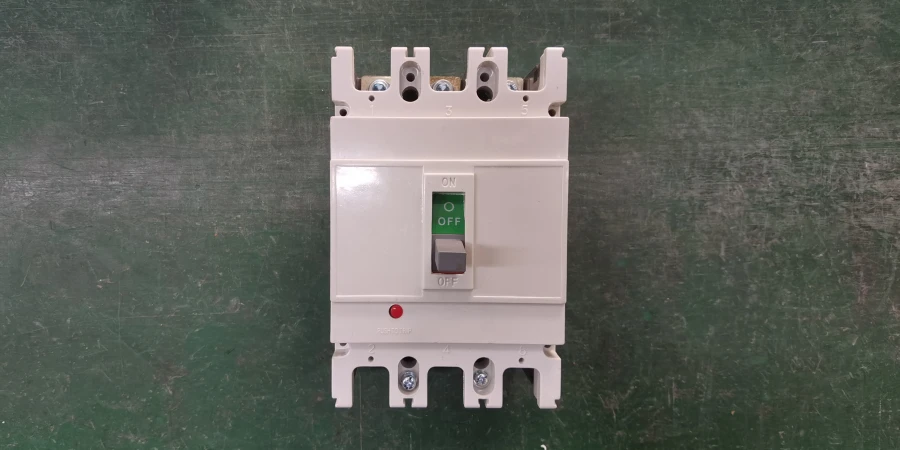
This is where most of the confusion happens. When a breaker trips, it opens automatically because its protection mechanism detected something dangerous. The internal contacts separate, stopping current flow, but the handle doesn’t behave the same way it does in a manual off.
Depending on the manufacturer and breaker design, a tripped breaker might sit halfway between on and off, or it might rest at the off position but feel different—"spongy", loose or not fully locked in place. Some breakers have a visible trip indicator, like a small window or button that changes color or pops out when the unit trips.
The important part is understanding why it tripped. Most modern residential breakers use two protection methods:
-
The thermal trip mechanism uses a bimetallic strip that bends when heated by excessive current over time—this protects against overloads. (Related Reading: How Bimetal Strips Work in Circuit Breakers?)
-
The magnetic mechanism uses an electromagnet that responds instantly to very high current spikes—this protects against short circuits. (Related Reading: What Does the Electromagnetic Coils Do in Circuit Breakers?)
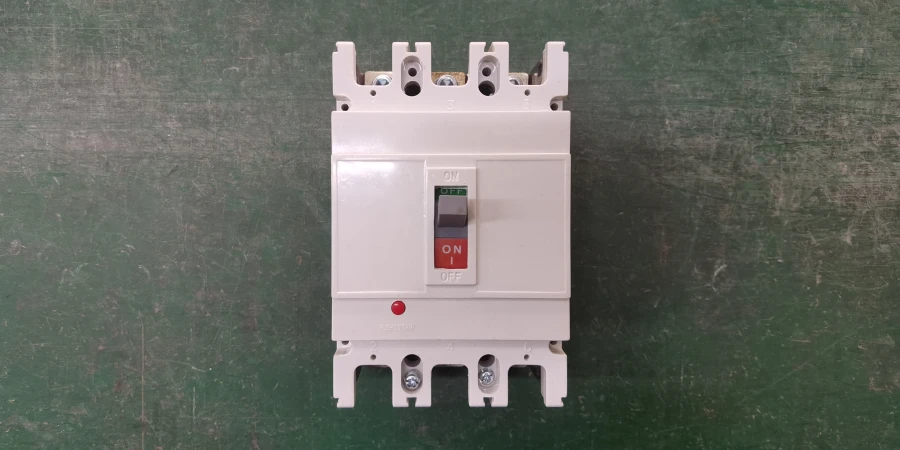
However, precise protection relies on manufacturing quality. If the internal mechanism is poorly calibrated, the breaker might trip too late (causing fire risks) or too early (causing downtime). This is why purchasing from a manufacturer with complete control over the production chain is critical.
| Trip Type | Current Level | Response Time | Common Causes |
|---|---|---|---|
| Thermal (Overload) | 1.1x to 3x rated current | Seconds to minutes (inverse time) | Too many devices on circuit, continuous high loads |
| Magnetic (Short Circuit) | 3x to 10x+ rated current | Milliseconds | Direct short between conductors, equipment failure |
| Ground Fault (GFCI) | 4-6 mA imbalance | ~25-30 milliseconds | Current leaking to ground, insulation breakdown |
When you see a breaker in the tripped position, treat it as a message from your electrical system. Something went wrong—an overload, a short circuit, a ground fault, or in rare cases a problem inside the breaker itself. Unlike the off state, which you control, the tripped state is the breaker taking control for your safety.
I’ve seen people reset tripped breakers without a second thought, treating them like nuisance interruptions. That’s dangerous thinking. Most modern molded-case breakers are trip-free, meaning they’ll open even if you’re physically holding the handle in the on position during a fault. The mechanism is designed to trip no matter what. If it tripped once, there was a reason. If it trips again immediately after reset, that reason still exists and needs checking.
Understanding these three states gives you a clear roadmap for action:
-
On means monitor as usual.
-
Off means understand the intention and ensure the circuit is safe before re-energizing.
-
Tripped means you should investigate, correct the root cause, and reset carefully.
Mixing these up leads to mistakes. Recognizing them leads to safer, smarter decisions at the electrical panel.
Conclusion
Next time you look at your electrical panel, think of each breaker as sending a message. Checking why one tripped or is turned off turns a simple chore into a moment of careful attention and common-sense safety.