
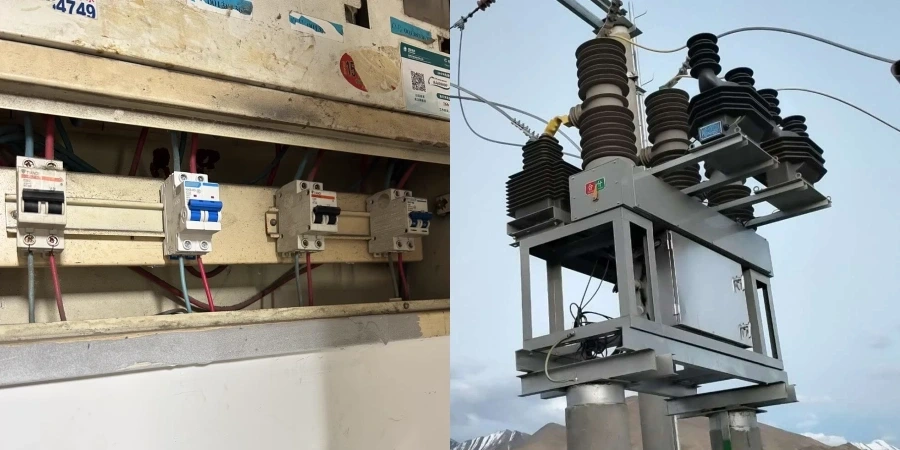
Circuit breakers can be sorted in lots of ways—by what they do, how much current they handle, or where they’re installed. One of the simplest and most important ways, though, is by voltage: low-voltage versus high-voltage breakers. At first glance, they all do the same thing—stop electricity when there’s a problem—but when you actually see them, the differences are striking.
I first noticed this during a factory visit. The low-voltage breakers in the panel room were small, neat, and easy to work with. But in the high-voltage room, a single breaker was almost taller than me, with huge insulators and complicated parts. It hit me that voltage isn’t just a number—it shapes how these machines are built and how they keep people and equipment safe.
Since then, I’ve watched every breaker more closely, whether in homes, offices, or big factories. Learning about the voltage behind each one has made me appreciate how much thought and care goes into keeping our electricity running safely.
Low-voltage vs High-voltage Definitions
The line between low-voltage and high-voltage breakers isn’t arbitrary. It’s based on engineering limits and safety considerations. In many references, systems up to 1 kV AC or 1.5 kV DC are considered low-voltage, while higher voltages fall into high-voltage categories. However, voltage classifications can vary depending on international standards:
-
IEC (International Electrotechnical Commission): Low voltage ≤ 1 kV, medium voltage 1–36 kV, high voltage > 36 kV
-
IEEE (Institute of Electrical and Electronics Engineers): Low voltage ≤ 1 kV, medium voltage 1–72.5 kV, extra-high voltage above 72.5 kV
-
China GB/T standards: Similar to IEC, but with specific ranges for substation and distribution equipment
This threshold exists because electricity behaves very differently at different voltages. Below 1 kV, you deal with distribution-level challenges: manageable arc energy, simpler insulation, and protection schemes that rely on basic thermal-magnetic principles. Once you cross into medium or high voltage, the physics—and the risks—change dramatically, requiring entirely different engineering solutions.
Why the Distinction Matters
The voltage classification determines everything else about a breaker’s design, application, and regulatory requirements. A 15-amp residential breaker and a 1200-amp transmission breaker might both interrupt electrical current, but they’re as different as a bicycle and a freight train. The low-voltage unit uses simple bimetallic strips or magnetic coils, while its high-voltage cousin employs sophisticated arc-quenching media like SF₆ gas or vacuum chambers.
Understanding this split explains why you can’t just scale up a low-voltage design for high-voltage use—and why high-voltage breakers cost considerably more. It’s not just about size; it’s about fundamentally different engineering and safety challenges.
Construction and Design Differences
One of the most eye-opening moments in my career came during a substation tour when I saw a high-voltage breaker next to its low-voltage cousin. The size difference alone was striking—but it’s what’s inside that truly shows the engineering challenges.
Arc Interruption: The Core Challenge
All circuit breakers face the same fundamental problem: when contacts separate under load, an electrical arc forms and wants to keep conducting current. How a breaker handles this arc defines its entire design.
Low-voltage breakers use relatively simple methods. Home miniature circuit breakers (MCBs) rely on air to cool and stretch the arc until it goes out. Commercial molded case circuit breakers (MCCBs) often add magnetic blowout coils to push the arc into special chambers for extinction.
High-voltage breakers face arcs that could destroy low-voltage mechanisms in milliseconds. They use specialized media to safely interrupt current:
-
SF₆ gas breakers – use sulfur hexafluoride to quench arcs quickly
-
Vacuum breakers – remove the medium entirely, letting the arc die naturally
-
Oil-filled breakers – older technology where mineral oil absorbs arc energy
-
Air blast breakers – use compressed air to blow the arc apart
Trip Mechanisms and Protection
Protection strategies differ dramatically between low- and high-voltage systems. Low-voltage breakers combine switching and protection in one device. An MCCB, for example, has thermal elements (bimetallic strips) for overloads and magnetic coils for short circuits paced into a compact molded case.
This integration requires precise manufacturing. Because the trip mechanism is internal and cannot be adjusted by the user, the quality of the internal components is paramount. At Sincede, we control this quality by managing the entire production process from mold making to final assembly, ensuring that every MCCB performs reliably when it matters most.
Modern electronic units add programmable trip curves and communication features. High-voltage breakers separate protection from interruption. The breaker focuses purely on stopping current, while separate relays detect faults and decide when to trip. This separation allows complex protection schemes, considering system stability and coordination with other devices—which are rarely seen in low-voltage systems.
| Feature | Low-Voltage Breakers | High-Voltage Breakers |
|---|---|---|
| Interrupting Medium | Air, small SF₆ units | SF₆, Vacuum, Oil, Air blast |
| Trip Mechanism | Integrated thermal-magnetic or electronic | Separate protective relays |
| Arc Energy | Tens of kJ | Hundreds to thousands of kJ |
| Contact Design | Simple, single interrupter | Multiple breaks in series |
| Insulation | Air gaps, solid insulation | Complex dielectric systems |
Mechanical Design Philosophy
Low-voltage breakers prioritize compactness, cost, and ease of installation. They fit standard enclosures, mount on DIN rails or bolts, and can be serviced by general electricians. Everything—contacts, arc chambers, trip mechanism—is packed into a small, manageable unit.
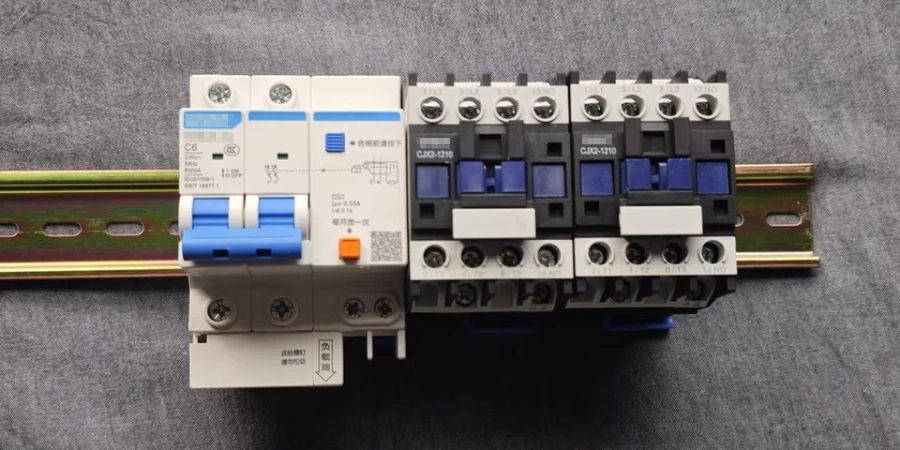
High-voltage breakers prioritize reliability and interrupting capability above all else. Size and cost are secondary when protecting millions of dollars of equipment and preventing blackouts. They use multiple interrupters in series, elaborate support structures, and advanced monitoring systems that track contact wear, gas pressure, and more.
Monitoring and Diagnostics
Here’s another clear difference. Low-voltage breakers were traditionally “black boxes”—either they worked or they didn’t. Modern units add limited diagnostics, like trip cause indication and basic metering.
High-voltage breakers, however, are sophisticated monitoring platforms. They track operating cycles, contact resistance, the condition of the interrupting medium, and provide detailed fault analysis. Some even predict maintenance needs based on historical usage and environmental conditions.
Environmental Considerations
Low-voltage breakers usually operate indoors—in controlled electrical rooms or panels—so simpler construction and materials are sufficient.
High-voltage breakers must endure extreme conditions. Outdoor units face temperature swings from -40°F to 140°F, UV exposure, ice, seismic forces, and contamination from salt, dust, or biological sources. This requires robust construction, specialized coatings, and materials that perform reliably across wide conditions.
In short, the differences in construction aren’t just engineering preferences—they’re governed by physics. As voltage rises, dielectric stresses, arc energies, and insulation requirements grow tremendously, forcing entirely different approaches but to the same basic goal: safely interrupting electrical current.
Where Are Low-voltage Breakers Used?
Walking through different facilities over the years has taught me more about breaker applications than any textbook ever could. Each voltage class plays a distinct role in our power system, and those roles explain why the technology looks and behaves so differently.
Low-voltage breakers act like the “managers of capillaries” in our electrical system—they control power flow at the very end of the distribution chain, where electricity finally does useful work. We can them everywhere: in homes, offices, factories, and massive industrial plants.
In residential buildings, low-voltage breakers protect individual circuits—lighting, outlets, appliances, HVAC equipment. The familiar panel in a basement is filled with miniature circuit breakers (MCBs), usually rated from 15 to 50 amps. Each one protects a specific circuit, ensuring both the wiring and the connected devices are safe from overloads.
Commercial buildings use larger molded case circuit breakers (MCCBs) and insulated case breakers (ICCBs). These handle higher loads and need better coordination. The goal is simple: if a small branch circuit faults, you don’t want the main breaker for the whole building tripping unnecessarily.
Industrial Low-voltage Applications
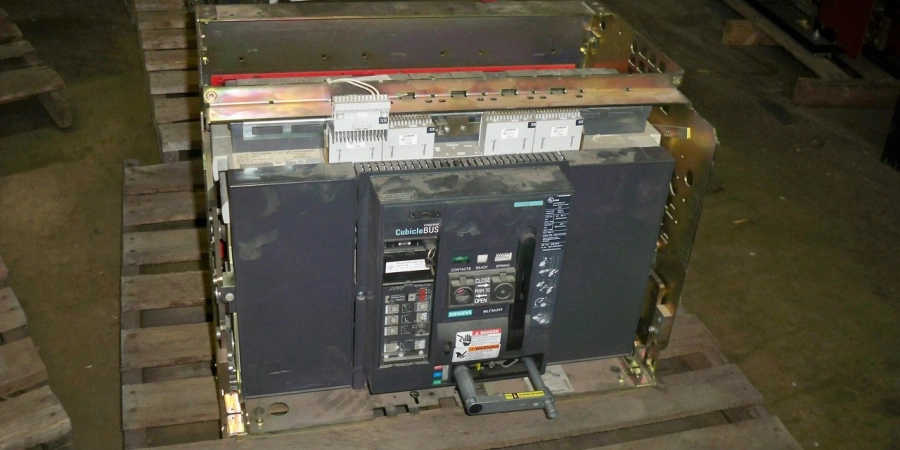
Industrial facilities represent where low-voltage breakers really show their versatility. Motor control centers (MCCs) rely heavily on these breakers to protect individual motor starters. In a typical manufacturing plant, you might see hundreds of these units protecting everything from small conveyor motors to large process equipment..
Power distribution panels use larger low-voltage breakers, specifically Air Circuit Breakers (ACB), as main disconnects and feeder protection. These are the critical gatekeepers of the facility’s power. Given their importance, choosing a manufacturer with a proven track record of high breaking capacity and durability is essential for preventing costly plant downtime.
These applications often require electronic trip units with programmable curves, ground fault protection, and communication capabilities for integration with facility management systems.
| Application Type | Typical Voltage | Common Breaker Types | Current Range |
|---|---|---|---|
| Residential | 120–240 V | MCB | 15–100 A |
| Commercial Buildings | 208–480 V | MCCB, ICCB | 100–1200 A |
| Industrial Distribution | 480–690 V | MCCB, ACB | 100–4000 A |
Where Are High-voltage Breakers Used?
If low-voltage breakers are the capillaries, high-voltage breakers are the “main arteries” of the grid. They protect transmission lines, distribution substations, and generation facilities—places where system stability and reliability matter just as much as safety.
Transmission System Protection
At utility substations, high-voltage breakers form the backbone of grid protection. These devices work at 115 kV up to 765 kV, safeguarding transmission lines that carry electricity across entire regions.
Here, speed is critical. A low-voltage breaker might take several cycles to clear a fault, but a transmission breaker must act within just 2–3 cycles. That difference in timing drives much of their advanced engineering.
Distribution Substation Applications
Distribution substations bridge the gap between transmission and local distribution. Operating at 4–69 kV, breakers here control power as it flows to feeders that serve neighborhoods or industrial zones.
Protection at this level becomes more complex. Breakers must coordinate both with upstream transmission and downstream distribution, often relying on multiple relays that analyze load flow, fault direction, and system stability.
Industrial High-voltage Applications
Some industrial facilities are so large that low-voltage connections simply won’t cut it. Steel mills, aluminum smelters, and petrochemical plants often take service at 4–35 kV for their biggest equipment. These systems provide the same level of reliability you’d expect from a utility grid, while also meeting the heavy, specialized power needs of industrial operations.
Installation Environment Differences
How and where breakers are installed shows another sharp divide. Low-voltage breakers usually sit indoors—inside electrical rooms, panels, or motor control centers. Compact designs and standard mounting hardware make them easy to install.
High-voltage breakers, on the other hand, are often outdoors or in specially built substations. Outdoor gear must handle extreme temperatures, ice, UV exposure, even salt or pollution. Indoor high-voltage gear requires big clearances and advanced ventilation. In many cases, the breaker design dictates the building design, not the other way around.
Maintenance Access and Safety
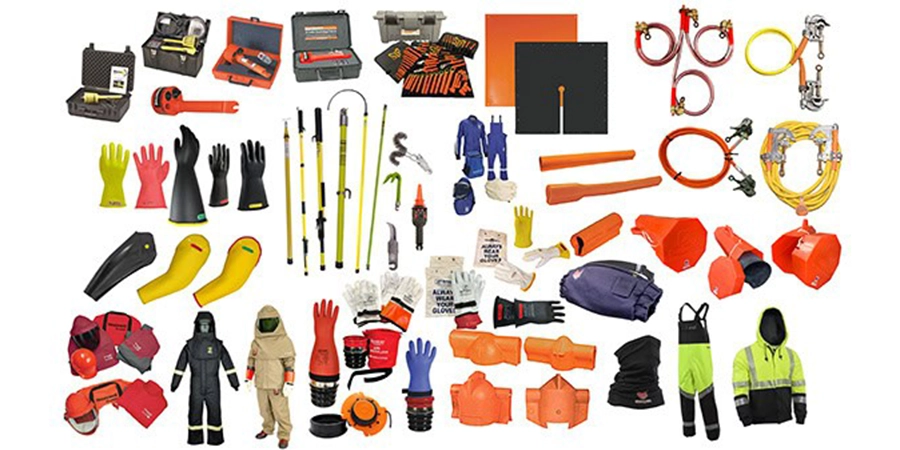
Finally, there’s the human factor. Low-voltage breakers can be serviced by electricians using standard tools and protective equipment. While arc flash hazards exist, they’re generally manageable with training and procedures.
High-voltage equipment is different. Maintenance requires utility crews with specialized training, tools, and PPE. Mistakes here can be fatal, so safety rules and redundancy are baked into every step of design and operation.
Conclusion
Electricity is invisible yet powerful, and the tools we use to control it reflect both ingenuity and caution. Understanding the differences between low- and high-voltage breakers reminds us that safety, reliability, and thoughtful design are never optional—they shape every system that powers our world.
While high-voltage equipment manages the grid, the low-voltage side is where your daily operations actually happen. For this critical layer of protection, browse Sincede’s specialized low-voltage circuit breaker catalog to find the robust, industrial-grade solutions your projects require.