

Electricity powers almost everything in our homes and workplaces, from lights to computers. But with all this convenience comes risk—overloads, short circuits, and sudden voltage spikes can damage equipment or even cause fires.
Many beginners confuse circuit breakers and surge protection devices (SPDs), assuming they serve the same “safety” function. While they may look similar at first glance, their roles are very different.
Circuit breakers act as a safeguard against excess current, shutting off power when needed, while SPDs protect electronics from sudden voltage surges by absorbing or redirecting energy.
Though they serve different purposes, both play a crucial role in preventing damage, keeping devices running smoothly, and ensuring safety for people and property.
What Breakers and SPDs Do?
At first glance, they both seem like “safety nets.” But as I spent more time talking with electricians and watching real installations, I realized each one has a very different job. Let’s go through the basics in plain terms.
A circuit breaker is the switch you see in your electrical panel. Its job is to shut off power when the current gets too high, stopping overloads or short circuits from damaging the system. Think of it as a guard that steps in when the wires are carrying more than they safely can.
A surge protection device (SPD), on the other hand, deals with sudden spikes in voltage. These can come from lightning strikes or even from turning on large equipment. Instead of cutting power, the SPD absorbs or redirects that excess energy so it doesn’t fry your electronics.
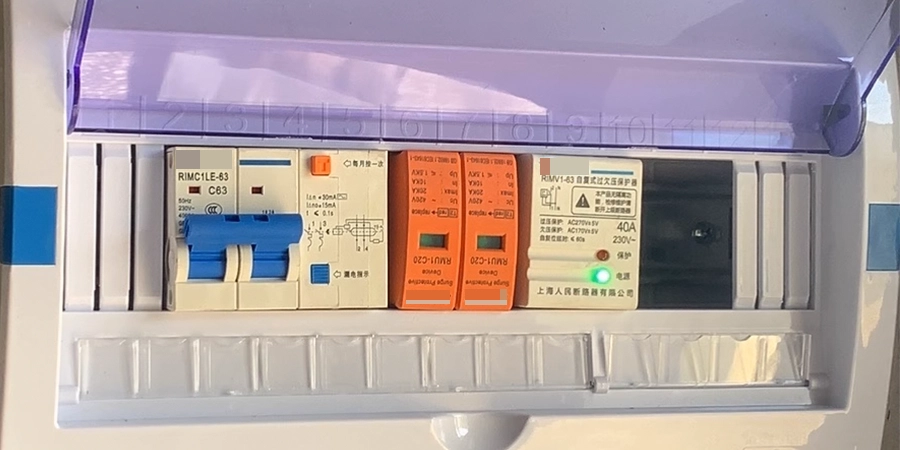
Inside the Devices
So, how do they actually work?
A circuit breaker senses when the current goes beyond safe levels—usually 110% to 200% of the rated limit. It then uses heat or magnetic forces to trip and open the circuit. That’s why in homes and factories, breakers prevent wires from overheating and fires from starting. You’ll often see them rated for common voltages like 120V or 480V, and they follow rules set by groups like UL.
SPDs, in contrast, are built with components like metal-oxide varistors or gas discharge tubes. These clamp down on voltage spikes, keeping them below safe thresholds—say, under 600V in a 480V system. They act almost instantly, in nanoseconds, because surges are short but extremely powerful.
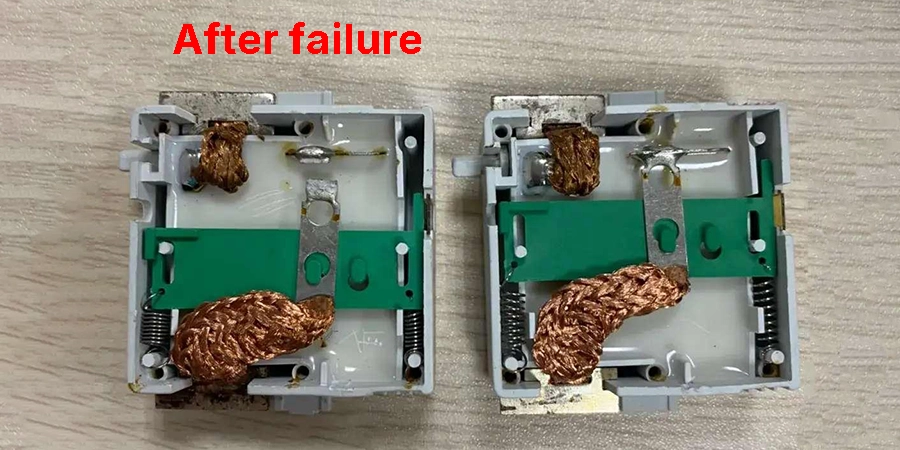
There are also specialized SPDs called lightning arrestors. These are installed at the main entry point to handle direct lightning strikes, which can send currents as high as 100kA. Standard SPDs, meanwhile, handle smaller surges further down the line, like those caused by equipment switching on and off. Confusing the two can leave dangerous gaps in protection.
Why These Differences Matter in Practice
A breaker won’t stop a surge—it only reacts to excess current. And an SPD won’t protect against overloads—it only cares about voltage spikes. A surge can damage unprotected equipment while a circuit breaker may remain unaffected. That made it clear: you need both devices working together for full protection.
The industry standards reinforce this: circuit breakers are tested under UL 489, while SPDs follow UL 1449. Each is designed for its own role, and neither can replace the other.
Bring It All Together
Understanding these basics gives you a strong foundation for designing or troubleshooting electrical systems. Whether you’re wiring a new building or fixing an existing setup, knowing the difference between breakers and SPDs helps you avoid costly mistakes. More importantly, it ensures that people and property stay safe.
How They Handle Problems?
You might be wondering how circuit breakers and SPDs actually do their jobs behind the scenes. From my experience, the difference is clear: breakers act like a chain that snaps under too much force, while SPDs are like a sponge soaking up sudden bursts of energy.
Circuit breakers are connected in series with the circuit, so all the current flows through them. When there’s a short or an overload, thermal elements heat up or magnetic fields pull the switch open. The response can be almost instant for large faults (milliseconds) or slower for smaller overloads. SPDs, in contrast, are connected in parallel, ready to divert extra voltage without interrupting normal current.
Speed and Limits
Let’s dig into the numbers.
Modern breakers often use thermal-magnetic technology. At 200% overload, they might trip within 0.1–1 second, while for short circuits up to 10kA, the trip is nearly instantaneous. Industrial breakers can handle up to 200kA.
SPDs respond much faster: metal-oxide varistors (MOVs) react in under 5 nanoseconds, and gas discharge tubes (GDTs) in about 100 nanoseconds. That speed is essential for protecting against brief voltage spikes.
One key difference is endurance. Breakers can be reset repeatedly without wearing out, while SPDs can degrade over time. MOVs, for example, have a finite energy absorption—say around 500J total—before they need replacing. In some cases, SPDs may wear out after repeated surges, while the breaker can continue operating after being reset.
To make the differences clearer, here’s a quick comparison:
| Feature | Circuit Breaker | Surge Protection Device |
|---|---|---|
| Operating Principle | Series-connected; trips on overcurrent | Parallel-connected; clamps voltage spikes |
| Response Time | 0.1–30 ms for shorts; 0.2–2 s for overloads | \<5 ns (MOVs); ~100 ns (GDTs) |
| Voltage Rating | Rated for line voltage (e.g., 120V, 480V) | Coordinated for max continuous (e.g., 275VAC) |
| Interrupting Capacity | Up to 200kA RMS for industrial | Energy handling up to 200J (Type 1/2) |
| Duty Cycle | Resets repeatedly without replacement | Degrades; replace after ~500J cumulative |
| Standards | UL 489, IEC 60947-2 | UL 1449, IEC 61643-11 |
This table shows why one device can’t replace the other—different speeds, connection types, and endurances make them suited for distinct roles.
Because reliability depends heavily on these internal mechanical and thermal properties, the manufacturing quality of the breaker is critical. You need components built to last, not just assembled.
What This Means for You
In practical terms, breakers protect wiring from overheating and fires, while SPDs safeguard sensitive electronics from voltage spikes.
Standards like IEEE C62.41.2 test SPDs for these fast transient events. When installing, it’s crucial to match the device to the system’s needs. From my experience, I’ve learnt that mismatched devices often lead to failures, so always check ratings carefully.
Where to Use Them and How They Work Together?
If you’ve ever dealt with a blown system, you know that protection isn’t one-size-fits-all. Breakers and SPDs cover different risks but work best together—like having a lock on the door and an alarm. Both are essential.
Circuit breakers focus on overcurrent situations—like too many tools running on one line or wires accidentally touching. They trip to cut off power, preventing heat buildup and potential fires. But breakers don’t respond to voltage spikes, which can sneak in and damage electronics even without high current. That’s where SPDs come in. They clamp surges from storms or equipment switching, but they don’t stop overloads—they rely on breakers for that.
Protection in Layers
To provide full protection, SPDs are installed at multiple points in a system.
- At the service entrance, Type 1 SPDs handle large surges, up to 10kA, protecting the main panel.
- Type 2 SPDs go on distribution panels to manage around 20kA for branch circuits.
- Type 3 SPDs sit near outlets or sensitive equipment, handling smaller surges, around 5kA.
This layered setup gradually diverts surge energy before it reaches critical devices.
No SPD can replace a breaker—they are partners, not substitutes. Breakers handle sustained faults; SPDs handle fast transients. Even with breakers in place, systems without SPDs remain vulnerable to voltage spikes, which can damage sensitive electronics even when no overload occurs.
This layered approach, based on IEEE C62.41, ensures surges weaken progressively before hitting your gear. Think of it as a defense line, where each layer catches what the last one misses.
Working Together Safely
Pairing breakers and SPDs significantly boosts safety. Place SPDs close to the loads they protect, ideally under 10 feet of wiring, to respond quickly. Poor coordination causes more problems than faulty devices. Always test setups with your team and ensure that breakers and SPDs complement each other for maximum protection.
Conclusion
Circuit breakers protect against overloads and short circuits, while SPDs guard against voltage spikes. Knowing their roles and using both together ensures safe and reliable electrical systems.
Building a safe electrical system requires sourcing reliable components. If you are looking for a trusted manufacturing partner to ensure safety for your projects, explore Sincede’s Complete Range of Low-Voltage Circuit Breakers, we provide the consistent quality your business needs.