
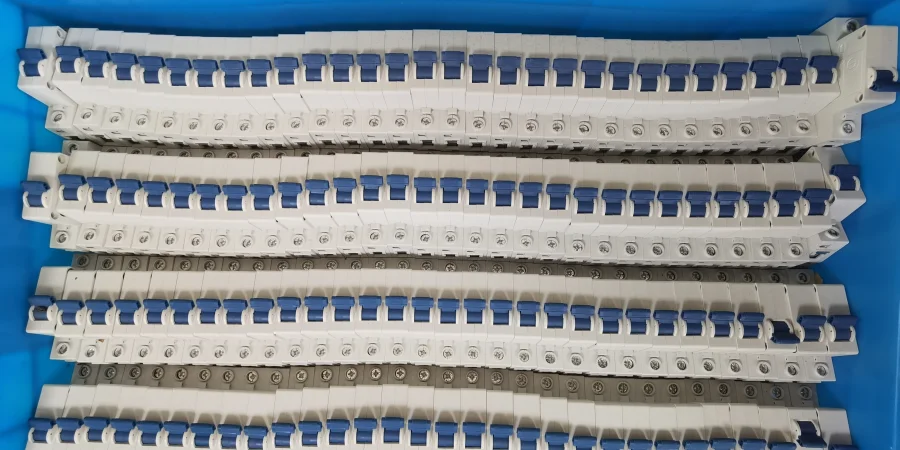
MCBs may look simple, but selecting the right type is often underestimated. From a factory perspective, one of the most common issues we see is that the breaker type is chosen by habit, not by how the load actually behaves. Those small letters—A, B, C, or D—play a critical role when current rises suddenly.
Different applications place very different demands on a circuit breaker. Lighting circuits, household appliances, and electric motors all create distinct current patterns, especially during startup. When the tripping curve does not match the load, nuisance tripping or insufficient protection becomes a real problem.
Matching the MCB type to the application improves reliability and protects both wiring and equipment. A clear understanding of tripping characteristics helps avoid unnecessary downtime and leads to safer, more stable electrical systems.
What Is an MCB?
An MCB, or Miniature Circuit Breaker, is like the guardian of your electrical circuits. It protects your wiring and devices from overcurrents or short circuits by automatically cutting off power when something goes wrong.
Unlike old-school fuses that burn out and need replacing, MCBs could be reset—just flip the switch back on after fixing the issue. Whether it’s your home, office, or factory, MCBs are used everywhere, quietly keeping things safe from fires, damage, or shocks.
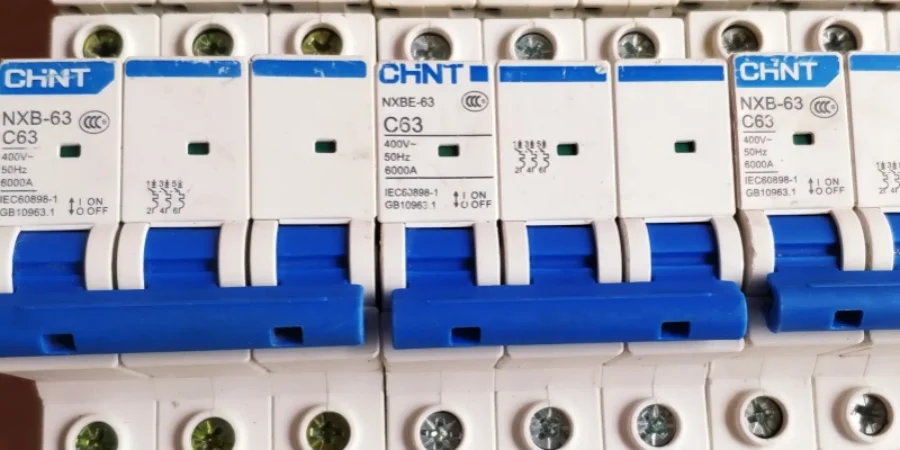
Key Things to Know About MCBs
Before we dive into the different types, here are some key things about the MCBs you must know:
1. Current Rating: This is the maximum current the MCB can handle without tripping. We could think it as the breaker’s “comfort zone.”
2. Breaking Capacity: This tells you how much fault current (like a short circuit) the MCB can stop without failing. It’s like the breaker’s “emergency strength.”
3. Tripping Characteristics: This is where things get interesting. It’s all about how quickly the MCB reacts to an overload, and that’s where the types (A, B, C, etc.) come into play.
The Triping Curve
A tripping curve is like a "personality profile" for a circuit breaker. It tells you how the breaker will react when there’s too much electricity flowing through it. Some breakers are super quick to shut off the power, while others wait a bit longer to make sure there’s really a problem. This curve helps you pick the right breaker for your needs, whether it’s for your home, office, or factory.
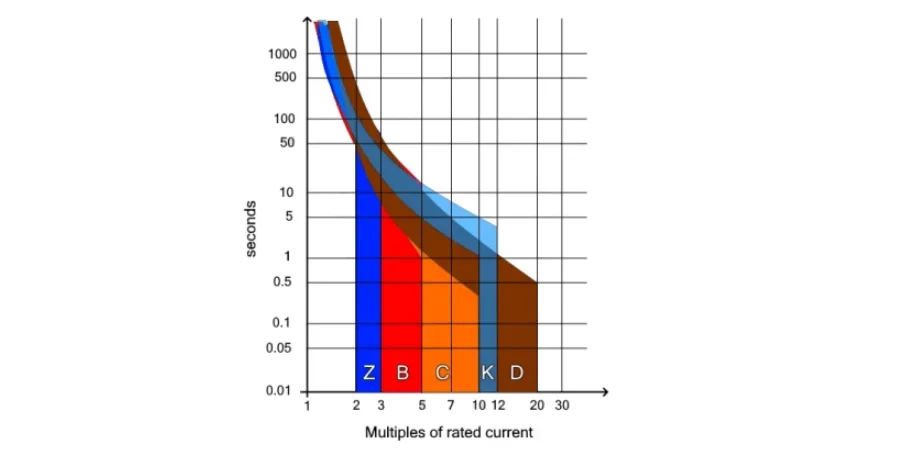
The bottom (X-axis) shows how much electricity is flowing. It’s measured as a multiple of the breaker’s normal rating. For example, 2x means twice the normal current, and 10x means ten times the normal current.
The side (Y-axis) shows how long it takes for the breaker to trip. It could be seconds, milliseconds, or even minutes, depending on the situation.
Imagine you have a 10A B-curve breaker in your home:
-
If you plug in too many devices and the current goes up to 15A, the breaker will trip after a few seconds.
-
If there’s a short circuit and the current jumps to 50A, the breaker will trip instantly.
Now, if you had a 10A C-curve breaker instead:
-
At 15A, it might not trip at all because it’s designed to handle more current.
-
At 50A, it would still trip quickly, but not as fast as the B-curve breaker.
Type A MCB
Type A MCBs are very sensitive and trip when the current is 2 to 3 times the rated current (In). They are rarely mentioned and even a lot of industry veterans don’t know about them.
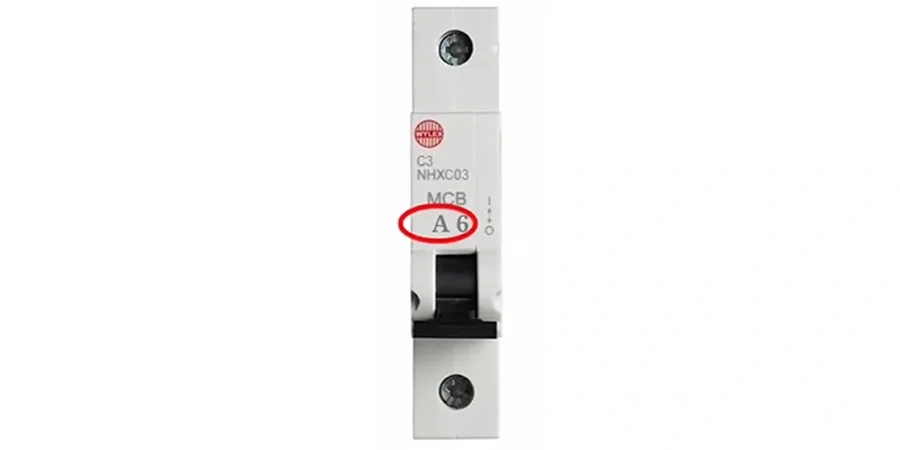
Due to their fast response, they are ideal for circuits with delicate electronics. They are used to protect super-sensitive equipment, such as semiconductors, lab devices, or precision instruments, where even a small overcurrent can cause serious damage.
However, they are not commonly used in everyday life because most homes or industrial circuits don’t need such a high level of sensitivity, and they might trip too easily in normal conditions. They are mainly used in specialized environments where precision and protection are key.
Type B MCB
Type B MCBs trip when the current is 3 to 5 times the rated current (In).
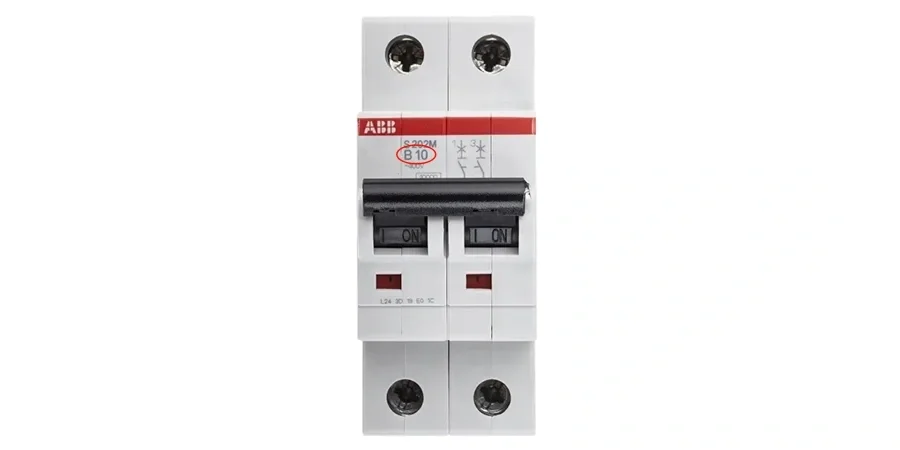
They are widely used in homes for lighting circuits, sockets, and small appliances like TVs, lamps, or phone chargers.
These MCBs are perfect for protecting circuits where the current doesn’t spike too high, and they provide a good balance between safety and practicality. They are fast-acting but not overly sensitive, so they won’t trip unnecessarily during normal use. This makes them a popular choice for residential applications.
Type C MCB
Type C MCBs trip when the current is 5 to 10 times higher than normal.
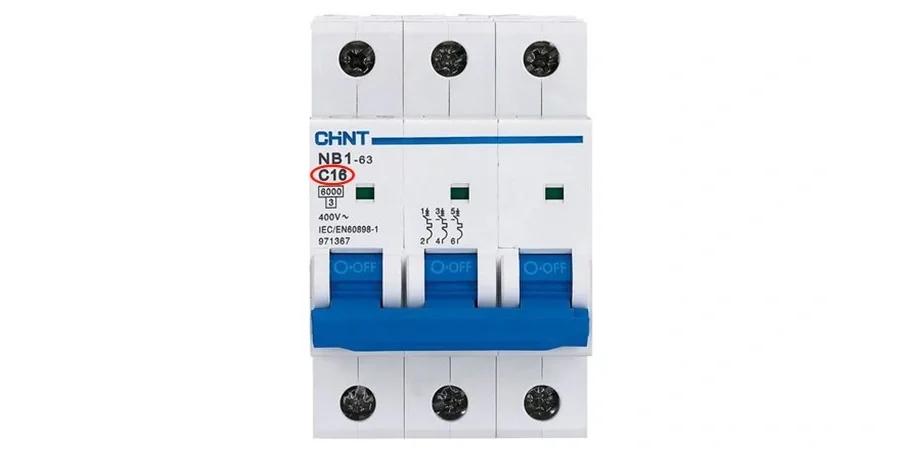
They are the most common type and are used for circuits with moderate inrush currents, such as air conditioners, refrigerators, or small motors. These devices often have a higher current when they start up, and Type C MCBs are designed to handle this temporary surge without tripping.
They are strong enough to protect your appliances from overcurrents but won’t trip unnecessarily during normal use. This makes them a great choice for both homes and small businesses, where you need reliable protection without constant interruptions. (Note: For distributors looking for bulk Type C MCBs, Sincede offers consistent quality and competitive factory-direct pricing.)
Type D MCB
Type D MCBs trip when the current is 10 to 20 times the rated current (In).
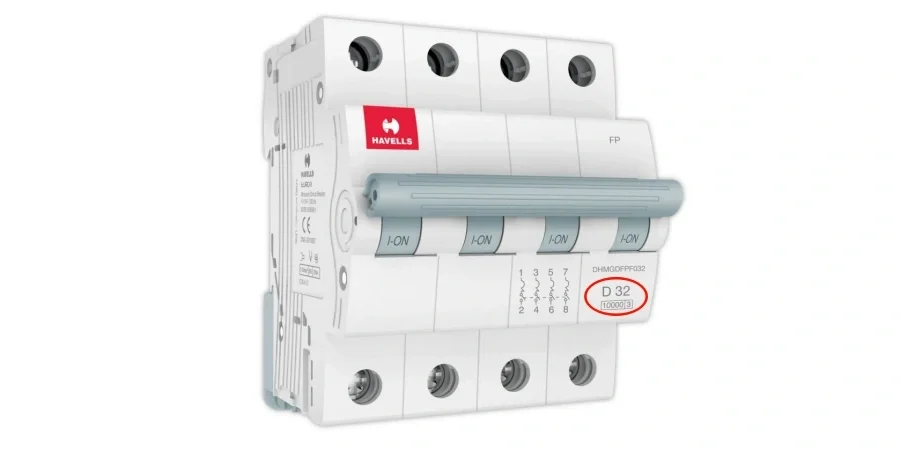
They are specifically designed for heavy-duty equipment with very high inrush currents, such as large motors, transformers, or welding machines. These devices require a lot of power to start, and Type D MCBs allow this initial surge without tripping.
They are mostly used in industrial or commercial settings where high-power equipment is common. However, they are not suitable for general home use because they are less sensitive and might not provide enough protection for smaller circuits.
Type K MCB
Type K MCBs trip when the current is 8 to 12 times the rated current (In).
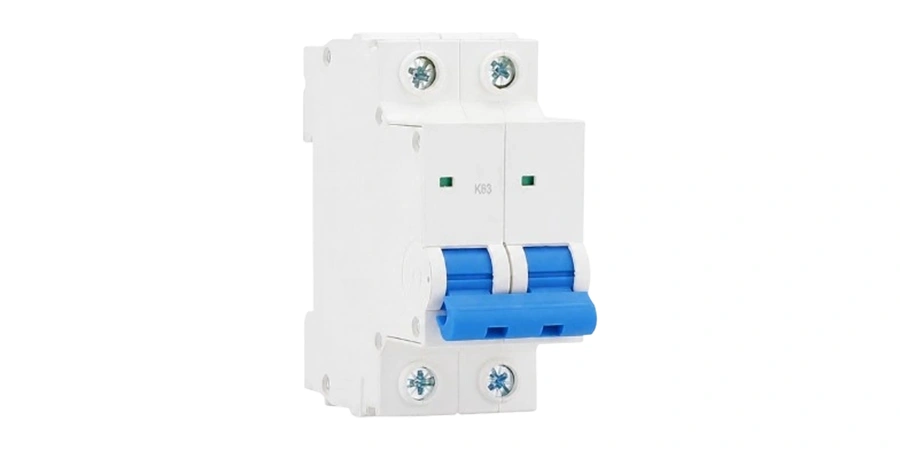
They are designed for protecting motors and other heavy industrial equipment that experience frequent starts and stops, such as conveyor belts, pumps, or compressors.
Type K MCBs are less sensitive than Type D but still provide strong protection against overcurrents. They are a good choice for industrial environments where equipment needs to handle high currents regularly without causing the MCB to trip unnecessarily.
Type Z MCB
Type Z MCBs are the most sensitive type, tripping when the current is 2 to 3 times the rated current (In).
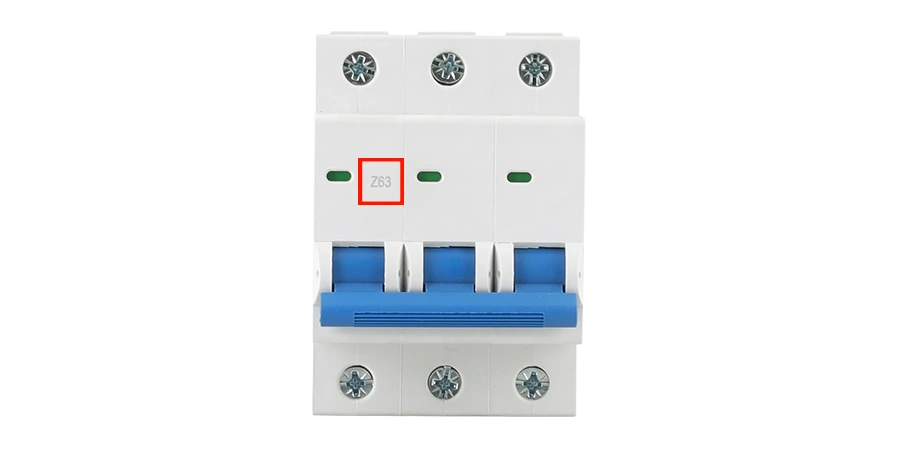
Both Type Z and Type A MCBs are highly sensitive, but Type Z is even more specialized. Type A is typically used for protecting semiconductors and precision instruments, while Type Z is specifically designed for ultra-sensitive electronics like medical devices,communication systems or satellites.
Type Z MCBs have a faster response time than Type A MCBs, typically tripping within 10 milliseconds under fault conditions, compared to Type A’s response time of around 20 milliseconds. they are optimized for environments where even the smallest overcurrent can cause critical damage. Also, they are not suitable for general use because they are so sensitive that they might trip too easily in normal circuits.
Summary Table
| MCB Type | Tripping Range | Main Protection | Typical Applications | Suitable For |
|---|---|---|---|---|
| A | 2-3x(In) | Precision electronics | Lab equipment, semiconductors | Clean rooms |
| B | 3-5x(In) | Sensitive devices | Home lighting, sockets | Houses/apartments |
| C | 5-10x(In) | Motor loads | AC units, refrigerators | Homes/offices |
| D | 10-20x(In) | Heavy motors | Industrial compressors | Factories |
| K | 8-12x(In) | Frequent-start machines | Conveyors, pumps | Workshops |
| Z | 2-3x(In) | Ultra-sensitive electronics | Medical devices, satellites | Hospitals/labs |
Conclusion
Choosing the right MCB isn’t just about technical specs—it’s about matching the device to your lifestyle or business needs. Whether you’re sourcing standard Type C breakers for residential projects or heavy-duty Type D for industrial clients, Sincede provides a full range of circuit protection solutions backed by 26 years of manufacturing quality.
Next time you’re faced with an electrical upgrade, ask: “Does this MCB type make sense for my load?” Your wiring and wallet will thank you!