
In the last blog, we talked about How Vibration and Mechanical Shock Affect Circuit Breaker’s Performance. That discussion made one thing clear: vibration is far more than a background annoyance. It doesn’t create obvious warning signs the way heat or electrical faults do. Instead, it works quietly, shaking and wearing down components long before anyone realizes something is wrong.
There are many cases where circuit breakers fail even though everything appears perfectly fine—correct wiring, safe loads, and clean environments. The surroundings may look harmless, yet the machines nearby tell a different story. Engines, rotors, tracks, waves, and moving structures generate constant motion that never stops, creating a mechanical stress that slowly builds over time.
Once you recognize how these hidden forces operate, your idea of “reliable equipment” begins to shift. After many years of engineering breakers, our team know that in many environments, the real question isn’t how the breaker performs electrically—it’s whether it can physically survive where it’s placed.
Wind Turbine Nacelles and Tower Structures
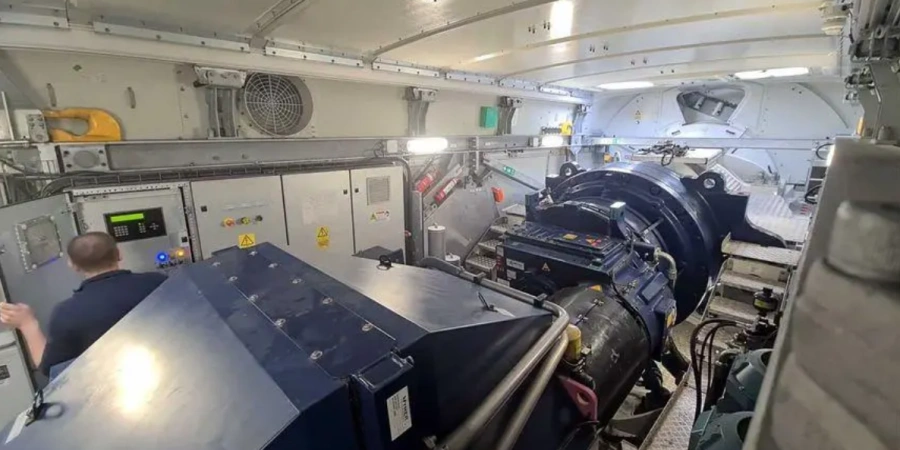
Wind turbines create one of the toughest environments for electrical equipment. These aren’t just gentle breezes. The circuit breakers inside turbine nacelles are exposed to vibration from multiple sources at the same time: rotating blades cutting through the air, gearbox operations grinding away, generators spinning at high speeds, and power converters switching constantly. All of this happens dozens of meters above the ground, where the mechanical forces are amplified.
Why Standard Breakers Don’t Cut It?
Here’s something that surprised me when I first learned it: most standard air circuit breakers are only designed to handle vibration category 3M2 according to IEC 60721 standards. That classification is literally described as "vibrations of low significance." But wind turbines demand far more.
Inside a turbine tower, the vibrations usually fall into the low-frequency displacement category, and temperature swings between 25°C and 50°C makes things even more complex. When you consider that wind power now supplies over 5% of global electricity—and countries like Denmark get 43% of their power from wind—the stakes become crystal clear. These breakers absolutely cannot fail.
That’s why manufacturers like Schneider Electric developed the MasterPact MTZ smart circuit breaker, the first to achieve IEC 60721 vibration category 3M4. This level is defined as "vibrations of high level," and it doubles the tolerance from 0.5 g to 1 g. When your job is to keep turbines online and generating revenue, that upgrade makes a huge difference.
The ocean doesn’t care about your electrical equipment. It’s the first thing you realize when you look at how marine installations operate. Ships and naval vessels create a harsh mix of mechanical shock, constant vibration, moisture, and corrosive saltwater that tests circuit breakers like few other environments can.
Electrical systems on ships face nonstop mechanical stress from engines, thrusters, heavy machinery, and rough sea conditions. But unlike land-based installations where you can arrange maintenance whenever needed, ships often operate for weeks or months at a time with no chance for repairs. When a circuit breaker fails at sea, the consquences can range from inconvenient to dangerous.

Military Standards and Real-World Consequences
Navy circuit breakers undergo testings that most industrial breakers would never survive. They’re specifically designed and tested to MIL-S-901 standards for high-impact shock and MIL-STD-167 for mechanical vibration. These aren’t just technical references—they reflect the real-world conditions naval vessels face during combat operations, emergency maneuvers, or simply navigating through heavy seas.
Commercial maritime systems face similar challenges. A well-known example is the container ship Dali, which suffered transformer and circuit breaker failures linked to heavy, long-standing vibrations. The maintenance team had actually tried to fix the problem by adding anti-vibration braces, but those braces eventually cracked and required repeated welding. (Related News: US Files $103M Claim Saying Dali was “Unseaworthy” and “Jury-Rigged”)
When I read about that case, it reminded me of how severe shipboard vibration can be — and why getting the specifications right from the start matters far more than trying to fix after the fact.
Beyond Just Vibration
Marine breakers face more than vibration alone. Moisture reaches every part of a ship. Saltwater corrosion aggressively attacks metal surfaces. Humidity fluctuates constantly. Through all of this, the breakers must maintain their mechanical integrity and vibration resistance over years of service.
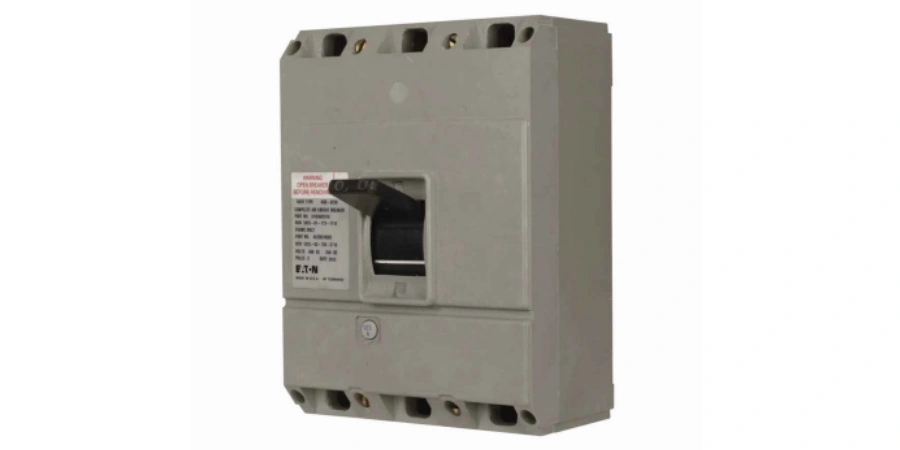
This is why marine breakers are certified to a whole set of specifications: ABS (American Bureau of Shipping), USCG-CFR46, IEEE 45, and UL 489. Each covers a different aspect of marine operation, but together they reflect the reality that breakers must withstand both routine vibration and sudden shock loads from rough seas or equipment failures. When specifying breakers for a vessel, it’s not enough to check a single compliance box — the ocean will expose every weakness.
High-Speed Rail and Transportation Systems
It’s fascinating to watch a high-speed train glide into a station. They look so smooth and stable. But that appearance hides the intense mechanical reality happening inside those train cars. The circuit breakers inside deal with vibration levels that would destroy standard breakers in months.
High-speed rail is one of the most demanding applications for circuit protection. The constant mechanical oscillations from train operation on rail tracks create a unique vibration profile—not random, but relentless. Every imperfection in the track, every curve, every acceleration and deceleration translates into mechanical stress on the electrical systems.
Engineering for Extreme Durability
To handle these challenges, there are specialized rail breakers like VITZRO’s. These breakers aren’t just slightly stronger than general-purpose ones — they’re engineered for a completely different class of service.
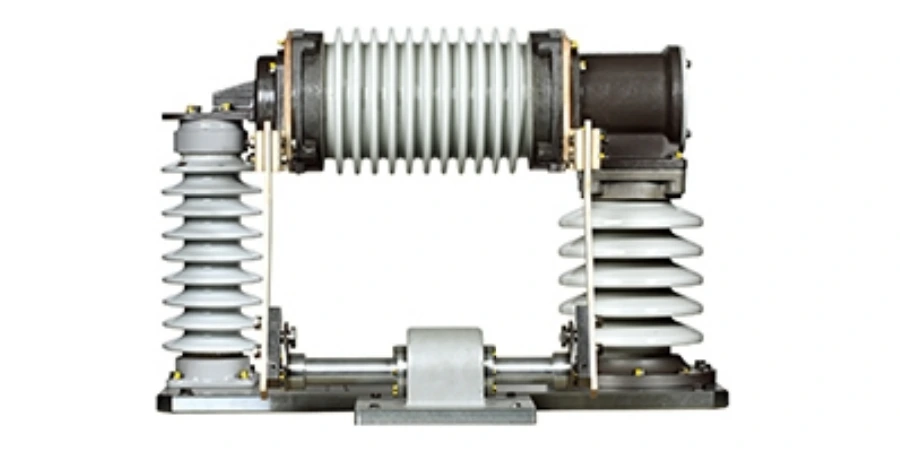
The numbers make that clear. These rail breakers undergo anti-vibration testing based on IEC 61373 Type B standards, and are designed to survive 250,000 switching operations. Standard breakers typically manage around 12,500. That’s twenty times more switching cycles. When you think about a train making hundreds of stops per day, accelerating and decelerating constantly, the need for that level of endurance becomes obvious.
The Rail-Specific Challenge
The mechanical stresses in rail applications differ from other vibration environments in an important way: they’re both substantial and highly repetitive. It’s not occasional shock loads or sporadic vibration. Instead, it’s the never-ending contact between wheels and track, combined with constant motion, that creates a mechanical load that simply never stops.
Train circuit breakers must also handle frequent switching operations while staying ready to interrupt extremely high fault currents during failures. Imagine a train traveling at 300 kilometers per hour when an electrical fault happens. The breaker must interrupt that fault instantly, despite the vibration and mechanical stress it’s already experiencing. There’s no room for hesitation or degraded performance.
What stands out in rail applications is the rigor of the validation process. When a manufacturer says their breaker meets IEC 61373 Type B, they’re saying it survived tests that simulate years of rail service—including random vibration across broad frequency ranges, impacts from track irregularities, temperature cycling and more. That level of testing is what gives engineers confidence to install these breakers on high-speed trains carrying hundreds of passengers at a time.
Offshore Drilling Platforms and Marine Installations
Studying offshore platforms is enough to change the way you think about equipment reliability. Everything vibrates—the deck under your feet, the handrails, even the air feels like it carries a mechanical hum. In that environment, circuit breakers must stay dependable at all times, as any malfunction can quickly turn into a serious issue.
Offshore platforms face vibrations from more sources than almost any other industrial setting. Wave action creates constant motion. Engines generate mechanical oscillations. Rotating equipment—turbines, generators, and pumps—all contribute their own vibration signatures. HVAC systems add another layer. And in some regions, seismic activity brings another challenge that offshore structure must be prepared to deal with.

The Cumulative Effect
What makes offshore vibrations particularly difficult is how it stack up. It’s not any single source that causes problems—it’s the combination of many vibration frequencies overlapping and interacting. Research on deepwater jacket offshore platforms shows a striking fact: if vibrations aren’t controlled, the structure can experience 3 to 5 times more fatigue damage. That extra stress can quickly wear down expensive electrical equipment, cutting its service life much faster than usual.
If you’ve ever read failure analysis reports from offshore sites, you will find the same pattern again and again. Components that would last decades onshore fail in just a few years offshore. Circuit breakers show accelerated contact wear, internal connections loosen, trip mechanisms drift out of calibration. The constant mechanical stress wears everything down faster than normal aging alone would explain.
Protection Through Vibration Isolation
That’s why vibration isolation has become a critical strategy for protecting sensitive electrical components on offshore installations. It’s commonly used for power distribution units and sensitive electronics that can’t tolerate the platform’s natural vibration environment.
Vibration isolation doesn’t mean eliminating vibration entirely—that’s impossible on a floating or fixed platform in the ocean. Instead, it means decoupling critical components from the main structure using isolation mounts, flexible connections, or specially designed enclosures that absorb vibration energy before it reaches sensitive equipment. Think of it like a shock-absorbing seat on a train: the train may still rattle and shake, but the passenger remains steady and comfortable.
The combination of high operational vibrations and harsh environmental stresses makes circuit breaker selection absolutely critical for platform safety and reliability. When you’re miles offshore with limited maintenance capabilities and weather windows, you need equipment that can withstand the environment without frequent attention. That’s why offshore specifications often exceed standard industrial ratings—the environment needs it.
Aerospace and Military Applications
If you think wind turbines or offshore platforms are tough on circuit breakers, aerospace applications take it to another level. Aircraft circuit breakers operate in the "no excuses" category—they simply cannot fail, period. There’s no maintenance technician at 35,000 feet, and no tolerance for nuisance trips during critical flight operations.
Aircraft and military systems are among the most demanding environments for circuit breakers. Extreme vibration, large temperature swings, high-altitude pressure variations, and the absolute requirement for zero failures creates engineering challenges that push the limits with electrical protection devices.
Compact, Lightweight, and Incredibly Tough
Aerospace breakers, such as the KLIXON series, are engineered for compact size and lightweight construction—weight matters tremendously in aircraft—while offering exceptional vibration resistance. We’re talking about 10G minimum vibration resistance across 50-500 Hz frequency ranges, with mechanical shock resistance exceeding 50G.
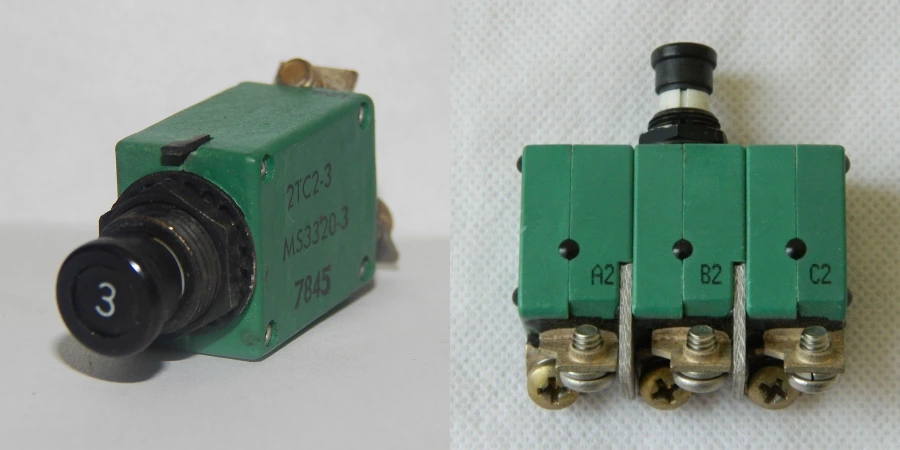
To put that in perspective. A 10G vibration means the breaker experiences acceleration forces ten times stronger than gravity. And 50G shock resistance is the kind of impact you’d feel in a hard landing or emergency maneuver. Standard industrial breakers would simply fail under those conditions, but aircraft breakers treat them as routine.
Military specifications, like MIL-C-5809, define the design and performance requirements for aircraft circuit breakers in exacting detail. These aren’t guidelines—they’re requirements that must be met and verified through rigorous testing. These breakers are used in fighter jets, transport aircraft, helicopters, and other military systems where reliability is literally a matter of life and death.
Different Missions, Different Requirements
What fascinates me about aerospace breakers is how they’re tailored to specific applications. Different circuit breaker series meet varying vibration specifications based on where they’ll be installed and what they’ll protect. For example, some 5TC aircraft breakers achieve 10G minimum vibration resistance at 80-500 Hz, while 15TC series breakers can withstand 3G minimum at 2000 Hz.
Why the difference? Because different locations in an aircraft experience different vibration profiles. Breakers near the engines faces intense high-frequency vibration. One in the avionics bay might see lower amplitude but broader frequency ranges. And breakers in the landing gear systems must withstand massive shock loads during touchdown. Engineers select breakers matched to the specific environment, not just a one-size-fits-all solution.
The stringent requirements ensure operation even under extreme conditions that would never occur in ground-based installations. High-altitude pressure changes that would cause arcing in standard breakers, temperature swings from -55°C to +85°C, and thousands of hours of continuous vibration. Aerospace breakers are validated for all of it before they ever see service in a real aircraft.
Industrial Heavy Equipment and Mining Operations
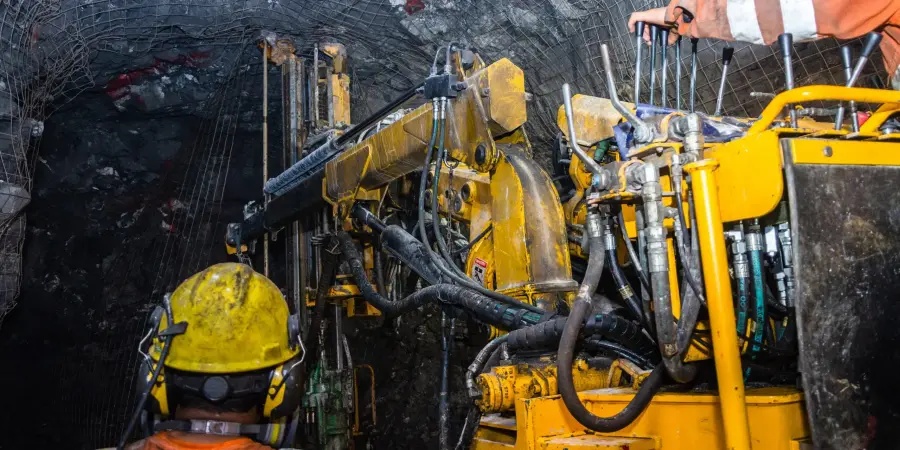
If you’ve ever been near mining equipment, you know the noise and vibration are overwhelming even before you get close. Everything shakes—the ground, the vehicles, the structures. It’s one of the harshest industrial environments you’ll encounter, and the circuit breakers in this equipment are put under extreme stress.
Mining operations expose electrical systems to vibrations from rock breakers shattering stone, drilling equipment boring through hard material, mobile machinery hauling massive loads, and vehicles moving across rough, uneven ground. Each piece of equipment generates its own vibration signature, and when you’re working with mobile mining equipment like dozers, loaders, and dump trucks, the circuit breakers mounted on these machines experience it all firsthand.

Above Action Limits
Research on mining vibration exposure reveals something concerning: some equipment operates well above the action limits defined by safety standards. These aren’t just uncomfortable vibration levels—they’re strong enough to cause equipment damage and accelerated wear. For circuit breakers, this translates into failures that happen much faster than manufacturers’ standard ratings would predict.
Even with robust designs, the constant pounding from mining operations tests these devices every single day.
When Components Drift Out of Alignment
Vibration-induced failures in mining and heavy equipment environments often appear as misalignment of internal components. The trip mechanism may shift slightly, affecting calibration. Contacts might not close fully or might separate when they shouldn’t. These aren’t dramatic, sudden failures—they’re gradual degradation that eventually prevent the breakers from working correctly.
Maintenance logs from mining operations often show circuit breakers failing to trip during actual faults or tripping unnecessarily during normal operation. Both problems traced back to vibration-induced misalignment. In some cases, the breakers were mounted improperly, allowing vibration to be transmitted more directly than intended. In others, the breakers themselves weren’t rated for the actual vibration levels they experienced.
Critical Protection Strategies
Secure mounting is the first line of defense. A breaker that’s loosely attached or mounted on a flexible panel will experience amplified vibration compared to one that’s firmly secured to a solid surface. But mounting alone isn’t enough—you need vibration-resistant breakers specifically rated for high mechanical stress applications.
What sets mining-grade breakers apart from standard industrial breakers is their internal construction. Heavier contact springs that maintain pressure under vibration. Trip mechanisms are reinforced to resist displacement. In some cases, materials are specially chosen to withstand the combination of vibration, dust, and temperature extremes common in mining. These design differences might not be visible from the appearance, but they make all the difference in service life and reliability.
The economics of proper specification become clear when you consider replacement costs. Mining equipment operates in remote locations where maintenance access is limited and downtime is expensive. A failed breaker might mean hours or days of lost production while waiting for replacement parts and qualified technicians. Spending more upfront for robust equipment pays for itself many times over. For main distribution systems facing mechanical stress, we recommend industrial-grade Air Circuit Breakers (ACB) engineered with reinforced internal structures and high breaking capacities to ensure continuous operation.
Automotive and Vehicle Power Systems
Every time you start your car, hit a pothole, or accelerate onto the highway, the circuit breakers in your vehicle’s electrical system experience mechanical stress. Automotive applications create a continuous vibration environment that’s different from industrial settings but equally challenging in its own way.
Automotive electrical systems face vibrations from engine operation, suspension dynamics, road irregularities, and acceleration or braking forces. Unlike stationary installations where vibration might be intermittent or predictable, vehicles experience constantly changing vibration profiles depending on driving conditions. The smooth highway cruise creates different stresses than city stop-and-go traffic or off-road driving.
Standards That Reflect Real-World Driving
Modern automotive circuit breakers are engineered to withstand these stresses using comprehensive vibration testing standards including ISO 16750-3, MIL-STD-810G, and GMW3172. These standards don’t just specify a single vibration level—they define testing protocols that sweep across frequencies from 10 Hz to 2,000 Hz with acceleration levels varying based on mounting location.
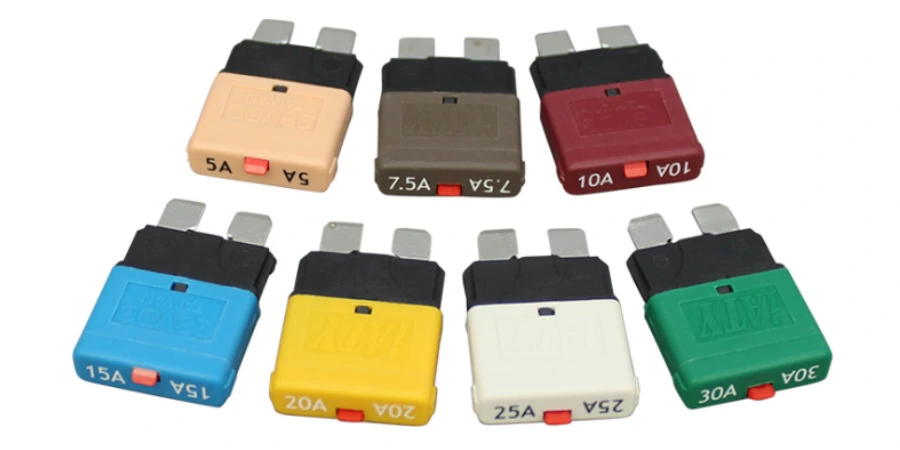
Why does mounting location matter? Because components mounted directly on the engine block experience much higher vibration than those in the passenger cabin. ISO 16750-3 testing requirements recognize this reality, with engine-mounted components facing vibration profiles up to 20g acceleration in some standards, while cabin-mounted components see lower levels.
Design Features That Keep Things Secure
Automotive circuit breakers use retaining clips to provide tight fits during shock and vibration events. These clips might seem minor, but they prevent mechanical displacement that could cause false tripping or contact failures. When your car hits a pothole at speed, that impact generates momentary acceleration forces that could shift a loosely mounted breaker. The retaining clips ensure everything stays exactly where it should be.
Many automotive applications require breakers rated for both AC and DC operation with temperature compensation to ensure consistent protection across varying conditions. A car parked in Arizona summer heat presents a very different thermal environment than one starting up on a Minnesota winter morning, yet the circuit protection needs to work reliably in both cases.
The Push Toward Electric Vehicles
The shift toward electric and hybrid vehicles has intensified the focus on breaker reliability. EVs have higher voltage systems, more complex power electronics, and even greater reliance on electrical components than traditional vehicles. Battery management systems, inverters, charging systems—all require circuit protection that can edure continuous vibration exposure.
Modern automotive standards reflect these evolving requirements, with testing protocols addressing the unique challenges of EV powertrains. The vibration environment in an EV is different from a traditional internal combustion vehicle—different frequency ranges, different mounting configurations, different thermal profiles. Circuit breaker manufacturers have had to adapt their designs to keep pace with these changes.
Conclusion
Vibration will never disappear from these environments, but our approach to handling it can keep evolving. When we design with vibration in mind from the start, circuit breakers stop being weak links and become dependable partners in systems that can’t afford surprises.