
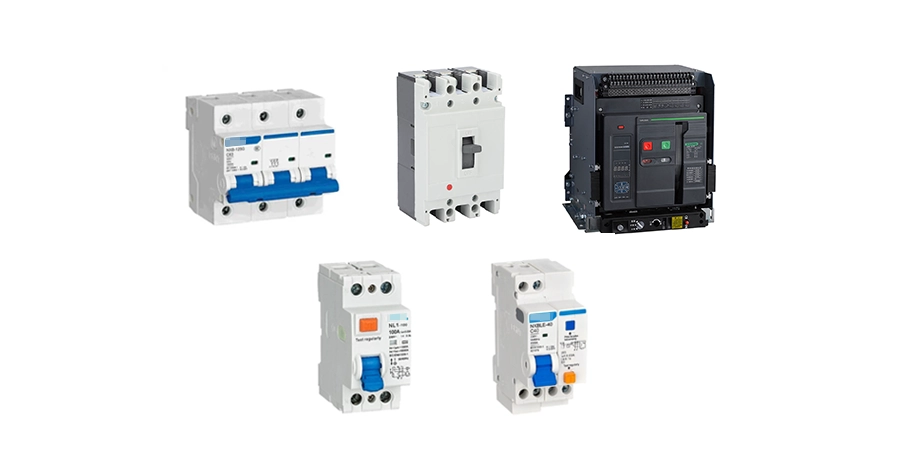
Electricity is like a wild river, useful, and sometimes unpredictable. It flows through our homes, offices, and small industrial systems, quietly keeping everything running—until something goes wrong. That’s when tiny devices step in, preventing accidents, fires, or equipment damage. Among them, a special group of low-voltage circuit breakers takes the lead in managing everyday electricity safely.
These devices don’t just stop the flow—they act instantly when currents spike and help keep systems reliable. Each type is designed for a specific situation, from ordinary household circuits to more demanding commercial or light industrial setups.
Recognizing how these devices differ changes the way we think about safety and control. They are silent guardians, turning potential chaos into order, and reminding us that even the most powerful forces can be managed with careful design.
MCBs
When I first started in this industry, MCBs seemed almost too simple to take seriously. I quickly realized how wrong I was. These small devices have replaced traditional fuses in most modern installations for good reason—they reset with a quick flip instead of needing replacement.

Inside each MCB are two key components: a bimetal strip for overload protection and a magnetic coil for short circuits. The bimetal strip bends when heated by sustained overloads—like a space heater running on a circuit that’s too small. Once it bends far enough, it triggers the trip mechanism.
Short circuits are handled by the magnetic coil. When a large surge of current flows, the coil generates a strong magnetic force that snaps the contacts open almost instantly.
Key Specifications
Typical MCBs are rated up to 125A with breaking capacities up to 25kA. Breaking capacity is the maximum fault current the device can safely interrupt. In homes, 6kA MCBs are common, while commercial buildings near transformers often need 10kA units.
MCBs come with different trip curves, showing how quickly they react to rising current and how much inrush they tolerate:
| Type | Trip Range | Best Use |
|---|---|---|
| B | 3–5× rated current | Homes, lighting, sockets |
| C | 5–10× rated current | Small motors, commercial loads |
| D | 10–20× rated current | Large motors, high-inrush equipment |
MCBs have fixed trip settings, so selecting the right curve is crucial. For example, a Type B breaker on a motor circuit may trip during normal startup because it cannot distinguish inrush current from a fault.
Applications, Strengths, and Limits
MCBs are common in homes, apartments, small offices, shops, and light industrial spaces. They protect lighting, sockets, kitchen appliances, small motors, and general power distribution. Their compact, modular design allows many circuits in a small panel, saving space. They’re also affordable and easy to reset after a trip, unlike fuses that require replacement.
However, MCBs have limits. Fixed trip settings mean they cannot be adjusted for temporary overloads or coordinated with other devices. Lower breaking capacity can be an issue in high-fault areas, and high-inrush loads may cause nuisance trips if the wrong type is used. Choosing the correct rating and curve is essential for safe and reliable operation.
MCCBs
The first time I watched an electrician install an MCCB, I was struck by how much more substantial they felt compared to MCBs—clearly built for tougher conditions.
MCCBs (Molded Case Circuit Breakers) are heavier, more robust cousins of MCBs, built for tougher environments. Their operating mechanism is sealed in a molded insulating housing, allowing them to handle higher fault currents safely. Like MCBs, they use thermal-magnetic protection, but all components are stronger: larger, precisely calibrated bimetallic strips, magnetic trips capable of higher fault currents, and contact systems designed to interrupt large currents and quench strong arcs.
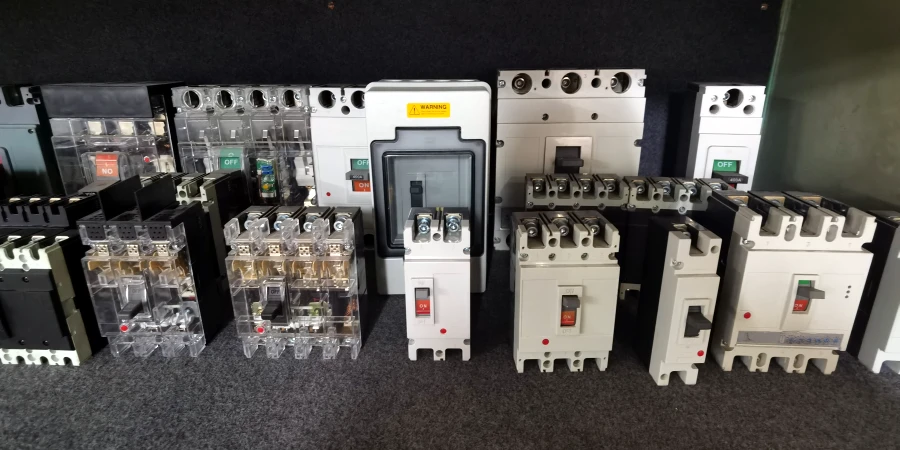
The main advantage of many MCCBs is adjustability. Unlike fixed-trip MCBs, higher-end MCCBs allow engineers to set both the overcurrent trip point and the time-delay characteristics. This flexibility is crucial in complex industrial systems, as it enables coordinated protection: by properly configuring the trip settings of upstream and downstream breakers, only the breaker closest to a fault trips while the rest of the system remains powered.
Technical Specifications
MCCBs cover current ratings from 16A up to 2,500A, with breaking capacities from 10kA to 200kA. These ratings are important in industrial environments where fault currents can be pretty massive. Modern electronic MCCBs provide additional features such as real-time current monitoring, fault logs, and IoT connectivity for predictive maintenance.
| Feature | MCB | MCCB |
|---|---|---|
| Current Rating | Up to 125A | 16A–2,500A |
| Breaking Capacity | Up to 25kA | 10kA–200kA |
| Trip Adjustment | Fixed | Adjustable |
| Primary Use | Residential, light commercial | Industrial, large commercial |
Applications
MCCBs are widely used in industrial power distribution, large commercial buildings, motor protection circuits, generators, and large-scale renewable energy systems. They reliably handle high inrush currents from motors, allow coordination with upstream and downstream devices, and provide robust protection against overloads and short circuits. Their adjustable trip settings make them ideal for complex systems requiring selective protection and minimal downtime.
ACBs
The first time I saw an ACB(Air Circuit Breaker) in the sample room, I gained immediate respect for just how serious electrical protection can be. These aren’t devices you casually install or maintain—they are well-designed systems that impress people with their strength and reliability.
ACBs are heavy-duty protective devices used in high-power industrial and commercial applications. Unlike MCBs or MCCBs, ACBs use compressed air to extinguish the intense arcs that form when contacts separate during fault conditions. This mechanism cools, stretches, and directs the arc into arc chutes, ensuring reliable interruption of very high fault currents.
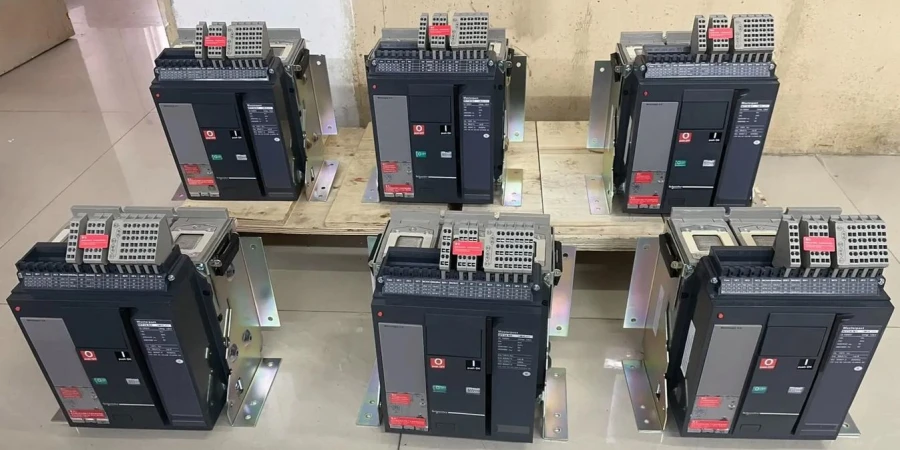
Modern ACBs are highly intelligent. They are equipped with advanced electronic overcurrent release (OCR) systems to monitor current, voltage, power quality, helping them decide when to trip. Many units communicate with building management systems, provide remote diagnostics, and predict when maintenance is needed, transforming them from passive breakers into active power system managers.
Specifications
ACBs handle current ratings from 400A up to 6,300A, well beyond typical MCCBs. Their breaking capacities range from 25kA to 200kA, allowing them to safely interrupt extremely high fault currents, often repeatedly, without damage.
In addition, their modular design makes it possible to replace or upgrade key components—such as trip units, contact assemblies, and operating mechanisms—without swapping the entire breaker, helping to extend the service life of the frame and maintain system reliability over time.
| Feature | Specification |
|---|---|
| Current Rating | 400A–6,300A |
| Breaking Capacity | 25kA–200kA |
| Arc-Extinguishing | Compressed air system |
| Trip System | Intelligent electronic OCR |
| Communication | Remote monitoring, diagnostics |
| Physical Size | Large, panel-mounted |
| Serviceability | Modular, replaceable components |
Premium ACBs go beyond basic models with advanced protection features. Beyond simple overcurrent protection, they offer under-voltage protection, ground fault detection, arc flash mitigation, and power quality monitoring.
Some models include zone-selective interlocking, where multiple breakers can communicate to make sure only the one closest to the fault trips, keeping power flowing to unaffected parts of the system.
Applications
ACBs are used where reliability and high fault-current interruption are critical. Typical applications include:
-
Power plants and substations: Main breakers safely interrupt massive currents from generators or incoming utility lines.
-
Industrial facilities: Main distribution to production areas with selective tripping to avoid shutting down unaffected sections.
-
Data centers: Ultra-fast fault detection, current-limiting protection, and remote monitoring to prevent outages.
-
High-rise buildings: Main risers and large subfeeds across multiple floors, coordinating with downstream breakers.
-
Critical infrastructure: Hospitals, airports, and water treatment plants rely on ACBs for coordinated protection and minimal downtime.
In short, ACBs are essential for high-current, high-reliability systems. Their modular design, intelligent trip systems, and ability to interrupt massive fault currents set them apart from lower-level breakers.
RCCBs
Few devices in electrical systems save more lives than RCCBs—though most people don’t even know they exist. Unlike MCBs or MCCBs, RCCBs don’t respond to overloads or short circuits. They protect against leakage currents that could flow through a person or into unintended paths.
RCCBs, or Residual Current Devices (RCDs), work by comparing outgoing current in the live conductor with returning current in neutral. Under normal conditions, these should be equal. Any imbalance—caused by a person touching faulty equipment, damaged insulation, or water bridging live and ground—triggers the RCCB, usually within milliseconds.
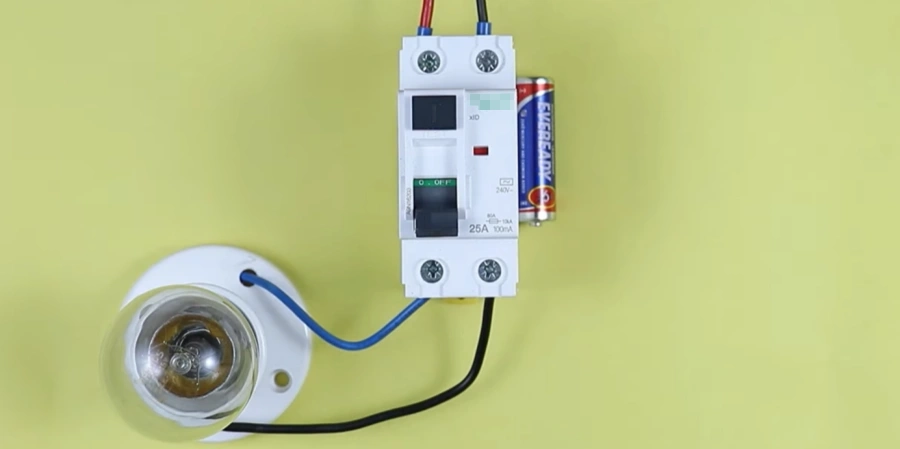
Modern RCCBs are faster and more comprehensive than old voltage-operated ELCBs, which only detect voltage on earthed metal. A 30mA RCCB could trip in 20–40 milliseconds, fast enough to prevent serious injury from electric shock.
Types of RCCBs
RCCBs come in several types, each designed to detect different kinds of leakage currents:
-
Type AC: Detects standard sinusoidal AC residual currents. Ideal for simple resistive loads and traditional AC motors. Reliable and cost-effective for older household appliances.
-
Type A: Detects AC and pulsating DC currents. Necessary for modern appliances with electronic controls—washing machines, induction cooktops, dishwashers, and EV chargers. Prevents missed or erratic trips common with Type AC.
-
Type B: Detects AC, pulsating DC, and smooth DC currents. Used in industrial settings, solar PV systems, inverters, and sensitive medical equipment where smooth DC faults may occur.
-
Type F: Designed for mixed-frequency or harmonic-rich loads, such as HVAC systems, elevators, or automated building controls, minimizing nuisance trips.
-
Type S (Selective): Incorporates a short time delay to coordinate multi-level installations, ensuring downstream RCCBs trip first while the main unit responds only if necessary.
Each type ensures the right protection for the specific electrical environment, balancing safety and operational reliability.
Technical Details
Sensitivity (IΔn) determines the leakage current that trips the device. Standard ratings range from 30mA to 1000mA:
-
30mA: Personal protection, required for wet areas and socket outlets.
-
Higher ratings (100–1000mA): Mainly for fire prevention and equipment safety.
RCCBs must always be paired with overcurrent protection, usually MCBs, because they do not respond to overloads or short circuits. A common setup is an RCCB protecting a group of circuits, with MCBs on each circuit.
Monthly testing via the built-in button is essential. It generates simulated leakage current to verify proper operation. Failure to test can leave the device non-functional, as I’ve seen in investigations of shock incidents.
Applications
RCCBs are standard in modern homes, protecting wet areas like bathrooms, kitchens, and outdoor outlets, as well as general socket circuits for portable appliances. Their fast response to leakage currents significantly reduces the risk of electric shock, making them essential for personal safety.
In commercial settings, RCCBs are used on outlets in offices, retail spaces, kitchens, and other areas where water and electricity may interact. Proper placement helps prevent shocks and minor equipment damage while maintaining safety compliance.
Industrial applications require selective deployment. High earth leakage from motor drives, long cable runs, and EMI can cause nuisance trips if RCCBs are installed on all circuits. Instead, they protect areas where personnel may be exposed—hand tool outlets, temporary power points, and maintenance zones—complementing MCBs that handle overloads and short circuits.
RCBOs
If RCCBs and MCBs had a child, it would be an RCBO.
RCBOs combine the features of RCCBs and MCBs, offering both residual current detection and overcurrent protection in a single device. This integration simplifies panel design, saves space, and provides complete protection for individual circuits.
Inside, RCBOs use the same transformer principle as RCCBs to monitor leakage current, while overcurrent protection relies on thermal-magnetic or electronic trip mechanisms like those in MCBs. Both functions operate independently but share the same contacts, so a trip from either function can disconnect the circuit completely.
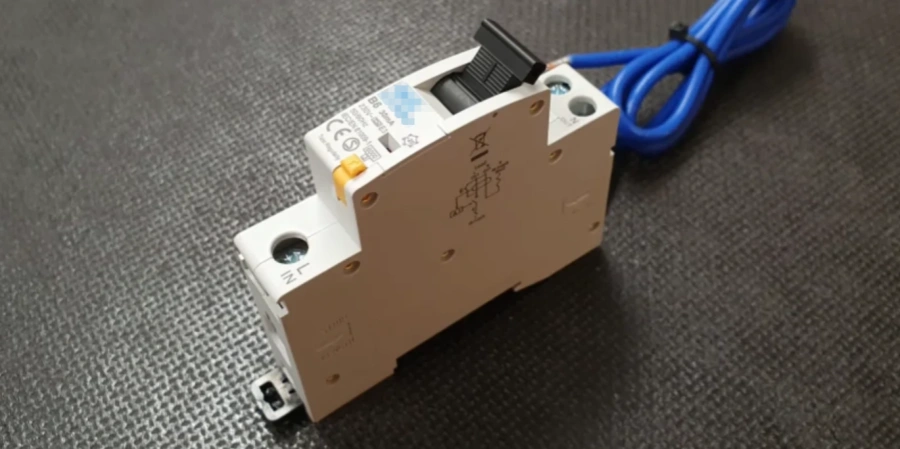
The main advantage is simplicity: one RCBO per circuit eliminates the need to coordinate RCCBs and multiple MCBs. If a fault occurs, only the affected circuit trips, making troubleshooting faster and clearer.
Features and Benefits
-
Earth leakage protection: Trips within milliseconds (typically 30mA in 20–40ms), safeguarding people from electric shocks.
-
Overcurrent protection: Handles sustained overloads and instantaneous short circuits, following standard MCB time-current curves (Type B, C, or D).
-
Comprehensive protection: MCBs cannot detect small earth leakages; RCCBs cannot protect against overloads. RCBOs cover both, providing complete single-point protection.
-
Space-saving: One RCBO per circuit can replace a setup with multiple MCBs and an RCCB, freeing panel space and simplifying wiring.
| Feature | RCCB + MCB | RCBO |
|---|---|---|
| Earth leakage | Single RCCB | Individual per circuit |
| Overcurrent | Individual MCBs | Integrated |
| Panel positions | 5 | 4 |
| Fault isolation | Multiple circuits may trip | Only affected circuit trips |
| Wiring | Complex | Simple |
Cost comparisons between RCCB+MCB combinations and RCBOs aren’t straightforward. RCBOs cost more per unit than MCBs, and if you’re protecting many circuits, buying individual RCBOs exceeds the cost of one RCCB plus multiple MCBs. However, installation labor often costs more for the RCCB setup due to the additional wiring complexity. When you factor in the superior fault isolation and easier troubleshooting RCBOs provide, the total lifetime cost often favors RCBOs despite higher initial component prices.
Specifications
RCBOs typically cover 6A–125A for residential and light commercial circuits, with 30mA sensitivity for personal protection. Specialized applications may require 10mA (medical) or 100mA (equipment protection).
Overcurrent trip types follow standard MCB curves: Type B for general loads, Type C for moderate inrush, Type D for high inrush equipment. Modern RCBOs may include communication modules for smart monitoring and remote alerts.
Applications
RCBOs are ideal for modern residential circuits: kitchens, bathrooms, garages, and outdoor outlets. Only the faulty circuit trips, avoiding unnecessary outages. Offices and commercial spaces also benefit, as individual RCBOs isolate faults without affecting multiple circuits. In light industrial settings, RCBOs are used for portable tools, maintenance outlets, and temporary circuits, while permanent heavy loads are protected by MCCBs or ACBs.
By combining earth leakage and overcurrent protection in one device, RCBOs simplify installation, improve safety, and provide superior fault isolation, making them the preferred solution for modern electrical systems.
Conclusion
From homes to factories, every circuit breaker tells a story of control over chaos. Understanding their role invites a broader reflection: how can we anticipate risks, design smarter systems, and ensure the invisible currents powering our lives remain both useful and safe?